

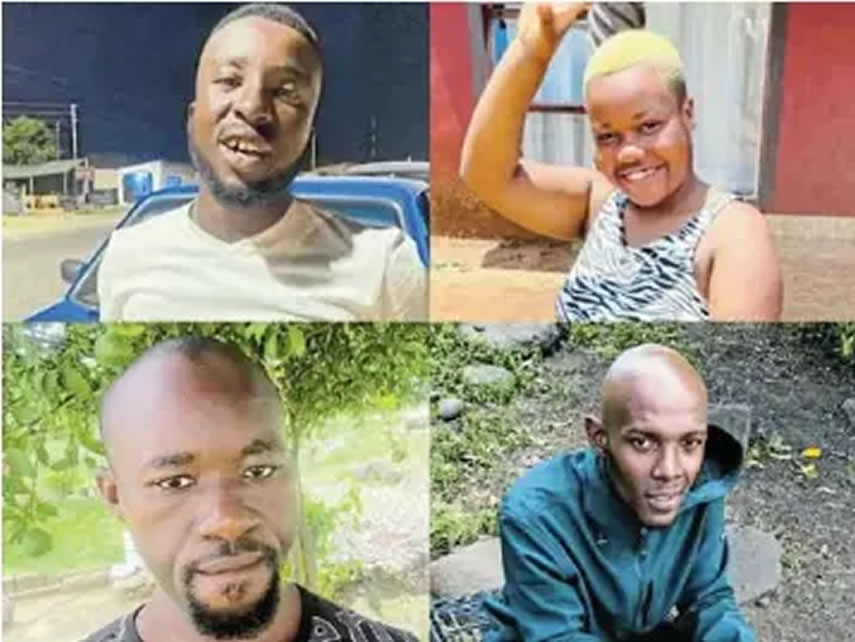
Mkhuhlu, Mpumalanga – A wave of terror has gripped the Mkhuhlu community in Mpumalanga following a brutal mass shooting that claimed the lives of four young friends, bringing the total number of gun-related murders in the area to a staggering 37 since January. The incident, which occurred on Sunday night, saw gunmen unleash a hail of over 40 bullets on a stationary VW Golf, leaving residents living in fear and casting a dark shadow over the effectiveness of local law enforcement.
The victims, identified as 19-year-old Alice Mahlangu, Fanafana Ngobe, Remember Sedibe, and Xolani Mona, were seated inside Mona’s car when the attackers struck. According to reports, the gunmen appeared suddenly in the dead of night, opening fire on the vehicle. Mahlangu, despite being severely injured, managed to escape the car, only to be pursued and executed by the assailants once outside. Ngobe, also wounded, attempted to flee but was similarly caught and shot until he succumbed to his injuries. Sedibe and Mona tragically died inside the bullet-riddled vehicle, while a fifth friend sustained injuries and was rushed to hospital.
The sheer brutality of the attack has left the community reeling, but it is the alleged inaction of the Calcutta police station that has ignited widespread anger and distrust. Residents, many of whom are too terrified to speak publicly, expressed profound fear. “We fear that the criminals will come and kill us at night,” one resident stated, encapsulating the pervasive sense of vulnerability.
A member of the Mkhuhlu Community Police Forum (CPF), who requested anonymity due to safety concerns, painted a grim picture of the local policing landscape. “Everybody knows here that if you speak up about the killings you will be killed. I’m a member of the CPF, but I am also scared. Actually, I do not even trust my colleagues and the police around here too, because some of them know the criminals but they do not act.” This damning accusation suggests a deeply entrenched problem within the local law enforcement structure, where alleged complicity or fear prevents effective crime fighting.
The latest massacre occurred just two days after the fatal shooting of ANC ward 3 branch secretary Shakatsa Metric Matjeke, who was also found dead inside his car. This proximity in time and method of killing has led to speculation about possible links between the incidents and the presence of organised criminal elements operating with impunity in the area.
Oina Nkuna, Fanafana Ngobe’s aunt, voiced the family’s profound grief and frustration. “As a family we are very hurt. This is the second person we will be burying in a space of three months, as my son was gunned down inside his house on April 21. No one has been arrested.” Her testimony highlights a pattern of unsolved murders and a justice system that appears to be failing the community. Nkuna’s criticism of the Calcutta police station was scathing: “It’s sad that we have a police station which is useless. We came with information on the whereabouts of the criminals and they [police] did not come through. We live in fear that maybe the police are helping the criminals by not acting.”
Mpumalanga Safety, Security and Liaison MEC Jackie Macie acknowledged the severity of the situation, conceding that there is a significant issue with the Calcutta police station. “There’s a problem with the Calcutta police station. It cannot happen that since all the people were killed there have been no arrests,” Macie stated. The MEC pledged to escalate the matter, promising to “source help from the national body” and expressing confidence in a forthcoming breakthrough. However, for a community traumatised by repeated violence and perceived police indifference, such promises may offer little immediate comfort.
The escalating death toll and the chilling allegations of police inaction paint a disturbing picture of a community under siege. The Mkhuhlu mass shooting is not merely an isolated incident but a symptom of a deeper crisis, where fear silences witnesses, and trust in the very institutions meant to protect citizens has eroded. As investigations continue, the demand for accountability and effective intervention grows louder, with residents and grieving families desperately seeking an end to the cycle of violence that has claimed so many lives in their community.