

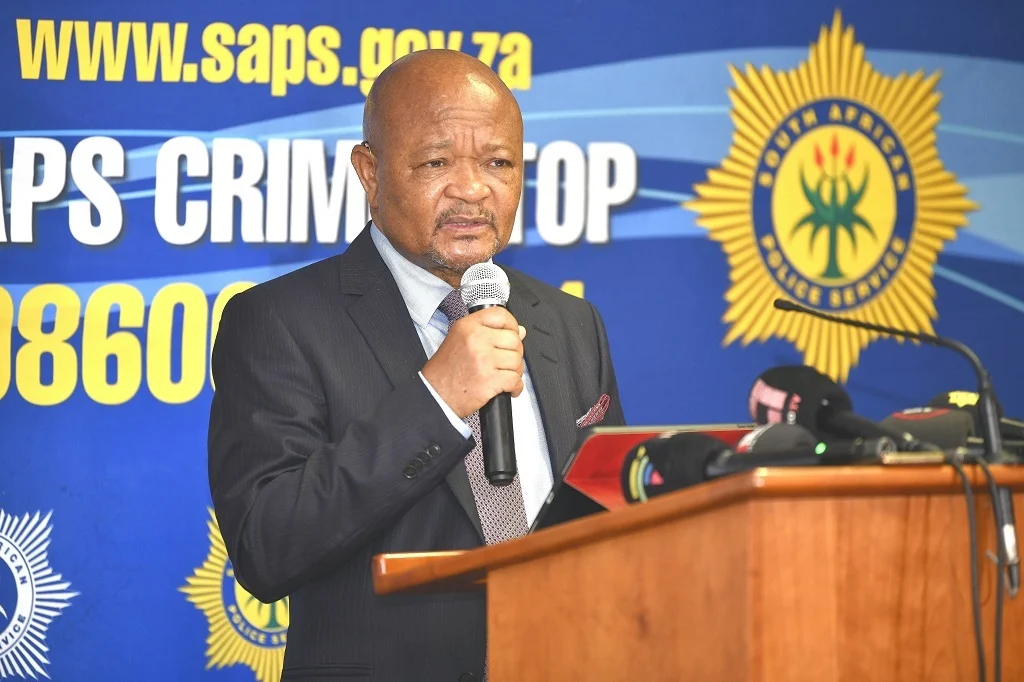
Pretoria, South Africa – A parliamentary ad hoc committee, tasked with the monumental responsibility of investigating allegations of criminal infiltration into South Africa’s beleaguered criminal justice system, has delivered a report that is both a sigh of relief and a cause for deep concern. While Police Minister Senzo Mchunu has been cleared of direct criminality, the committee’s findings paint a stark picture of serious governance and integrity issues surrounding his actions, particularly the controversial disbandment of the political killings task team. This report, which is yet to face the crucible of parliamentary debate, threatens to prolong Mchunu’s special leave and underscores the pervasive institutional weaknesses that leave the nation’s law enforcement vulnerable to abuse and external influence.
The committee’s draft report, deliberated upon yesterday with a submission deadline to National Assembly speaker Thoko Didiza looming later this month, explicitly states that there is no evidence to suggest Mchunu entered into a corrupt agreement or acted under the instruction of a criminal cartel when he dissolved the political killings task team in December 2024. This finding offers a measure of vindication for the embattled minister, who has been on special leave for a year, his career hanging precariously in the balance. However, this exoneration is far from absolute.
Crucially, the report concludes that Mchunu faces “unresolved integrity and executive accountability concerns” regarding the manner in which he went about disbanding the task team. This nuanced finding suggests that while direct criminal intent may be absent, his administrative decisions and leadership in the matter are still under intense scrutiny. The implications are significant: Mchunu’s suspension from the cabinet is likely to persist as President Cyril Ramaphosa awaits the final outcome of the Madlanga Commission of Inquiry. This commission, headed by retired Constitutional Court justice Mbuyiseli Madlanga and assisted by Sesi Baloyi and Sandile Khumalo, is specifically investigating political interference in police operations, a probe that could yet yield further uncomfortable truths.
While Mchunu may have sidestepped direct criminal findings, the report casts a long shadow over suspended deputy national police commissioner Lieutenant-General Shadrack Sibiya. The ad hoc committee found “serious unresolved issues” relating to Sibiya, including his handling of 121 case dockets and his implementation of the directive to dissolve the political task team. These findings suggest a pattern of conduct that warrants further investigation, even as the report stops short of concluding that Sibiya acted on behalf of business person Vusimusi “Cat” Matlala, Brown Mogotsi, or an organised crime network. The distinction is critical: while direct links to criminal cartels may not have been proven, the systemic vulnerabilities exposed by Sibiya’s actions are undeniable.
Interestingly, the committee made no findings of criminal conduct against Investigating Directorate Against Corruption (Idac) head Andrea Johnson. This particular finding may come as a relief to those concerned about the integrity of the anti-corruption unit, yet it does not diminish the broader concerns raised by the report. Rather than substantiating claims of a grand criminal conspiracy, the report concludes that the evidence points to a more insidious problem: systemic institutional weaknesses that have left law enforcement vulnerable to abuse and external influence. This is a far more complex and pervasive issue than simply identifying a few bad apples.
The report meticulously identifies a litany of deficiencies that plague the criminal justice system. These include glaring weaknesses in the governance of specialised police units, a flawed process used to dissolve the political killings task team, significant shortcomings in docket management and case continuity, and profound structural and integrity concerns within crime intelligence. Furthermore, the report highlights irregularities in the Medicare24 procurement process, weaknesses in oversight and disciplinary systems, inadequate protection for whistle-blowers and witnesses, and alarming shortcomings in parliamentary oversight and civilian accountability. This comprehensive indictment of institutional failures paints a grim picture of a system teetering on the brink.
Despite acknowledging serious vulnerabilities to organised crime, the committee ultimately concludes that the evidence does not establish the existence of a single criminal network exercising control over multiple state institutions. While this may offer some reassurance, the report’s identification of integrity risks affecting institutions including the National Prosecuting Authority, the judiciary, and Idac, suggests that the threat of capture remains very real, even if a singular, overarching criminal enterprise cannot be definitively proven. The subtle distinction between direct control and pervasive influence is a critical one, and the report leans heavily towards the latter.
However, the draft report is far from being a final verdict. It remains subject to amendments, with MPs from several parties already arguing that key findings and recommendations have been materially watered down. Action SA MP and member of the ad hoc committee Dereleen James has been particularly vocal in her dissent, stating that her party will not support the adoption of the report. “The draft report does not reflect the evidence before the committee,” James asserted. She further elaborated on her social media page, “Action SA’s position is that the draft report has been materially watered down. It softens, qualifies, or omits findings that the evidence plainly supports, and in several respects it reads as a summary of proceedings rather than a determination on the facts placed before the committee.” This strong opposition suggests that the report is likely to face a tough time in parliament, potentially leading to further revisions or even outright rejection.
Once finalised and adopted, the report will be submitted to Speaker Didiza, who is expected to table it before the National Assembly for consideration, along with any recommendations for further investigations or action. The political fallout from this report is likely to be significant, with implications for the careers of those implicated and for the broader reform of South Africa’s criminal justice system. The ongoing Madlanga Commission, with its broader mandate, may yet provide the definitive answers that this ad hoc committee has struggled to deliver. For now, the shadow of doubt and the specter of institutional compromise continue to hang heavy over the nation’s efforts to combat crime and corruption.