Outcry in Elsies River as Soldier Accused of Assaulting Woman Amidst Drug Bust
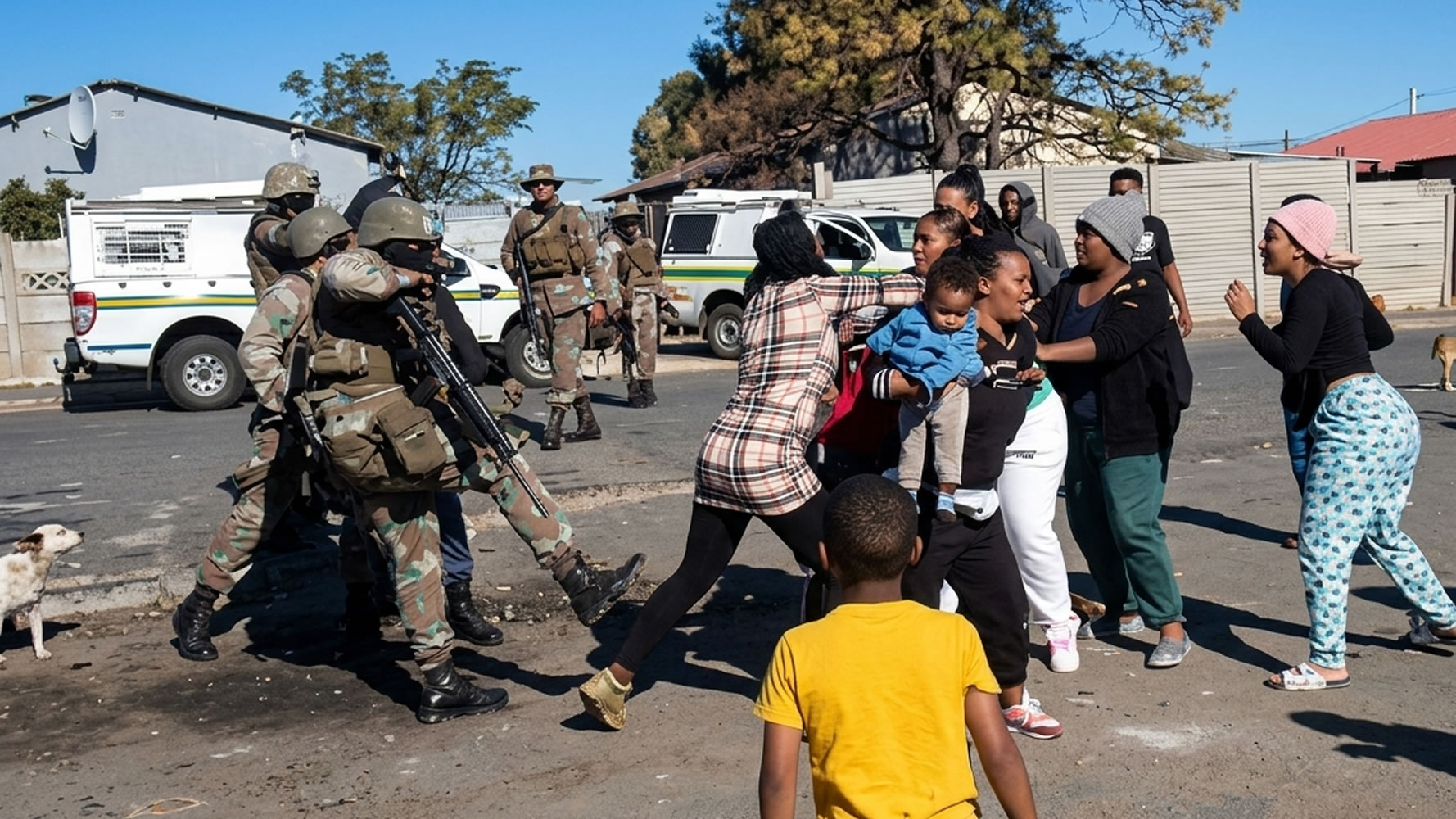
Elsies River, Cape Town – A recent incident in Balvenie Estate, Elsies River, has ignited widespread outrage after a video circulating on social media appeared to show a South African National Defence Force (SANDF) soldier assaulting a woman during a drug bust operation. The footage, which has garnered significant attention, depicts a soldier kicking and hitting a woman amidst a scuffle, raising serious questions about military conduct in civilian areas.
The incident unfolded following a crime prevention operation conducted by the South African Police Service (SAPS) in conjunction with the SANDF. According to police reports, the operation led to the arrest of suspects involved in drug-related offences and the confiscation of 59 Mandrax tablets, 338 packets of cocaine, and approximately R2,000 in cash. It was during the aftermath of these arrests, as officers were returning to their vehicles, that a member of the public allegedly attempted to throw a stone at police officials. The individual was reportedly prevented from doing so by SANDF members, with no injuries officially reported at that specific moment.
However, the widely shared video tells a more disturbing story. It captures a chaotic scene involving a group of women and soldiers attempting to separate them, culminating in the alleged assault by an SANDF member. This visual evidence has fuelled accusations of excessive force and brutality, echoing long-standing concerns within the community.
Local community activist Claudine Coleridge, a prominent voice from Elsies River, has vehemently stated that this incident is far from isolated. Coleridge, who was initially among those advocating for the deployment of the army to the gang-ridden Cape Flats, expressed profound disappointment. “I was one of the first to call for the army to be deployed to the Cape Flats due to gang violence, but thus far the only reports that have been received regarding the SANDF are brutality, assaults, violating people’s rights, and not having respect,” Coleridge remarked. She further highlighted the perceived lack of appropriate training for soldiers in civilian interactions: “Yes, they are differently trained from the police, but they have no people skills; they have no compassion.” Her sentiments underscore a growing disillusionment with the military's presence, suggesting that their operational methods are ill-suited for community policing.
The deployment of the SANDF to the Western Cape in March was part of a broader government initiative, Operation Prosper, aimed at assisting SAPS in combating gang violence. This national effort saw R823 million allocated to the SANDF to support priority internal tasks, with a focus on stabilising crime through a government-wide approach. President Cyril Ramaphosa had announced the deployment of over 3,000 soldiers countrywide to tackle organised crime, a move that was met with both hope and apprehension in communities like Elsies River.
Despite the clear visual evidence and community outcry, official channels have yet to register formal complaints regarding the soldier's conduct. Police spokesperson Colonel Andre Traut confirmed that no criminal cases had been opened against either SAPS or SANDF members in relation to the incident, nor had any formal complaints been received by SAPS regarding the conduct of members involved. Similarly, DA MP Nicholas Gotsell of the Joint Standing Committee on Defence (JSCD) stated that their committee had not formally received any complaints of alleged misconduct by SANDF members deployed under Operation Prosper. Gotsell emphasised the committee's condemnation of any unlawful assault, brutality, or abuse of authority by SANDF members, urging anyone who believes they have been mistreated to report the incident immediately to the Military Ombud and other appropriate law enforcement authorities.
However, the absence of formal complaints does not necessarily reflect an absence of misconduct. It often points to systemic barriers that prevent victims from coming forward, including fear of reprisal, lack of trust in official processes, or simply not knowing where to report such incidents. The discrepancy between public perception, as evidenced by the viral video and community statements, and official records highlights a significant challenge in ensuring accountability.
This incident in Elsies River draws parallels with other contentious deployments of the SANDF in civilian contexts, particularly the tragic case of Collins Khosa. In April 2020, Khosa died after an altercation with SANDF soldiers during the national lockdown, an event that sparked national outrage and brought the issue of military brutality into sharp focus. Investigations into Khosa's death revealed a pattern of excessive force and a lack of accountability within the military. The Khosa case, among others, underscored the critical need for soldiers to be adequately trained for civilian interactions and for robust oversight mechanisms to prevent abuses of power.
Critics argue that while the SANDF is trained for warfare, its deployment in domestic policing roles often leads to clashes with civilians due as their training is fundamentally different from that of police officers. The military's mandate to defend the country against external threats does not inherently equip them with the
skills required for community engagement and de-escalation. This fundamental difference often results in a more aggressive approach to law enforcement, which can be counterproductive and lead to human rights violations.
The Office of the Military Ombud, responsible for investigating complaints against SANDF members, reported a rise in complaints during the 2024/25 financial year, receiving 590 new complaints from soldiers and members of the public. While the report also indicated a drop in misconduct issues, the persistent number of complaints highlights ongoing concerns about military conduct. The Democratic Alliance (DA) has also raised objections regarding the SANDF's alleged sidelining of parliamentary oversight, citing failures to deliver legally-prescribed, timeous reports, further exacerbating concerns about transparency and accountability.
The situation in Elsies River is a microcosm of a larger national debate surrounding the role of the military in domestic security. While communities grapple with escalating gang violence and crime, the deployment of soldiers is often seen as a necessary, albeit temporary, measure. However, the effectiveness of such deployments is continually questioned when incidents of alleged brutality surface. Community activists, like Coleridge, are increasingly calling for a shift in focus from mere soldier deployment to addressing the root causes of crime, such as poverty, unemployment, and lack of educational opportunities.
The video from Balvenie Estate serves as a stark reminder of the delicate balance between maintaining law and order and upholding human rights. As the investigation into this particular incident unfolds, it is imperative that all allegations of misconduct are thoroughly investigated and that justice is served. The trust between communities and the forces meant to protect them is fragile, and incidents like these threaten to erode it further, making the already challenging task of stabilising crime even more arduous.