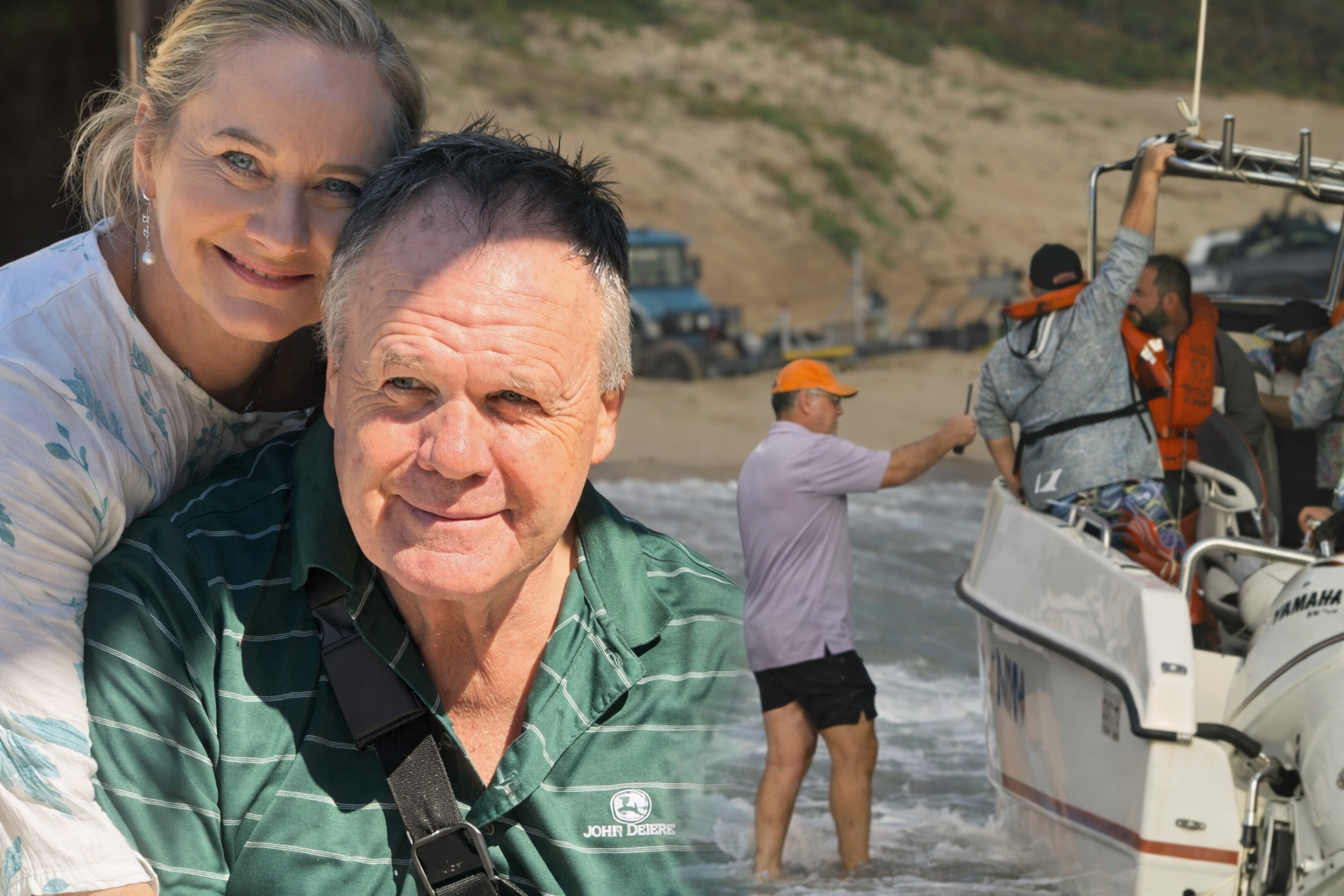
What began as a familiar, low‑key day of service at a much‑loved fishing competition in Sodwana Bay ended in a near‑fatal catastrophe for Frikkie “Kappie” Kapp of Middelburg, Mpumalanga — and a months‑long fight back to health that doctors and his family still describe as nothing short of remarkable.
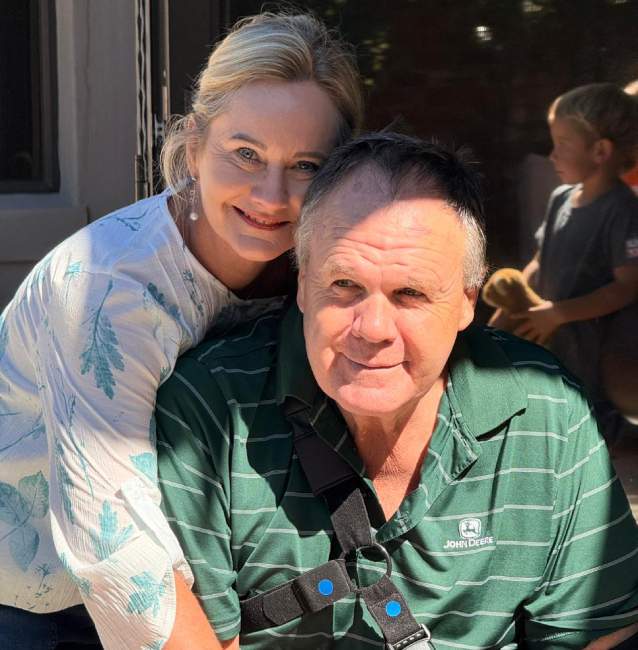
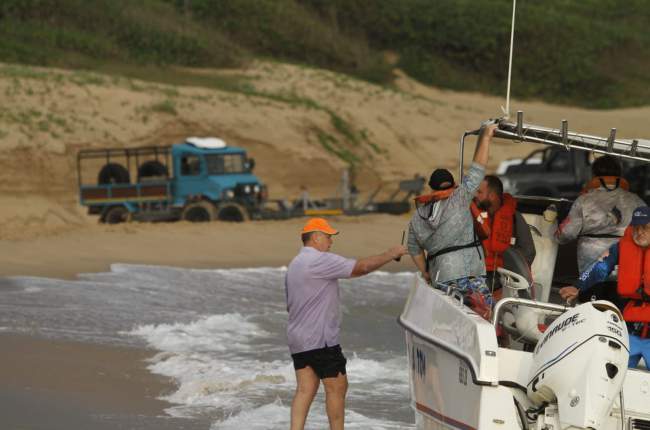
Kapp and his wife, Judy, were in their usual volunteer roles that March morning. With a small flag in hand, Kapp stood on the beach, guiding boats safely over a shallow sandbank as they returned from the Indian Ocean; Judy was stationed up in the radio control tower, logging movements and relaying updates. The couple had helped friends with the arrangements for years. It was all routine — until it wasn’t.
“It’s a miracle that Kappie is alive,” Judy says. “The Lord truly intervened here.”
For hours the choreography was smooth: skippers throttled gently on the volunteer’s signal, crested the sandbank, and slid ashore. Then, as the final vessel of the day approached, the script snapped. The boat hit the throttle too hard, shot forward over the sandbank and careered straight at Kapp. He tried to run but his feet sank into soft sand. The hull struck him with devastating force.
“The boat buried him underground,” Judy says.
On the beach, shock turned instantly to action. About 35 men swarmed the stricken craft, heaving to lift its weight while others dug frantically. They clawed the sand away and freed Kapp. “He can count himself so lucky that not a single grain of sand ended up in his lungs,” Judy says, still marvelling at the narrowest of escapes within a calamity.
Up in the tower, a voice cut through Judy’s headset: “Juds, someone has been hit by a fishing boat.” She knew, without being told, that it was her husband. She sprinted to the shoreline. He lay unconscious, his skin a blue‑purple. Then, as she knelt beside him, his eyes opened.
Given the severity of the impact, there was no time to lose. A helicopter airlifted him from the beach to a hospital in Durban, where he spent several days in intensive care. Despite the violence of the crash, initial scans did not detect catastrophic injuries and he was discharged. That should have been the end of it. It wasn’t.
Back in Middelburg, the pain would not relent. The family doctor took one look and ordered urgent blood tests. That evening she called with instructions that brooked no delay: get to the emergency room, immediately. At Pretoria East Hospital, the team was already waiting. “When we arrived at the hospital in Pretoria East, they were waiting for us,” Judy says. “They admitted Kappie immediately. They treated him for the blood clot for five days and then they had to operate on him.”
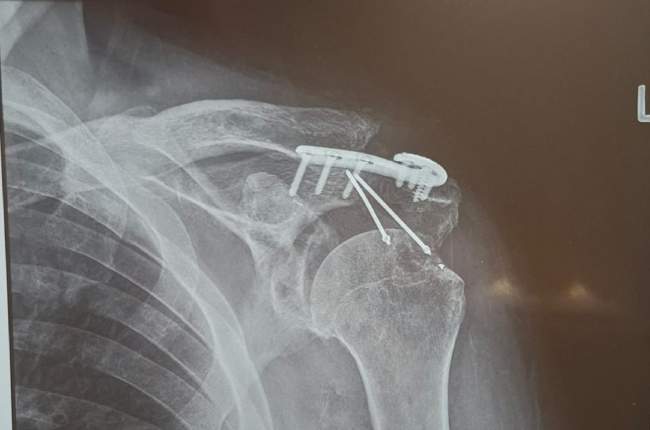
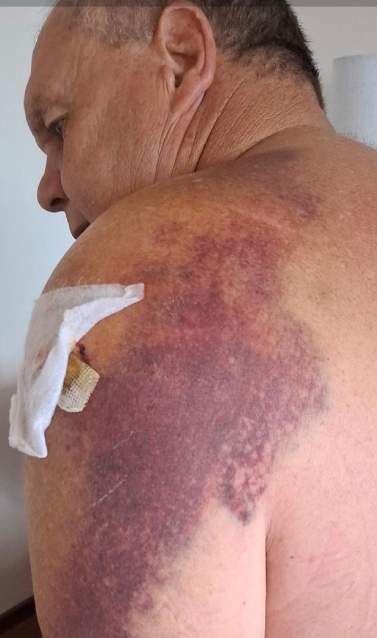
A pulmonary embolism — a blood clot in the lungs — had formed, a potentially deadly complication that often hides in plain sight. Only in theatre did the full picture of trauma emerge. Kapp’s shoulder blade was broken in three places. His shoulder was dislocated. The muscles on his arm had been torn completely off. Surgeons counted six broken ribs and four fractured vertebrae. Where the boat had dragged him through the sand, there was no skin left on his left buttock. “That’s when we realised how serious it really was,” Judy says.
An X‑ray image now shows the jagged breaks in his shoulder blade, a stark reminder of the forces unleashed when fibreglass and steel meet flesh and bone. The list of injuries reads like a ledger from a high‑speed road crash, not a beach landing gone wrong. And yet, as Judy keeps returning to, worse was narrowly averted: no sand in the lungs; a clot caught in time; a heartbeat still steady.
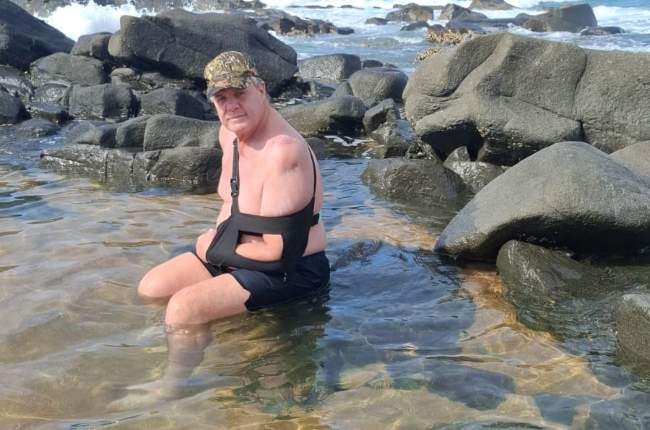
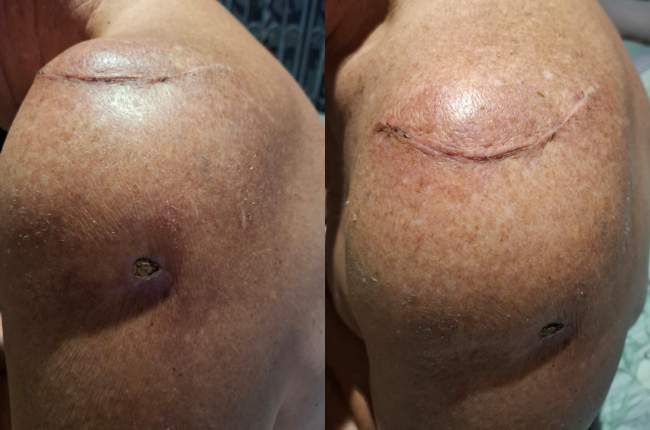
Today, weeks into recovery, the scars are visible — on his left shoulder and ankle where the boat struck — and the regimen is relentless. Kapp remains under close medical supervision. He still attends regular doctor’s appointments and may need a shoulder replacement. There is a long road ahead, but it is a road. “We are so grateful,” Judy says. “We receive so much support from all corners. You don’t realise how many people care until something like this happens.”
Friends from the Sodwana competition and from Middelburg have rallied: meals delivered, lifts offered, prayers said, calls made. For Judy, the groundswell has been both lifeline and revelation, the everyday kindnesses forming a scaffold for the big days — the follow‑up consults, the rehab milestones, the small victories that now punctuate their weeks.
The accident itself has sparked difficult conversations among organisers and skippers alike. Beach landings, especially over shifting sandbanks, demand precision and calm. Volunteer marshals, positioned as human beacons, depend on skippers reading the signals and respecting the margin for error. On that day, one misjudgement cascaded into disaster. In the aftermath, safety protocols and training are under review: clearer briefing of crews, reconsidered landing lanes, reinforced roles for shore teams, possible buffer zones where volunteers can step safely aside if an approach goes wrong.
For all the technical debriefs, this remains, at heart, a story about people: a husband buried beneath a boat and dug out by 35 pairs of hands; a wife who heard the call sign and knew; paramedics and pilots who bridged the distance to Durban; a local doctor who refused to accept that pain was nothing; a Pretoria team ready at the door; and a community that has kept faith and company through the long, sore days after. The couple plans to take life day by day, celebrating small victories in his recovery.
“It’s a miracle that Kappie is alive,” Judy repeats, the words now a refrain. Between that miracle and the medical grind is a truth the Kapps have learned and share freely: the ordinary can turn in a heartbeat, and the only way back is one careful step at a time — with help.