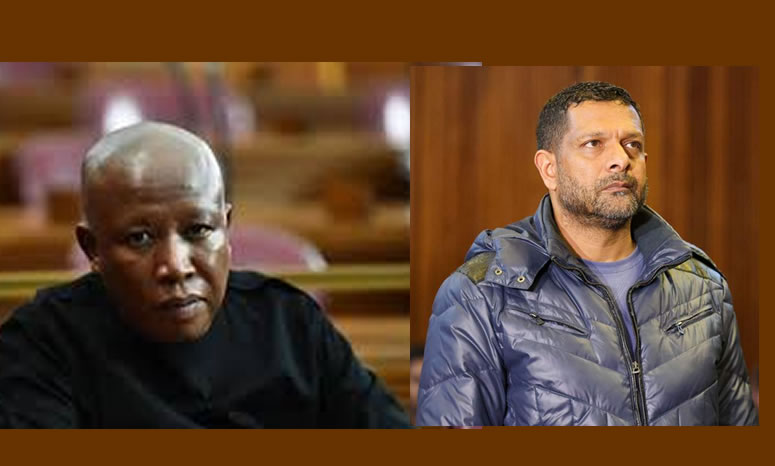
Pretoria, South Africa – The Madlanga Commission, tasked with unravelling the murky underbelly of South Africa’s intelligence services, has peeled back the layers of a deeply disturbing narrative, exposing alleged collusion between a senior Crime Intelligence boss, a prominent political figure, and a controversial tobacco magnate. Major-General Feroz Khan, a figure once at the pinnacle of national security, has been summoned to appear before the commission in July, facing a barrage of questions that threaten to expose a far-ranging criminal conspiracy and a shocking abuse of power. This unfolding drama, punctuated by explosive WhatsApp messages, paints a grim picture of compromised institutions and the perilous entanglement of politics, crime, and intelligence.
Khan’s appearance before the commission comes after he abandoned an urgent legal bid to block investigators from accessing information on his seized devices. These devices were confiscated following his arrest for allegedly interfering in the arrest of a Durban businessman caught with unwrought gold, a precursor to the current revelations. Commission investigator Tshepo Nyatlo has now laid bare how Khan’s communications with Mohammadh Sayed, the chief operating officer at Adriano Mazzotti’s cigarette manufacturer company Carnilinx, provided prima facie evidence of his deep involvement in a criminal network that allegedly sought to manipulate state institutions for personal and political gain.
At the heart of Nyatlo’s testimony are WhatsApp exchanges that suggest a shocking level of collaboration between Khan, Sayed, and the leader of the Economic Freedom Fighters (EFF), Julius Malema. The investigator revealed that Khan allegedly handed over the name and address of a VBS Mutual Bank curator who had laid criminal charges against Malema over corruption at the bank. More disturbingly, Khan is accused of channelling parliamentary questions to Malema, questions specifically designed to bring down an Inspector-General of Intelligence (IGI), Selumanthuro Dintwe.
These parliamentary questions, which Sayed forwarded to Khan on June 12, 2021, explicitly stated they were from “Juju” – a known nickname for Malema. The questions centred on whether Dintwe had “any relationship with convicted drug lord Timmy Marimuthu” and if this relationship included discussing Crime Intelligence matters. They further probed whether Dintwe had discussed the removal of General Peter Jacobs as head of Crime Intelligence with Marimuthu, questioning what security clearance would grant a convicted drug lord such access to the IGI. Khan’s immediate response to these questions was chillingly enthusiastic: “Excellent bro. Thanks,” followed by “Let’s go to War.”
Nyatlo argues that these questions were meticulously crafted to trap the Inspector-General into providing a dishonest response, thereby creating grounds for his removal. In one particularly damning exchange, Khan explicitly states: “This should get him to lie. And in return we can ask for his removal coz (sic) he lied.” Sayed’s reply, “Absolutely, he’s gonna deny it and then he’s fucked. Bye bye p**s,” further underscores the alleged malicious intent behind the scheme. Nyatlo’s contention is clear: if Khan’s concern was genuinely about an improper relationship between the IGI and an alleged drug dealer, he would have followed appropriate channels, not used his alleged relationship with a tobacco smuggler to plant questions in Parliament.
The WhatsApp conversations also reveal Sayed forwarding Khan a screenshot of his discussion with Malema regarding these questions, with Malema confirming they would be “fired off” the next day. A week later, Sayed sent Khan a copy of a letter from then-EFF MP Mbuyiseni Ndlozi to then-police minister Bheki Cele, repeating questions about Cele’s alleged relationship with Marimuthu and discussions concerning Crime Intelligence matters and the removal of General Jacobs. Khan also wanted Cele to be questioned about an alleged deal between former President Jacob Zuma and himself, where Khan would use state intelligence resources to ensure Nkosazana Dlamini-Zuma’s election as ANC president, again questioning Marimuthu’s security clearance to discuss such sensitive matters.
While it remains unclear whether Cele or Dintwe ever responded to these specific questions, the implications for Khan are severe. His communications with Sayed suggest a pattern of assisting Carnilinx’s business interests by allegedly using police resources to target competitors. This alleged abuse of power extends to a disturbing exchange concerning anti-crime activist Yusuf Abramjee, a vocal critic of the illegal cigarette industry. In response to an article by Abramjee, Sayed messaged Khan, “Abramjee gonna get fucked up, bru.” Khan’s reply, “fuck him up, bro,” and “He must stay in his lane,” reveals a shocking disregard for due process and a willingness to silence critics.
Further exchanges show Sayed forwarding Abramjee’s post questioning the low prices of Carnilinx brands and their tax implications, to which Khan responded: “We can sort it out easily, bro.” These messages, Nyatlo stresses, are particularly damning given the widely reported financial ties between Carnilinx and the EFF. Carnilinx allegedly donated R650,000 to the EFF for party registration, and its late co-founder, Kyle Phillips, reportedly advanced R1 million to Malema to settle a tax debt. Furthermore, Mazzotti allegedly made his Sandton penthouse available to Malema, and Khan himself attended an EFF gala dinner at a Carnilinx-sponsored table, claiming to be on Crime Intelligence business.
The revelations from the Madlanga Commission also cast a shadow over Malema’s ongoing legal battles. His lawyers are attempting to persuade the Gauteng High Court in Johannesburg that Patriotic Alliance deputy president Kenny Kunene defamed him by claiming he visited the compound of alleged “Big 5” cartel leader Jothan “Mswazi” Msibi after midnight. Malema vehemently denies these accusations, but the limited WhatsApp evidence exposed by Nyatlo, suggesting Malema’s potential implication in tender rigging, could severely compromise his defamation case.
In August 2021, Sayed forwarded details of a company called Bertobrite, which had bid for a police fleet management tender, to Khan, stating that the information came from “Juju” and that Malema “wants us to do it.” This occurred despite media reports in July 2021 accusing Bertobrite of securing a City of Tshwane fuel tender by paying bribes to the EFF. The WhatsApps further reveal Sayed offering Malema’s support to Khan when he faced disciplinary action over a drug bust, with Malema reportedly assuring Khan that he would not resign and that they would “emerge victorious.”
The Madlanga Commission’s findings paint a disturbing picture of a criminal justice system potentially compromised at its highest levels. The alleged actions of Major-General Feroz Khan, in concert with political figures and business interests, represent a profound betrayal of public trust and a direct threat to the integrity of South Africa’s democratic institutions. As Khan prepares to testify, the nation awaits further revelations, hoping that the commission will finally bring accountability to those who have allegedly exploited their positions for personal gain, leaving a trail of corruption and deceit in their wake.