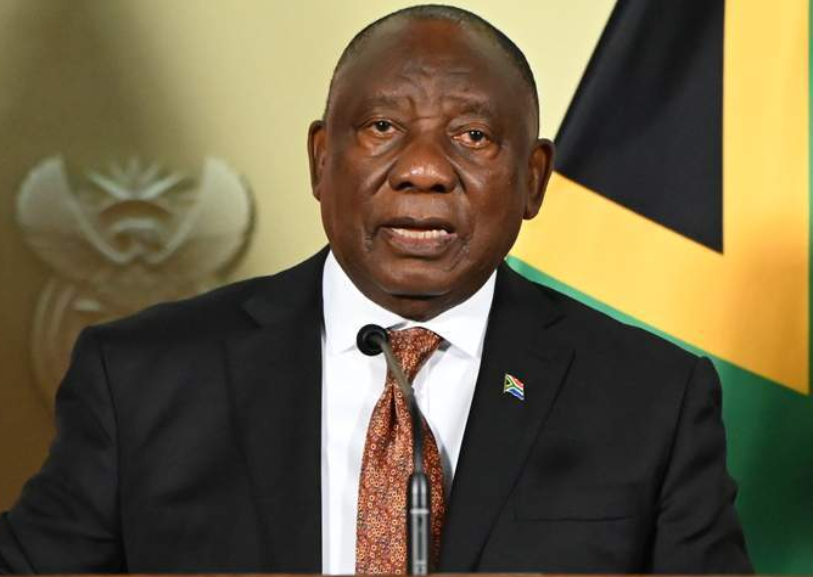
Pretoria, South Africa – In a decisive move to address the escalating challenges of illegal immigration and prioritise local employment, President Cyril Ramaphosa has unveiled a stringent government response, spearheaded by the gazetted Employment Services Amendment Bill. This landmark legislation proposes draconian fines of up to R1 million for employers found non-compliant with new foreign worker regulations, signalling a dramatic shift in South Africa’s approach to labour migration. The announcement, delivered in a recent address to the nation, has ignited a fierce debate, with critics warning of significant enforcement hurdles and potential delays that could see the bill’s full implementation stretch into 2028. As the nation grapples with a complex web of economic pressures and social tensions, this legislative overhaul stands poised to reshape the landscape of employment and immigration for years to come.
The core of the Employment Services Amendment Bill, gazetted on May 26 and already approved by the Cabinet for parliamentary introduction, mandates a fundamental reassessment of hiring practices, particularly concerning foreign nationals. At its heart, the bill empowers the Minister of Employment and Labour to establish quotas for foreign workers across various economic sectors and occupational categories. This means employers will be legally obligated to prioritise South African job seekers, ensuring that no local citizens or permanent residents with the requisite skills are available before considering foreign nationals. Furthermore, the bill explicitly states that the terms and conditions of employment for foreign nationals must not be inferior to those afforded to South African citizens, aiming to curb exploitation and ensure fair labour practices.
President Ramaphosa, in his address, underscored the urgency of these measures, acknowledging the fragmented and often contradictory nature of South Africa’s existing immigration laws. He asserted that these loopholes have been systematically exploited by illegal immigrants, contributing to a crisis that demands immediate and decisive action. The President articulated a clear vision: the new bill is designed to close these gaps, ensuring that South African citizens are unequivocally “first in the queue for employment.” This rhetoric, while resonating with a populace increasingly concerned about job scarcity, also raises questions about the practicalities of implementation and the potential for unintended consequences.
To enforce compliance and deter illicit employment practices, the bill proposes a tiered system of escalating penalties. First-time offenders caught illegally employing foreign nationals could face fines of R100,000. Repeat offences within a three-year period would see this penalty double to R200,000. However, the most significant deterrent comes in the form of a staggering R1 million fine, or 10% of the employer’s turnover – whichever is greater – for multiple contraventions. This substantial financial punitive measure is intended to make non-compliance an economically unviable option, forcing businesses to adhere strictly to the new regulations.
Deputy Minister of Labour Jomo Sibiya revealed that the bill has been the subject of extensive consultation since as early as 2019, indicating a long and deliberative process behind its formulation. Despite its approval by Cabinet and tabling in Parliament on May 29, the bill still requires formal presentation to National Assembly Speaker Thoko Didiza. Sibiya candidly admitted that while the bill represents a significant step forward, it alone would not resolve all issues pertaining to migrant labour. He highlighted the interconnectedness of this legislation with other critical reforms, including the finalisation of a new Citizenship, Immigration and Refugees Act and the National Small Business Amendment Bill, which seeks to limit who can open a small business in the country. The establishment of a Migration Court System by the Department of Justice is also deemed essential for a comprehensive approach.
However, the legislative journey of the Employment Services Amendment Bill has been fraught with delays, drawing sharp criticism from various quarters. Matthew Parks, Cosatu’s parliamentary coordinator, voiced profound frustration at the slow pace, noting that the bill had languished at the National Economic Development and Labour Council since 2023, only receiving Cabinet approval in 2025. Parks’s exasperation was palpable: “Even if Parliament got [to] it tomorrow, it will still take until mid-2028 to pass it into law.” He lamented that the current “migration crisis” could have been mitigated had these laws been enacted earlier, suggesting that the protracted legislative process has exacerbated existing problems.
Parks, however, also acknowledged the bill’s potential to significantly impact the labour market. He noted its capacity to limit the number of foreign workers, allow for exemptions for small businesses, and crucially, designate certain sectors exclusively for South African citizens. This dual perspective highlights the complex balancing act inherent in such legislation: addressing local employment concerns while navigating the realities of a globalised workforce.
Vuyo Zungula, leader of the ATM and a member of Parliament’s Portfolio Committee on Employment and Labour, echoed concerns about the inadequacy of existing penalties. He pointed out that current fines for non-compliance are “minimal,” ranging from R1,500 in some provinces to R80,000 in others. This inconsistency and perceived leniency, Zungula argued, emboldens employers to “take chances” because they know the punishment is effectively “peanuts.” He further asserted that employers often prefer foreign nationals due to insufficient enforcement, or when enforcement occurs, the penalties are “basically non-existent.” The new bill, with its substantially higher fines, aims to rectify this perceived imbalance and instill a greater sense of accountability among employers.
Conversely, DA spokesperson on employment and labour Michael Bagraim offered a more cautious perspective. While acknowledging the government’s efforts to address systemic issues within the labour regime through new legislation, Bagraim stressed that these reforms would not materialise by the end of June. This deadline, set by anti-immigration groups staging protests and advocating for mass deportations, underscores the intense public pressure surrounding the issue. Bagraim questioned the targets of these protests, suggesting that the government is actively working to rectify past shortcomings: “Who are you marching against? Government? I think the government is now trying to sort out the ills of the past. They’re doing their best.” His comments highlight the political tightrope walk the government faces, balancing public demands with the complexities of legislative reform.
The Employment Services Amendment Bill represents a pivotal moment in South Africa’s ongoing struggle with immigration and unemployment. While its proponents hail it as a necessary step towards protecting local jobs and restoring order, critics remain wary of its practical implementation and the potential for unintended social and economic repercussions. As the bill navigates the parliamentary process, the nation watches, hopeful for solutions but acutely aware of the deep-seated challenges that lie ahead. The debate is far from over, and the true impact of these sweeping changes will only become apparent in the months and years to come.