

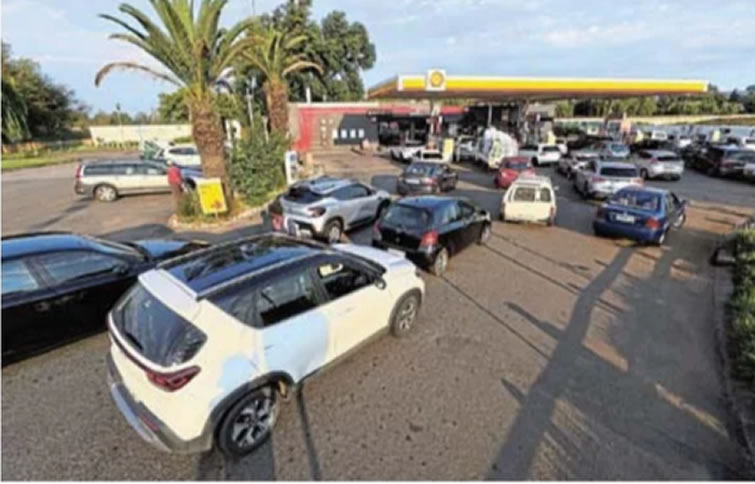
South Africa Braces for Massive Fuel Price Hike as Middle East Conflict Drives Inflation Fears
JOHANNESBURG – Consumers and businesses in South Africa are set to endure another sharp increase in fuel prices, effective tomorrow, which is expected to send living and production costs spiralling further and poses significant risks for inflation. The looming price shock comes despite the government's recent extension of its general fuel levy reduction for petrol and a pause on the tax on diesel for another month, aimed at lessening the impact of the Middle East conflict on global oil prices.
The retail price of petrol will jump by a hefty R3.27 a litre from tomorrow, while the wholesale cost of diesel will surge to R6.19. This substantial increase will place immense pressure on already strained household budgets and business operations.
Paraffin, a crucial energy source for many poor households for cooking and lighting – especially those in informal settlements with limited or no access to electricity – will now cost R4.22 per litre more. This price hike is expected to disproportionately impact vulnerable communities.
Being a net oil importer, South Africa has been among the countries hardest-hit by the turmoil on global markets since the US and Israel waged war against Iran on February 28, throttling the passage of 15%-20% of global oil supplies through the key Strait of Hormuz. The conflict has disrupted supply chains and driven up oil prices worldwide.
The knock-on effects of the fuel hikes will be widespread, placing additional strain on already under-pressure households and businesses, particularly in the transport, logistics, agriculture, and small enterprise sectors, according to Henry van der Merwe, chairperson of the South African Petroleum Retailers Association. The association warns of dire economic consequences as a result of the fuel price increases.
“This raises concerns not only for consumers but also for the broader economic outlook, including the potential for further interest rate pressure in the months ahead,” Van der Merwe stated. The potential for further interest rate hikes adds another layer of concern for South African consumers and businesses.
Reserve Bank governor Lesetja Kganyago reiterated yesterday that the inflation outlook has turned more dire, denting the chances of interest rate cuts any time soon. Kganyago's warning underscores the severity of the economic challenges facing South Africa.
During a public lecture at Rhodes University yesterday, Kganyago said South Africa’s inflation headache could have been worse without the bank’s prudent policy stance, including the adoption last year of a lower 3% inflation target, after years of pursuing a 3%-6% band with a 4.5% midpoint. The governor defended the Reserve Bank's monetary policy decisions in the face of global economic shocks.
“This meant our policy stance was not immediately rendered obsolete when trouble did come with the conflict in the Middle East and the closure of the Strait of Hormuz,” Kganyago said. The adoption of a lower inflation target provided a buffer against the impact of the Middle East conflict.
“We had inflation at exactly 3%, with core also at 3%, in line with our new target. This was a reasonably good starting point for confronting a severe shock.” Kganyago highlighted the positive impact of the lower inflation target in mitigating the effects of the global crisis.
The well-established playbook for dealing with supply-side shocks in monetary policy was to look through the initial or first-round effects and rather focus on the second-round effects, he said. The Reserve Bank's strategy focuses on managing the long-term impact of supply-side shocks.
“The oil price goes up, and then petrol and transport get more expensive. Monetary policy cannot do much about this. What is relevant for monetary policy is the period after the shock has passed,” he told his audience. Kganyago explained the limitations of monetary policy in addressing immediate price increases.
“If we do have to raise rates, it will be to sustain low and stable inflation, and all the benefits that brings,” said Kganyago. The Reserve Bank is prepared to raise interest rates to maintain price stability and protect the economy from the long-term effects of inflation.