

The long-standing and often volatile relationship between Africa’s two largest economies has been plunged into a fresh crisis. On Monday, 4 May 2026, the Nigerian government formally summoned South Africa’s Acting High Commissioner in Abuja, demanding an immediate investigation into a surge of xenophobic violence that has left several foreign nationals dead and thousands living in fear.
The move marks a significant escalation in diplomatic tensions, as Nigeria joins a chorus of African nations – including Ethiopia and Zimbabwe – expressing outrage over what they describe as a failure by Pretoria to protect immigrants.
A Formal Rebuke in Abuja
The summons, issued by Nigeria’s Ministry of Foreign Affairs, followed a weekend of reports detailing targeted attacks against Nigerian-owned businesses and individuals in Gauteng and KwaZulu-Natal. According to diplomatic sources, the meeting was "tense and direct," with Nigerian officials presenting a dossier of recent incidents, including the alleged killing of two Nigerian nationals in Johannesburg.
"The government of Nigeria expresses its strong concern over the reported xenophobic tensions and threats against foreign nationals," a statement from the ministry read. "We demand a thorough probe into these killings and concrete assurances that our citizens will be protected."
The Nigerian government has also activated its emergency evacuation protocols, with over 130 citizens already registered for repatriation. The Nigerians in Diaspora Commission (NIDCOM) has called for "concrete protection" rather than "diplomatic platitudes," reflecting a growing impatience with South Africa’s response to the crisis.
A Week of Shutdowns and Marches
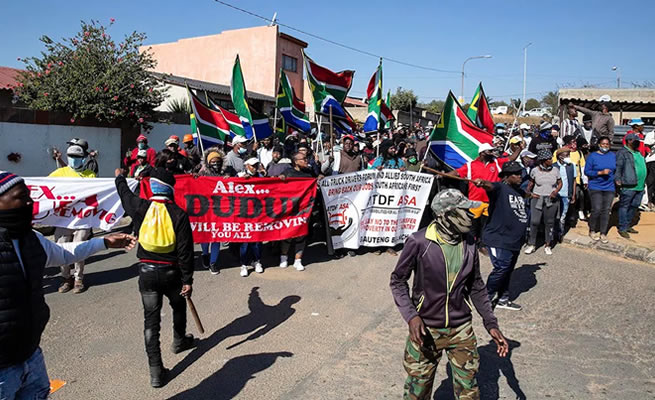
The diplomatic friction comes as South Africa enters a week of planned anti-foreigner protests. On Monday, a "nine-province shutdown" was attempted by various groups, leading to the closure of shops and a heavy police presence in major city centres.
The protests, which organisers claim are a response to illegal immigration and competition for jobs, have frequently spiralled into violence. In Durban, several shops were looted on Sunday night, while in Pretoria, marches planned for later this week have prompted foreign missions to issue urgent safety warnings to their citizens.
"We have seen these patterns before," said a human rights advocate based in Johannesburg. "What starts as a march for 'rule of law' quickly turns into a hunt for anyone who doesn't look or sound South African. The rhetoric from certain political figures has only fanned the flames."
The Human Cost: A Trail of Blood
While the diplomatic talks focus on high-level policy, the human cost on the ground is devastating. Beyond the Nigerian casualties, reports have emerged of at least five Ethiopian nationals killed in a separate shooting incident in the Western Cape last week.
In Diepsloot, a community that has become a flashpoint for such violence, residents spoke of a "reign of terror" as vigilante groups conducted door-to-door "searches" for documentation. Families have been forced to flee their homes, seeking refuge in community centres and churches.
The United Nations has expressed "deep concern" over the reports of harassment and intimidation. A spokesperson for the UN Secretary-General urged the South African government to hold perpetrators accountable and to address the underlying socio-economic frustrations that drive such conflict.
Pretoria’s Balancing Act
For the South African government, the crisis presents a delicate balancing act. While President Cyril Ramaphosa has repeatedly condemned xenophobia, his administration faces intense pressure from a domestic audience frustrated by high unemployment and a perceived lack of border control.
South Africa’s Acting High Commissioner in Abuja reportedly assured the Nigerian government that Pretoria is committed to the "spirit of Ubuntu" and that law enforcement agencies are on high alert. However, these assurances often ring hollow for those whose livelihoods have been destroyed.
"The problem is that the state is seen as reactive," noted a political analyst. "We wait for the bodies to pile up before we send in the police. By then, the diplomatic damage is done, and the cycle of hatred is further entrenched."
A Continent Divided?
The current crisis threatens to undermine South Africa’s standing within the African Union and its aspirations for a permanent seat on the UN Security Council. As other nations begin to voice their protests, the narrative of "African solidarity" is being tested like never before.
For 'Celeb Gossip News', the story is more than just politics; it is a story of families torn apart, of stars in both countries calling for peace, and of a continent watching to see if its two giants can find a way to coexist.
As the "shutdown" week continues, the eyes of the world – and the continent – remain fixed on the streets of South Africa. For the thousands of Nigerians, Ethiopians, and other nationals who call this country home, the question is no longer about diplomacy, but about survival.