

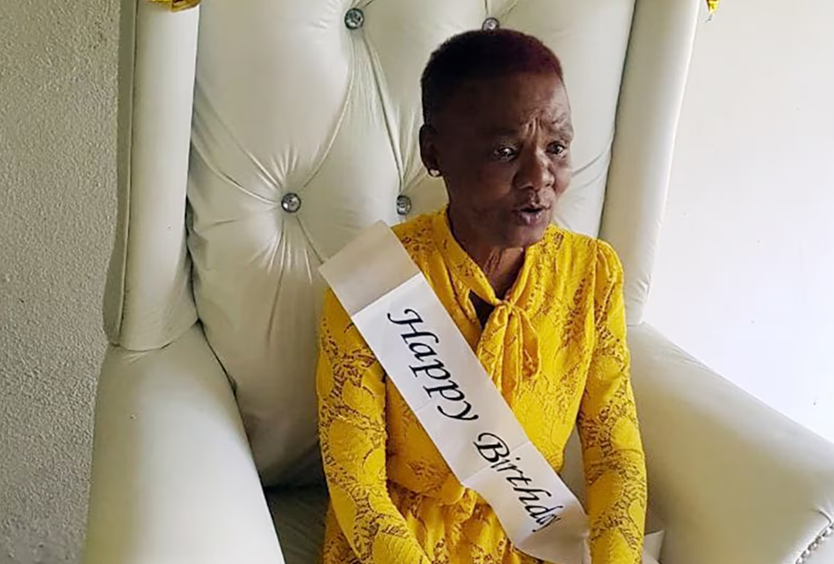
An Mpumalanga woman has told the Mbombela High Court how she lured her mother to a house where a group of people allegedly attacked and killed her for an R80,000 funeral-policy payout.
Nonhlanhla Mthunywa said she stood guard at the door while her mother, Wanter Dlamini, was held down and strangled. She also told the court that earlier attempts to kill Dlamini had failed, including an alleged plan to poison her and another plan to shoot her.
Mthunywa was originally charged with her mother’s murder, but later became a State witness after entering into a plea agreement and confessing to her role. She is serving a 20-year prison sentence.
Her evidence was heard during the trial of her sister, Bathabile Mthunywa, 39, neighbour Nombuso Ndwandwa, 41, and Steen Mashakeng, 36. Mashakeng was Nonhlanhla’s boyfriend at the time of the alleged killing.
The three remaining accused are on trial for charges linked to Dlamini’s murder and rape. Another accused, known as Nkunzi, who was Ndwandwa’s boyfriend, has since died.
The allegations against the accused have not been proved. They remain presumed innocent unless convicted by the court.
The ‘Quick Money’ Plan
Nonhlanhla told the court that the plan began during a conversation with Ndwandwa about making money quickly.
According to her testimony, Ndwandwa suggested that they work together to kill Dlamini and Nonhlanhla’s brother so they could benefit from insurance policies allegedly taken out on their lives.
“She said if I want quick money we must work together and kill my mother and my brother. She sounded serious and said that there was a life insurance on them and we can live a nice life with quick money. A plan was then made.”
The State alleges that the plan was connected to a funeral or life policy that could pay out R80,000. Earlier evidence in the case indicated that a policy had allegedly been taken out in Dlamini’s name without her knowledge.
The court heard that the claim was later stopped after the police became involved. The insurance arrangements and the alleged motive remain part of the State’s case against the accused.
Poisoning Attempt Allegedly Failed
Nonhlanhla said she and Mashakeng went to Dlamini’s house with poison that had allegedly been provided by Ndwandwa.
She told the court that she poured the poison into her mother’s drink. Dlamini took a sip but did not finish it, which made Nonhlanhla suspect that her mother may have noticed something was wrong.
The attempted poisoning allegedly failed, but Nonhlanhla said Ndwandwa was angry when she learned that Dlamini had survived.
“When I told Ndwandwa that my mother did not die, she was very angry and told me that we need to finish her later in the evening.”
Public court evidence has also indicated that insect poison was found in a drink linked to Dlamini. The court heard that Dlamini had noticed that the drink looked different and did not finish it.
The failed poisoning was allegedly followed by a plan involving a loaded firearm. Nonhlanhla said Ndwandwa and Nkunzi arrived at her home and said they needed to “go and finish Dlamini off”.
She testified that the plan was for her to knock on Dlamini’s door. When her mother opened it, Nkunzi would allegedly shoot her.
That plan also changed after Nkunzi heard a small child crying inside the house.
“if they find her (Dlamini) with people in the house everyone must die. So I had set another plan for her to be alone”.
Mother Lured To Her Death
Nonhlanhla said she then came up with another way to get her mother away from other people and into a house where the alleged attackers could act without witnesses.
She lured Dlamini to Mashakeng’s home the following day. The court heard that Dlamini believed she was going there for an ordinary reason and did not know that a plan had allegedly been made to kill her.
According to Nonhlanhla’s testimony, Ndwandwa and Nkunzi arrived at the house and entered through the back door. While Dlamini was still speaking outside the front door, Mashakeng allegedly pushed her into the house.
“Ndwandwa hit her on the head. She screamed once and fell down.”
Nonhlanhla said Nkunzi then attacked Dlamini while Ndwandwa and Mashakeng allegedly restrained her. She told the court that Ndwandwa held her mother’s legs, Mashakeng pressed down on her chest and Nkunzi strangled her.
“Nkunzi went to her and started strangling her while Ndwandwa held her legs to stop her from moving. Mashakeng pressed her down on the chest with his foot. I quickly closed the door and stood guard there while they killed her.”
Nonhlanhla said she knew her mother was no longer moving when Ndwandwa spoke to her.
“When she was no longer moving Ndwandwa said to me, ‘look your mother is dead now’. I nodded.”
The court has also heard that Dlamini was raped before she was killed. The allegation forms part of the charges against the remaining accused, but further graphic details are not repeated here out of respect for the victim and her family.
Plea Agreement And Prison Sentence
Nonhlanhla’s evidence comes after she changed her position in the case and entered into a plea agreement with the State.
She previously faced charges over her mother’s death, but later confessed and agreed to testify against the other accused. The court accepted her plea and sentenced her to 20 years in prison.
The State is relying on her account, together with other evidence, to prove its case against Bathabile, Ndwandwa and Mashakeng. The defence will have an opportunity to challenge her evidence and question whether her testimony is reliable.
Nonhlanhla reportedly told investigators that she struggled to sleep because she felt haunted by what happened to her mother. Her decision to testify has placed her account of the alleged plot before the court in detail.
However, her evidence is not automatically proof of guilt. The court must consider it alongside forensic evidence, statements from other witnesses and the accused people’s versions before making a final decision.
What Happened To Wanter Dlamini?
Dlamini was 62 when she died. Public evidence in the case has indicated that her body was discovered after the alleged killing and that the accused allegedly attempted to create circumstances that would support an insurance claim.
Earlier reports said Dlamini’s body was found near a dumping area in Barberton after family members reported her missing. The State alleges that the group wanted to benefit from a policy connected to her name.
The alleged payout has been described in court as R80,000. While the amount may appear small compared with other insurance-related murder cases, the State alleges that it was enough to motivate the accused to plan the killing and attempt to hide what happened.
The case has also raised questions about how vulnerable people can be targeted through insurance policies taken out without their knowledge. A policyholder may not know that cover has been arranged in their name until a claim is made after their death.
The prosecution is expected to lead further evidence about the policy, the alleged motive, the events at Mashakeng’s house and the actions of each accused person.
Trial Continues
Bathabile, Ndwandwa and Mashakeng have not pleaded guilty to the allegations against them. Their lawyers are expected to challenge the State’s version and test Nonhlanhla’s evidence during cross-examination.
The defence may also question the circumstances of the plea agreement, the sentence imposed on Nonhlanhla and whether she had reasons to shift blame after becoming a State witness.
For the State, the testimony is central because Nonhlanhla allegedly had direct knowledge of the discussions, the failed poisoning attempt and the events at Mashakeng’s home.
For the defence, the key issue will be whether her account can be relied on and whether it is supported by evidence that independently links each accused to the crimes.
The court will ultimately have to decide whether the prosecution has proved its case beyond reasonable doubt. Until then, the remaining accused are legally presumed innocent.
The trial continues in the Mbombela High Court.