Pretoria, Gauteng – The South African Police Service (SAPS) has been plunged into further turmoil as Lieutenant-General Molefe Fani, the divisional commissioner for supply chain management, faces a notice of intention to suspend him. The move comes as the fallout from a controversial R360-million health services tender continues to decimate the upper echelons of the police service, reaching as high as the national commissioner himself.
In a dramatic sequence of events, it has emerged that National Police Commissioner Fannie Masemola had been preparing to move against Fani just days before he was placed on precautionary suspension by President Cyril Ramaphosa. The situation highlights a deepening crisis within the SAPS, where internal power struggles and allegations of systemic corruption have become increasingly public.
Fani, who oversees the awarding of all police contracts, is now at the epicentre of an investigation into the irregular awarding of a lucrative healthcare services contract to Medicare 24, a company owned by controversial businessman Vusimuzi “Cat” Matlala
The contract, awarded in June 2024, was subsequently cancelled after serious procurement violations were flagged.
A Systemic Breakdown or Individual Failure?
The allegations against Fani are multifaceted. Beyond his role in the Medicare 24 tender, investigators are also scrutinising his previous tenure at the National Treasury, where he served as acting chief procurement officer and oversaw the SAPS budget vote.
Appearing before a parliamentary ad hoc committee probing the matter, Fani offered a staunch defence of his actions. He acknowledged that there were failures in the tender process but insisted that he was not personally responsible. Instead, he pointed to a breakdown in the procurement system itself.
“If we were to re-check every single document… it would defeat the purpose of adjudication,” Fani told Members of Parliament
He maintained that at the time the contract was approved, no major concerns were flagged to his committee. “All members indicated they were satisfied with the submission,” he added.
However, internal audit reports suggest a different narrative. Sources within the SAPS claim that Masemola was alerted to the “dodgy character” of the bidder early in the process. A preliminary probe by internal audit allegedly flagged significant irregularities, and Fani was reportedly informed of these findings. Despite these warnings, insiders say no decisive action followed, and the recommended corrective steps were never implemented.
The 'Dirty Dozen' and the Web of Corruption
The Medicare 24 scandal has already led to the arrest of 12 senior SAPS officials, dubbed the “dirty dozen,” who are charged with fraud, corruption, and money laundering. The accused range from brigadiers to major-generals, with investigators alleging a sophisticated manipulation of procurement processes to favour Matlala’s company.
Among those charged is Brigadier Rachel Matjeng, who is accused of referring SAPS members for health screenings to Matlala’s group in exchange for kickbacks. In a recent development, Matjeng’s internal disciplinary process was delayed after she was reportedly admitted to a psychiatric facility—a move some insiders have dismissed as a “delaying tactic”.
The scale of the alleged corruption is staggering. Investigators believe that Matlala effectively “infiltrated” the SAPS, using his connections with senior officers to secure multi-million rand contracts.
The R360-million tender was just one part of a broader network of influence that has left the integrity of the police service in tatters.
A New Leadership, A Cautious Approach
With Masemola now suspended and facing his own criminal trial linked to the same tender, the decision on Fani’s future has been transferred to the newly appointed acting national police commissioner, Lieutenant-General Puleng Dimpane.
Dimpane is described by those who know her as methodical and cautious. “She does not rush. She looks at everything carefully before she acts,” one source said.
While some have criticised her for what they describe as slow decision-making, others argue that her careful approach has helped her remain untainted by the factional battles that have gripped the SAPS leadership.
“People call it inertia, but it’s also why she has stayed clean,” another source remarked.
Dimpane now faces the unenviable task of cleaning up a procurement environment that many believe is riddled with deep-seated corruption.
The Treasury Connection: A Protected Asset?
One of the more intriguing aspects of the case against Fani is the focus on his time at the National Treasury. Fani joined the SAPS in 2022 from the Treasury, where he worked on state spending controls.
Some insiders have questioned why he is being pursued for issues linked to his previous role, suggesting that there may be more to the investigation than mere procedural errors.
“There is speculation that Fani may have knowledge of sensitive matters involving senior officials. He is very smart and highly educated – it will not be easy to take him down,” a top police official suggested.
This has led to concerns that Fani may be a protected asset or that he possesses information that could implicate even more senior figures in government.
A Call for Accountability
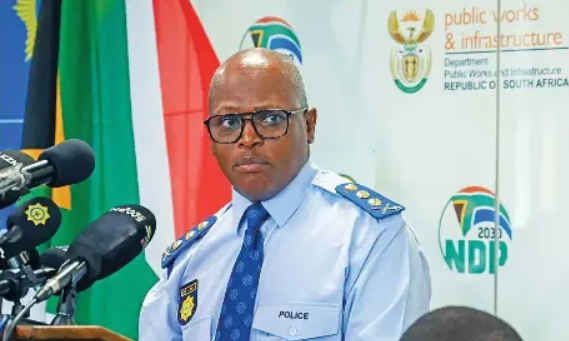
As the SAPS continues to grapple with the fallout from the Medicare 24 scandal, national police spokesperson Brigadier Athlenda Mathe has assured the public that the service is committed to accountability.
“The SAPS confirms that systems are firmly in place to institute disciplinary processes against any members who have been, or may be found to be, involved in wrongdoing, in full compliance with our disciplinary regulations,” Mathe said
She emphasised that these processes are designed to ensure fairness and uphold the integrity of the organisation.
However, for a public that has grown weary of constant reports of corruption within the police service, these assurances may ring hollow. The case of Lieutenant-General Molefe Fani and the R360-million tender scandal is a stark reminder of the long road ahead in restoring trust in the men and women tasked with protecting South Africa.