In the quiet, windswept streets of Grassy Park, a suburban enclave in the Western Cape, a 53-year-old woman is quietly dismantling the stigma surrounding the "burden" of ageing. Estherline Meyer, a former Department of Health employee with a sharp eye for systemic gaps and a heart for the vulnerable, has turned her own home into a sanctuary. She calls it the Leap of Faith Elderly Day Care, but to the families who rely on her, it is simply "Mommy Daycare"—a vital lifeline in a country where the state's provision for the elderly is increasingly described by human rights advocates as a "silent crisis."
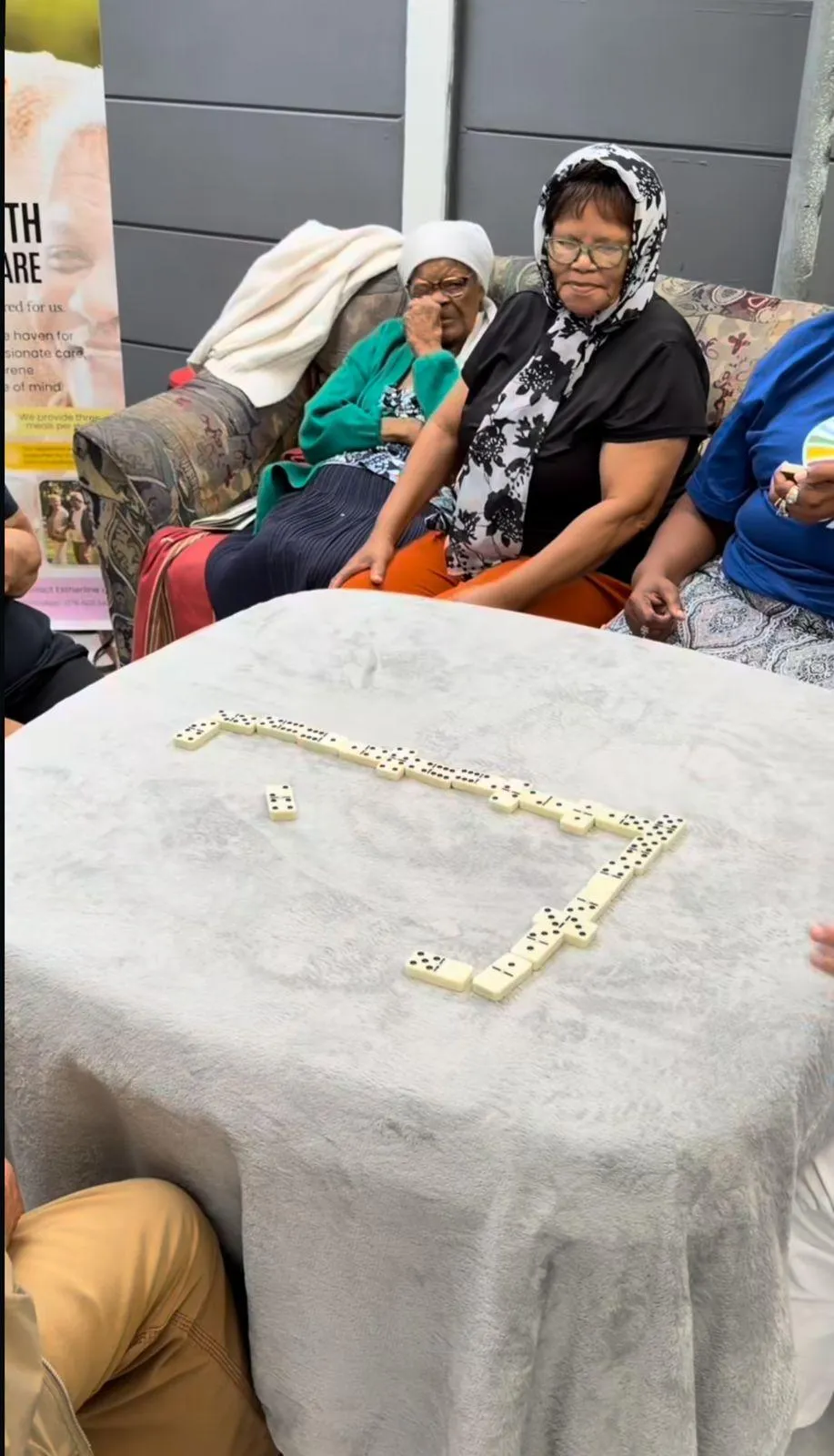
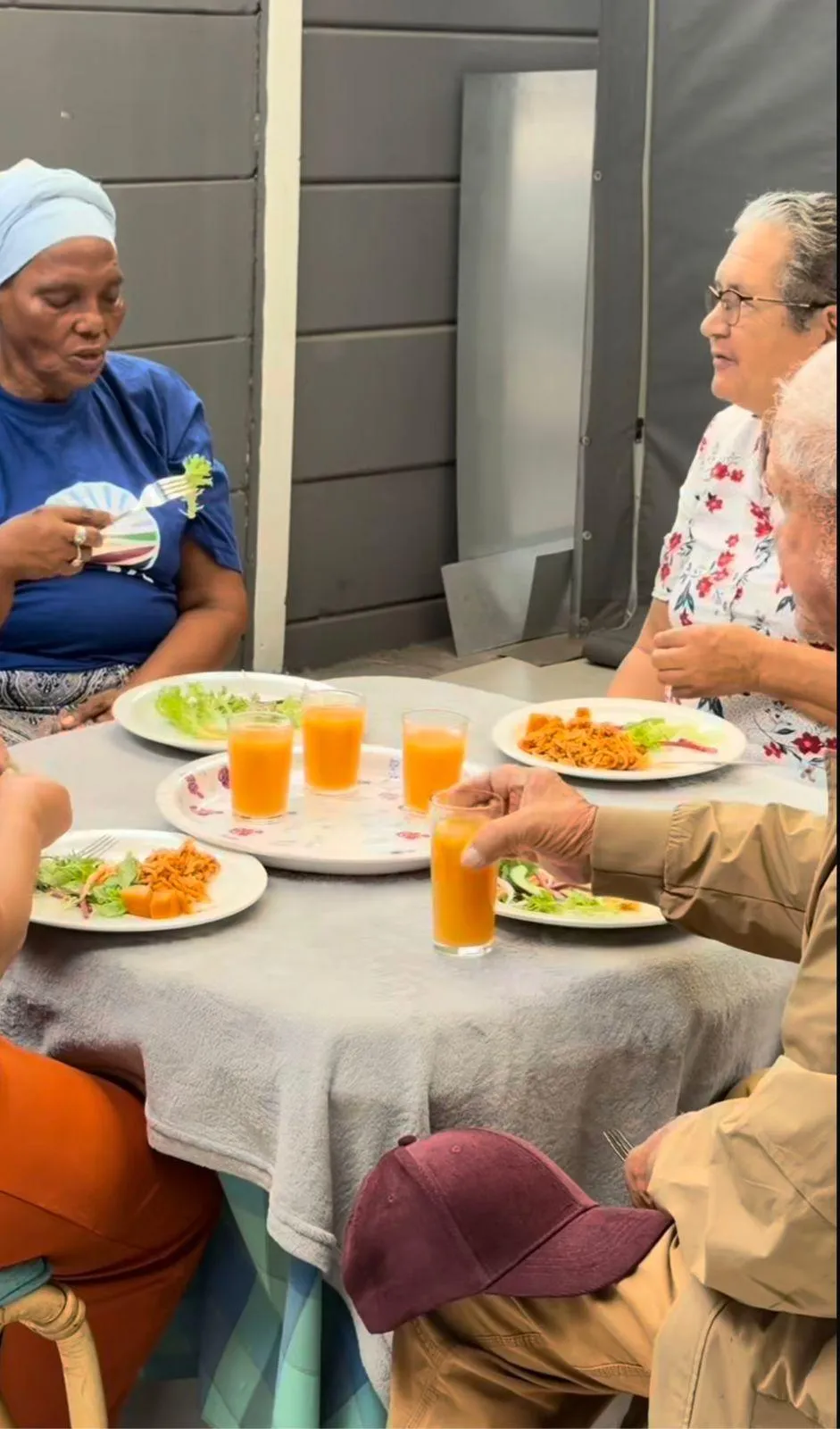
The facility, established in 2024, recently captured the national imagination after a video of its daily operations went viral on social media. The footage—a montage of silver-haired men and women laughing over a "lekker" meal and the rhythmic clack of dominoes—stands in stark contrast to the grim reports often emerging from South Africa's institutionalised care facilities. For many pensioners in the Western Cape, the choice is often between isolated poverty at home or the clinical, sometimes neglectful, environment of overcrowded state-run homes. Meyer offers a third way.
"I had parents, and could identify the need for it," Meyer told the Daily Voice during a recent interview. Her voice carries the weight of personal experience, shaped by years of watching her own parents navigate the complexities of growing older in a society that often prizes youth over wisdom. "As they grow older, they are easily seen as old and forgotten or a burden. We are not frail care. We cater for the elderly that can still walk on their own or with assistance of a walker or stick, and are able to use the bathroom on their own."
This distinction is crucial. While South Africa's healthcare system struggles to manage the "frail" population, there is a massive, underserved middle ground: senior citizens who are physically mobile but cognitively or socially vulnerable. These are the individuals who often fall through the cracks of the social safety net, left to spend their days in front of televisions or in empty houses while their children work to keep the household afloat.
The reality of this struggle is best understood through the eyes of people like Thelma Malan. A resident of Lotus River, Malan spent a year searching for a safe space for her 84-year-old mother, who suffers from a daunting list of ailments: dementia, chronic lung disease, and an irregular heartbeat regulated by a strict regimen of medication. In a landscape where specialised care is either prohibitively expensive or non-existent, Malan's search felt like a descent into hopelessness until a chance conversation at her church led her to Meyer.
"Mom's health, for the most part, is good. We really don't have any issues with her health," Malan explained, her relief palpable. "Although my mom can't always remember that she has been at the daycare, I can see she is in a better spirit and does not look so stressed and sad anymore. I told my sister the first week. I don't know if it is too early to tell, but I think something is busy changing with my mom. I have been looking for an organisation or group for my mom since last year. When I found out about the daycare, it was God-sent."
Malan's story is a microcosm of a broader national failure. A 2023 report by Human Rights Watch highlighted that South Africa is systematically failing to provide hundreds of thousands of older people with access to basic care and support services. The report noted that while the state old-age pension is a vital tool for poverty alleviation, it does not cover the costs of the community-based support services that allow people to age with dignity. Into this void step individuals like Meyer, who operate on a "leap of faith" and the thin margins of community donations.
Operating from Monday to Friday, between 08:00 and 15:00, the daycare provides a structured environment designed to combat the two greatest enemies of the elderly: cognitive decline and social isolation. The "oumas and oupas" who attend the centre are not merely supervised; they are engaged.
"They do different activities during the day, such as cognitive exercises to stimulate the memory, mild physical exercise, singing, dancing, games, and some leisure time," Meyer said. For her, the work is as much about the stories as it is about the care. "I enjoy engaging with them, listening to their stories, and seeing how much joy and laughter it brings them. Talking about it makes me happy."
The importance of these "cognitive exercises" cannot be overstated. In South Africa, where dementia remains under-diagnosed and stigmatised, the Leap of Faith centre provides a rare space where such conditions are managed with patience rather than frustration. Meyer's background in the Department of Health, where she served various communities at healthcare facilities, gave her the professional foundation to handle these challenges. Yet, it is the personal touch—the "Mommy" in the daycare—that sets her model apart.
Thelma Malan describes the peace of mind that comes with knowing her mother is in a place where she is truly "seen." "Estherline is keeping us in the loop of what is happening at the daycare with how mom is involved," Malan said. "I am just so happy, and it makes my heart happy that my mom is at a place where we have peace of mind that Estherline and her team are looking after my mom. It is absolutely amazing."
However, the success of the Grassy Park centre also highlights a troubling trend. As the South African population ages, the demand for community-based care is skyrocketing, but the funding remains stagnant. Reports from the South African Human Rights Commission have repeatedly pointed to the "violation of human rights of older persons" in institutionalised settings, ranging from physical abuse to the systematic withholding of adequate nutrition. The pandemic only exacerbated these issues, with researchers at the University of Cape Town noting that the government "systematically denied" care for the elderly during the global health crisis, leading to physical and mental depletion among family caregivers.
The "silent crisis" of elder care is often overshadowed by the country's other pressing issues—unemployment, crime, and the energy crisis. Yet, for the families in the Western Cape, the struggle is daily and deeply personal. Without centres like Meyer's, many families are forced into an impossible choice: quit their jobs to provide 24-hour care, or leave their elderly relatives in conditions that strip them of their dignity.
Meyer's clients are sourced primarily through social media and word of mouth, a testament to the power of community networks in the absence of formal state referral systems. Her viral video was not just a marketing tool; it was a revelation for many who didn't know such a service existed. It showed that elderly care doesn't have to be synonymous with sadness or "frail care" wards. It can be about dominoes, dancing, and the simple joy of a shared meal.
The sustainability of such initiatives, however, remains fragile. Meyer's operation relies on the goodwill of the community and the dedication of her small team. "Any donations are welcome, or if you want to sponsor an elderly person for the day, please email: [email protected]," she notes, a reminder that the "Angel of Grassy Park" cannot fly on her own.
As we move further into 2026, the story of the Leap of Faith Elderly Day Care serves as both a beacon of hope and a stern indictment of the status quo. It proves that with expertise and empathy, the "golden years" can indeed be golden, even in the face of health challenges like dementia and chronic illness. But it also asks a difficult question: why must the dignity of our senior citizens depend on the "leaps of faith" of private individuals?
For now, in a house in Grassy Park, the dominoes continue to fall, the music continues to play, and a group of oumas and oupas have found a home away from home. They are not forgotten, they are not a burden, and they are certainly not alone. In the hands of Estherline Meyer, they are simply home.
Investigating the National Landscape: The Crisis of Care
While the Leap of Faith centre provides a heartwarming local story, the broader investigative context reveals a starker reality across South Africa. The Department of Social Development's "Active Ageing" programmes, while well-intentioned, often fail to reach the most vulnerable in peri-urban and rural areas.
|
Region
|
Key Challenges in Elder Care (2024-2026)
|
Primary Care Model
|
|
Western Cape
|
High rates of dementia; lack of affordable day-care; urban isolation.
|
Community-led NGOs and private home-care.
|
|
Gauteng
|
Overcrowded state facilities; high cost of private retirement villages.
|
Institutionalised care and family-based care.
|
|
KwaZulu-Natal
|
Rural neglect; lack of transport to healthcare facilities.
|
Intergenerational households; mobile clinics.
|
|
Eastern Cape
|
Poverty-driven neglect; "pension-sharing" where elders support entire families.
|
Subsistence-based family care.
|
The "Mommy Daycare" model is a direct response to the "intergenerational struggle" identified by researchers like E. Moore in 2024. In many South African households, the elderly are the primary breadwinners through their state pensions, yet they are the last to receive specialised care. This "pension-sharing" phenomenon means that any money that could be spent on a daycare centre is often diverted to feeding grandchildren or paying for basic household utilities.
Meyer's initiative is a radical act of reclaiming that space for the elderly themselves. By focusing on "cognitive exercises" and "memory stimulation," she is addressing a healthcare need that the state-run clinics—often overwhelmed by the HIV and TB epidemics—frequently overlook.
The success of her viral video suggests a growing hunger for this type of content and service. In an era of "fake news" and social media cynicism, the sight of elderly people being treated with genuine "lekker" South African hospitality resonated deeply. It challenged the narrative of the "forgotten generation" and replaced it with one of active, joyful participation.
As investigative journalists, we must look beyond the heartwarming visuals. The "Leap of Faith" is not just a name; it is a precarious business model in an economy that is failing its most vulnerable. Until the South African government prioritises community-based elder care with the same urgency it applies to other social sectors, the "Angels of Grassy Park" will remain the exception rather than the rule.
For the families of Grassy Park and Lotus River, however, the politics matter less than the peace of mind. For them, Estherline Meyer isn't just a founder; she is the answer to a prayer they have been whispering for years.