

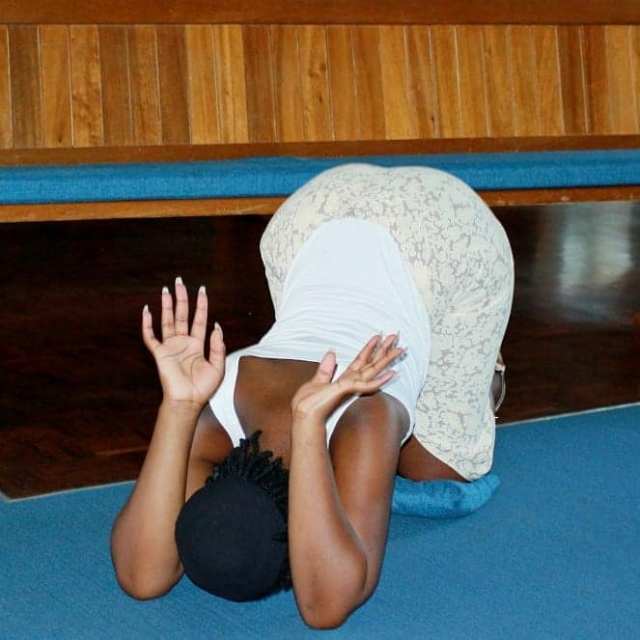
Deep in the rural heart of Dabangu village in Kwamaphumulo, about 30 kilometres north of Kwadukuza, a growing community of roughly 100 people has made a radical choice that is sending ripples of concern through the surrounding area. These individuals have walked away from their worldly possessions, their careers, and even their health to become what they describe as “disciples of Jesus” in a secluded settlement known as ikhaya Labafundi—the Home of the Disciples.
The settlement, a fenced property that is not easily accessible to outsiders, has become a sanctuary for those seeking a life entirely removed from modern society. Here, the rules of the world no longer apply. Men and women have resigned from lucrative jobs, students have abandoned their university degrees, and self-employed entrepreneurs have simply walked away from their businesses. For many, the commitment goes even further, involving the surrender of mobile phones and the embrace of a celibate lifestyle.
The community is led by Reverend Vusimuzi Sibiya, a man who claims to have found the inner peace that eluded him in his former life. Under his guidance, the disciples sustain themselves through subsistence farming, tending to crops of sweet potatoes, mealie meal, avocados, guavas, and amadumbe. The property is dotted with several dwellings and livestock, including cattle, pigs, and chickens, creating a self-contained world where the only greeting permitted is the uniform phrase: “Thank Jesus, he rules and is King.”
Inside the gates, life is defined by modesty and manual labour. Women are seen in headwraps and aprons, wearing modest A-line midi skirts or dresses, moving quietly across the expansive grounds in flat shoes or slippers. The disciples, ranging from young children to the elderly, speak of their new life with a sense of profound pride, despite the sacrifices they have made.
Reverend Sibiya, the architect of this spiritual retreat, is unapologetic about the radical nature of his teachings.
“Here, we have people from different backgrounds who left behind various assets to follow Jesus. Some were successful businesspeople who lacked inner peace, but now they have found it,” he said.
He explained that his followers come from across South Africa, many drawn to the settlement after encountering his teachings on social media. During a visit by journalists, Sibiya gestured towards a group of disciples, who responded with a synchronised round of applause as he stated:
“This is God’s nation, led from heaven. Some have given up comfortable jobs, left their families, and abandoned their studies to come here.”
The extent of this abandonment is perhaps most starkly illustrated by Sibiya’s own family. While speaking to reporters, his daughter entered the room to bring him food. Sibiya pointed to her as an example of the devotion required.
“This one too, I took her out of Grade 11. She thought she would study and become a doctor, but that did not happen,” said Sibiya.
This rejection of formal education is a cornerstone of the ikhaya Labafundi philosophy. A 15-year-old girl, sitting beside her mother, echoed this sentiment, explaining her decision to quit school.
“I quit school because they do not teach what Jesus taught, and I want to do God’s will,” she said.
Perhaps even more shocking is a video seen by Independent Media, which reportedly shows members of the sect burning their hard-earned academic certificates. In their eyes, these documents—once symbols of success and a future—no longer hold any value.
However, it is the community’s approach to healthcare that has raised the most serious alarms. Several members openly admitted to discontinuing life-saving medical treatments in favour of spiritual healing. Thandazile Mwelase, who moved to the settlement from Inanda, north of Durban, revealed that she stopped her antiretroviral (ARV) treatment in 2024, despite having been on the medication since 2022.
“I believe Jesus heals. The word of God says through His suffering we are healed. I have given up everything to follow Him,” she said.
She is not alone. Sibongile Mkhwanazi, originally from Mpumalanga, shared a similar story, stating she had discontinued her ARV treatment in 2024 after 16 years of consistent use.
For others, the sacrifice is about future potential. Ntokozo Mkhize, from Umlazi, chose to walk away from a secured spot at the University of Cape Town (UCT) where he was set to study computer engineering.
“I had been accepted and secured accommodation, but I felt called to follow God. I explained my decision at home, and they understood. I am here to learn about Jesus,” he said.
Mkhize has also renounced romantic relationships as part of his commitment to the sect’s lifestyle.
While the disciples speak of peace, the neighbouring community is far from tranquil. Residents have expressed deep-seated fears about the children living within the settlement who are being denied a formal education.
“What’s even worse is that they openly boast about taking children out of school. Where have you heard of people withdrawing kids from school because of their religious beliefs?” asked one resident, who spoke on condition of anonymity and called for the settlement to be shut down.
There are also allegations of constant noise, with residents claiming that Sibiya uses loudhailers for all-night sermons that frequently continue until dawn.
“He never seems to tire, day and night he is preaching,” another neighbour remarked.
The medical community has reacted with horror to the reports of abandoned HIV treatments. Professor Salim Abdool Karim, the renowned director of CAPRISA (Centre for the Aids Programme of Research in South Africa), warned that such decisions are life-threatening.
“HIV rebounds when treatment stops reaching high virus levels in the blood. When this happens, patients are running the risk of getting sick with Aids, developing tuberculosis and other diseases. As importantly, such patients become infectious when they stop treatment. They can start spreading the virus again, putting their partners and community at risk of HIV.“When Aids patients are on antiretroviral treatment and for several months after they stop treatment, they feel well. They should not mistake this as being cured. Religious prayers may be able to do many things but they cannot cure HIV,” said Abdool Karim.
Despite previous interventions by the Department of Social Development, who reportedly removed Sibiya’s children at one point to ensure they attended school, the children were eventually returned. For now, the gates of ikhaya Labafundi remain closed to the world, as its inhabitants continue to trade their futures for a faith that many on the outside find increasingly dangerous.