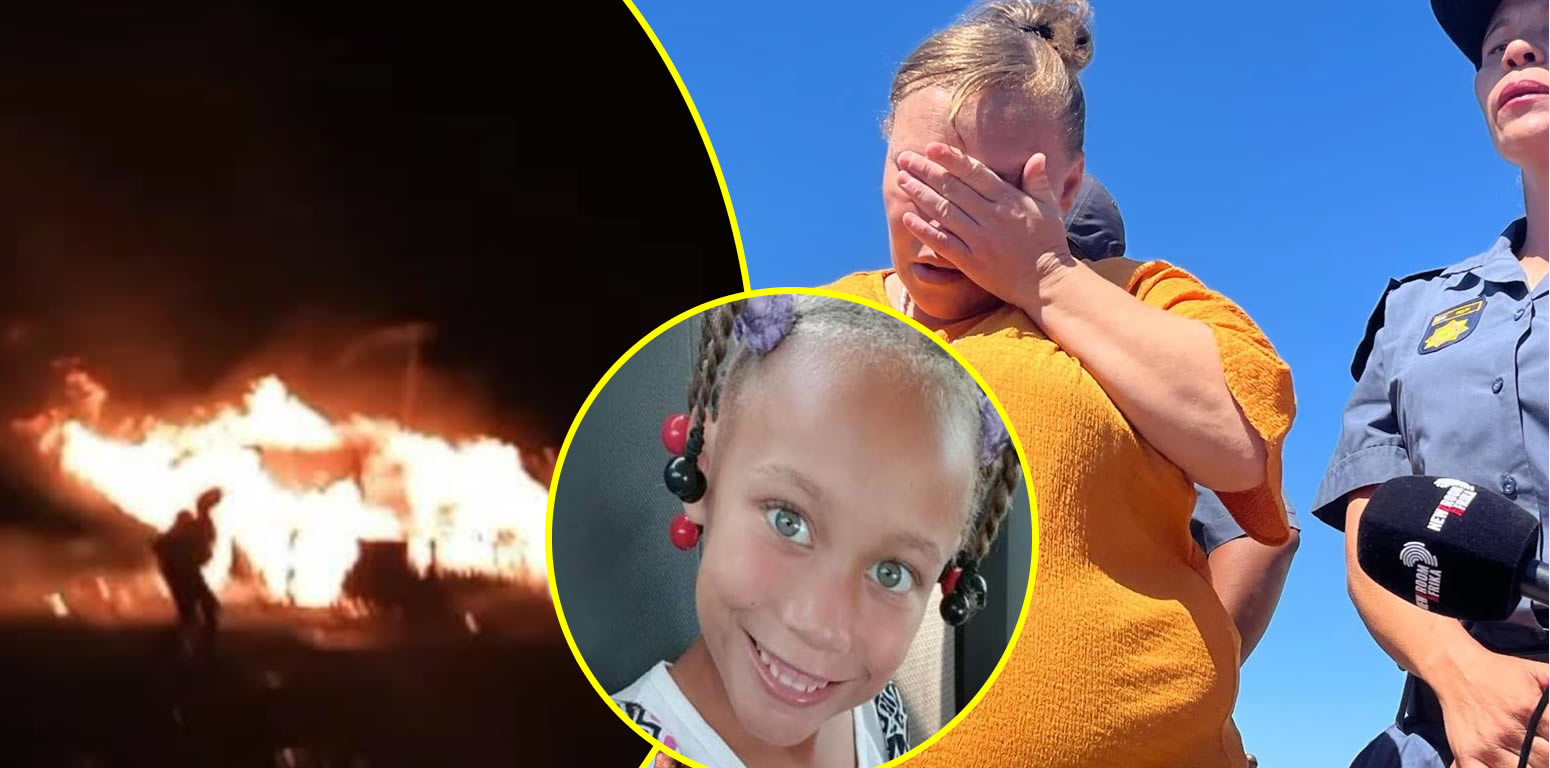
Police mounted a renewed search in the Diazville dunes in Saldanha Bay on Thursday, after claims that blood‑stained clothing linked to missing child Joshlin Smith had been found in the area.
A convoy of police vehicles, including members of the Organised Crime Unit and the K9 Search and Rescue Unit, descended on the sandy stretch near Diazville as detectives moved to test the latest lead in a case that has gripped the West Coast community for more than a year.
The fresh operation follows information that bloodied clothing and other items, believed by some to be linked to Joshlin, were discovered in the dunes. The items were allegedly found by local activist Reverend June Dolly, who played an active role in the early stages of the community‑led search after Joshlin disappeared on 19 February 2024.
Police sources at the scene told News24 they were acting on information that clothing and other items had been recovered in the dunes. Scores of residents gathered at the perimeter of the search zone, watching as officers and dog units moved through the terrain. Some community members were seen assisting officers, combing nearby areas in the hope of finding anything that might point to what happened to the little girl.
Members of the media, however, were barred from entering the core search area. Journalists were kept behind a cordon as police and K9 handlers worked in thick sand and scrub, scanning for any sign that the clothing might be genuine evidence rather than a false lead.
Western Cape police have not yet confirmed whether any of the recovered items belong to Joshlin or whether they will be sent for forensic analysis. At this stage, officers are treating the discovery as unverified information while they gather more facts on the ground.
Western Cape police spokesperson Colonel Andrè Traut confirmed that detectives were indeed in Saldanha Bay to follow up on what he described as recent claims from a community member about the child’s possible whereabouts.
“At this stage, no tangible evidence linked to Joshlin Smith has been found. However, SAPS reiterates that all information received is treated with seriousness and is thoroughly investigated,” said Traut.
He added that since Joshlin’s disappearance, investigators have followed up on multiple tips from the public, none of which has yet provided the crucial breakthrough the case needs.
“All information is rigorously assessed for credibility and evidential value, but unfortunately, none has yielded a breakthrough,” he said.
The renewed search comes against the backdrop of the criminal case that has already seen three people jailed for life over Joshlin’s disappearance. Her mother, Racquel “Kelly” Smith, along with Jacquen “Boeta” Appollis and Steveno van Rhyn, are serving life sentences after being convicted on charges including kidnapping and trafficking related to the missing child.
Despite those convictions, Joshlin herself has never been found. That grim reality has meant that every new tip, sighting or claimed discovery has been met with intense scrutiny from both the police and the community, desperate for answers.
Thursday’s operation in the Diazville dunes reflects that dynamic. Local residents gathered in significant numbers along the edges of the search zone. Many in Saldanha Bay have closely followed the case from the first days after the six‑year‑old’s disappearance, when large crowds joined community‑driven searches along the coastline, open fields and informal dumping sites. 
Reverend Dolly was one of those who became deeply involved in those early efforts. Her reported discovery of the bloodied clothing has again placed her at the centre of developments. While police have not provided details about the nature or appearance of the items she found, the mere suggestion that they might be linked to Joshlin was enough to trigger the deployment of specialised units.
The presence of the Organised Crime Unit underlines how seriously the police continue to treat the matter, even after the criminal trial. The involvement of K9 Search and Rescue suggests that officers are not only looking for clothing but are also alert to the possibility of human remains or other buried evidence.
SAPS has repeatedly urged the public to share any information, but it has also had to sift through large volumes of unverified or inaccurate tips in similar high‑profile cases. In the Western Cape and elsewhere, child disappearance cases frequently draw in well‑meaning but sometimes misinformed reports that can stretch limited investigative resources.
In this context, Traut’s emphasis on testing each lead for “credibility and evidential value” is significant. The statement reflects an attempt to strike a balance between acting swiftly on potential evidence and avoiding raising false hopes or diverting resources based on unsubstantiated claims.
As of Thursday evening, officers had not announced any conclusive findings from the Diazville search. For now, the dunes remain another painstakingly combed‑over site in a long investigation that has yet to answer the central question: where is Joshlin Smith?
Until there is a clear forensic link, the bloodied clothing found in the dunes will remain only a lead among many in a case defined by uncertainty, community involvement and a police investigation that shows no sign of closing, even with three people already behind bars.