

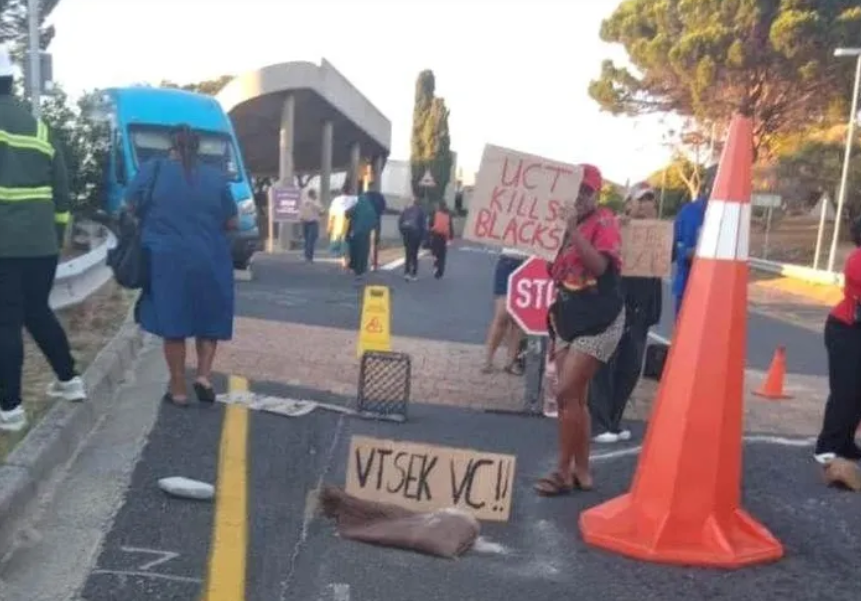
The prestigious University of Cape Town (UCT) has once again become the epicentre of student unrest, as protests over fee blocks and registration holds have erupted, threatening to plunge the institution into chaos. The demonstrations, which have seen students blocking key access points and disrupting academic activities, highlight the ongoing struggle for equitable access to higher education and the financial burdens faced by many South African students. The situation has drawn sharp criticism and calls for intervention from political parties, underscoring the national significance of these recurring issues.
At the heart of the current protests is the plight of approximately 1,400 students who are reportedly facing registration holds due to outstanding fees. Despite various debt relief measures implemented by the university, a significant number of students remain unable to clear their historical debts, effectively barring them from continuing their studies. This has ignited a fierce backlash from student bodies, who argue that fee blocks are a discriminatory practice that perpetuates inequality and denies deserving students the right to education.
Eyewitnesses reported scenes of disruption as protesting students blocked the M3 entrance to the university, a major arterial route, causing significant traffic delays and inconvenience. The visible escalation of these protests signals a deep-seated frustration among the student population, who feel their concerns are not being adequately addressed. The blocking of university access points is a tactic often employed to draw attention to their grievances and pressure management into acceding to their demands.
The demands of the protesting students are clear and multifaceted. They are calling for the immediate scrapping of fee blocks, comprehensive debt relief for financially struggling students, and an increase in adequate housing provisions. The issue of student housing is particularly pressing, with many students from disadvantaged backgrounds struggling to find affordable and safe accommodation in proximity to the university. These demands collectively paint a picture of students battling not just academic pressures but also significant socio-economic hurdles.
The Democratic Alliance (DA) has swiftly responded to the escalating situation, calling on the Department of Higher Education to intervene and address the violent protests on university campuses. The DA’s statement reflects a broader political concern over the stability of tertiary institutions and the impact of prolonged disruptions on the academic calendar and the future prospects of students. The involvement of political parties further elevates the issue from a campus-specific problem to a matter of national policy and governance.
These protests at UCT are not isolated incidents but rather symptomatic of a larger, systemic challenge within South Africa's higher education sector. The #FeesMustFall movement of previous years brought the issue of university fees to the national agenda, and while some concessions were made, the underlying financial barriers to education persist for many. The current demonstrations serve as a potent reminder that the struggle for accessible and affordable education is far from over.
The university management now faces the delicate task of de-escalating the situation, engaging with student representatives, and finding sustainable solutions that address their legitimate concerns while ensuring the smooth functioning of the institution. The balance between maintaining academic integrity and responding to the socio-economic realities of its student body is a tightrope walk for UCT. The outcome of these negotiations will not only shape the immediate future of the university but could also set a precedent for how similar challenges are handled across the country.
As the protests continue, the eyes of the nation remain fixed on UCT, hoping for a peaceful resolution that upholds the right to education for all, irrespective of their financial background. The call for an end to fee blocks and greater support for students is a plea for a more inclusive and equitable higher education system, a cornerstone for the future development of South Africa.