

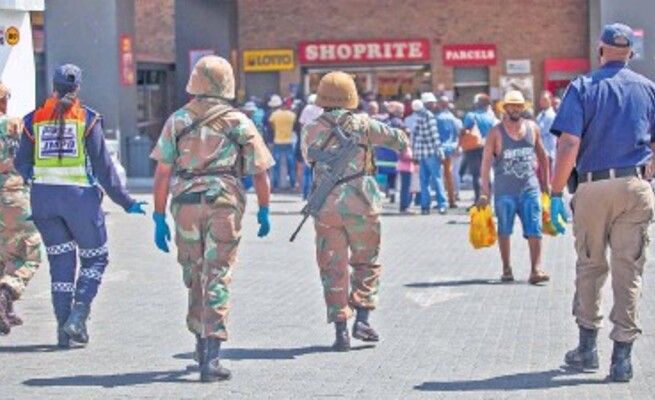
President Cyril Ramaphosa has made a momentous decision, deploying the South African National Defence Force (SANDF) to various hotspots across the country in a concerted effort to combat the escalating crime rate. This significant move sees soldiers being dispatched to the Eastern Cape, the notorious Cape Flats in the Western Cape, and parts of Gauteng, marking a critical escalation in the government's strategy to restore law and order.
The deployment, which is anticipated to commence within the next ten days, is specifically aimed at tackling organised crime, rampant gang violence, and the pervasive issue of illegal mining. The presence of the military alongside the South African Police Service (SAPS) is intended to provide a much-needed boost to law enforcement capabilities, particularly in areas where criminal elements have seemingly gained an upper hand.
The announcement has been met with a mixed bag of reactions from across the political spectrum and the general public. In the Eastern Cape, the news was largely welcomed with a sense of relief and
joy, with many residents expressing hope that the military presence will bring much-needed stability and security to their communities. This sentiment was echoed by Acting Police Minister Firoz Cachalia, who confirmed the SANDF's role in supporting SAPS efforts against gang violence and illegal mining.
However, the decision has not been without its detractors. During the State of the Nation Address (SONA) debate, Economic Freedom Fighters (EFF) leader Julius Malema launched a scathing critique of President Ramaphosa, accusing him of failing to effectively combat crime. Malema's remarks underscore a broader political debate about the efficacy of military intervention in civilian policing and whether it addresses the root causes of crime or merely provides a temporary solution.
The deployment to the Cape Flats is particularly significant, as this area has long been plagued by relentless gang violence, which has terrorised communities and claimed countless lives. Similarly, the focus on illegal mining in Gauteng highlights the growing challenge posed by zama-zamas (illegal miners), whose activities often lead to dangerous working conditions, environmental degradation, and violent clashes. The government's decision to involve the SANDF in these areas signals a recognition of the severity of these issues and the limitations of conventional policing methods alone.
This is not the first time the SANDF has been called upon to assist in domestic law enforcement. Previous deployments have seen soldiers on the streets during periods of unrest or to support anti-crime operations. Each instance sparks debate about the appropriate role of the military in a democratic society and the potential for militarisation of policing. Proponents argue that the SANDF possesses resources and training that can be invaluable in high-risk situations, while critics warn of the dangers of blurring the lines between military and police functions.
The success of this deployment will likely be measured not only by a reduction in crime statistics but also by its impact on public confidence and the long-term stability of the affected regions. It will also be crucial to observe how the SANDF and SAPS coordinate their efforts and whether this collaboration leads to sustainable improvements in safety and security. The coming weeks will be a critical test for this intensified approach to crime fighting in South Africa.