

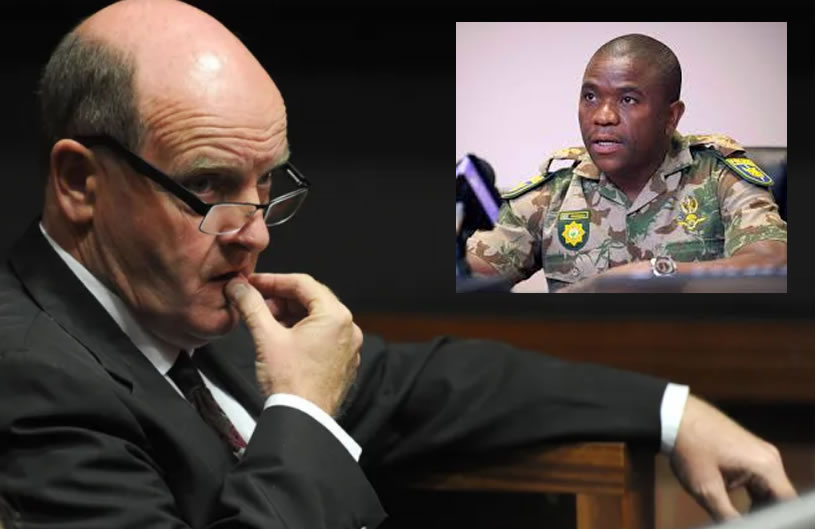
The halls of Parliament are usually filled with the dull hum of bureaucracy, but this Tuesday, the atmosphere shifted into something resembling a high-stakes spy thriller.
Paul O’Sullivan, South Africa’s most famous forensic investigator and the man who famously brought down former police commissioner Jackie Selebi, is back in the spotlight. However, he is not appearing as a casual observer. He is heading to an ad hoc committee under a level of security that suggests he is carrying information explosive enough to shatter the careers of the country’s top police brass.
Why is a private citizen under 24-hour guard just to testify before a committee? The answer lies in what O’Sullivan calls a "declaration of war" against a deep-seated conspiracy within the South African Police Service (SAPS).
Our investigation reveals that O’Sullivan is not merely there to answer questions; he is there to name names and expose a web of lies he claims was spun by the very people meant to uphold the law.
At the heart of his testimony are serious allegations against high-ranking officials, including KwaZulu-Natal Commissioner Nhlanhla Mkhwanazi, Cedric Nkabinde, and former acting commissioner Khomotso Phahlane.
O’Sullivan has never been one to mince his words, and his latest submissions are no exception. He has publicly labelled Cedric Nkabinde a "desperate lying crook," accusing him of intentional fabrication under oath during previous parliamentary sessions.
According to O’Sullivan, Nkabinde’s testimony was a carefully constructed set of lies designed to protect hidden interests and derail legitimate investigations into police corruption. The investigator is expected to provide the committee with a "briefcase" full of evidence that contradicts the official versions of events provided by these top cops.
The tension surrounding this appearance is palpable.
Mkhwanazi has previously made remarks about O’Sullivan that the investigator has dismissed as defamatory and part of a broader campaign to silence him. O’Sullivan claims that these officials have gone to great lengths to implicate him in crimes he did not commit, all in an effort to shield themselves from his relentless probing. He has even linked Nkabinde’s false testimony to a wider plot involving the spying on high-ranking officials to maintain control over the police's investigative arms.
For the ordinary citizen, the complex web of legal jargon and police politics can be hard to follow. To simplify it: O’Sullivan is alleging that a "shadow group" within the police has been lying to Parliament and the public to hide their own misconduct. He believes that the ad hoc committee is the only place where the truth can finally be aired without interference.
If his evidence holds up, it could lead to a total purge of the current police leadership. This is not just a personal grudge; it is an investigative journey into the dark heart of the SAPS, where loyalty to the "system" often outweighs loyalty to the law.
The security measures are not just for show. O’Sullivan has cited numerous threats against his life, particularly linked to his work in KwaZulu-Natal. He has previously refused to appear in person unless his safety could be guaranteed, leading to a standoff with Parliament that only ended when the current tight security arrangements were put in place. The fact that an investigator needs more protection than most cabinet ministers tells you everything you need to know about the danger he faces.
As the hearing begins, the question on everyone’s lips is whether the dominoes will finally start to fall. O’Sullivan’s testimony is expected to be a masterclass in investigative journalism, breaking down how "hidden interests" have managed to keep their grip on power for so long. He is prepared to tell the committee that Mkhwanazi, Nkabinde, and Phahlane lied, and he says he has the receipts to prove it. For the people of South Africa, who are tired of hearing about corruption without consequence, this could be the moment the tide finally turns.
The stakes could not be higher. If O’Sullivan speaks and his evidence is accepted, the shockwaves will reach the very top of South Africa’s security cluster.
We are witnessing a battle for the soul of the police service, and Paul O’Sullivan is right in the middle of it, protected by a wall of security and armed with a truth that many powerful people would rather see buried forever.
This is investigative journalism at its most raw, exposing the conspiracies that citizens were never meant to understand.