

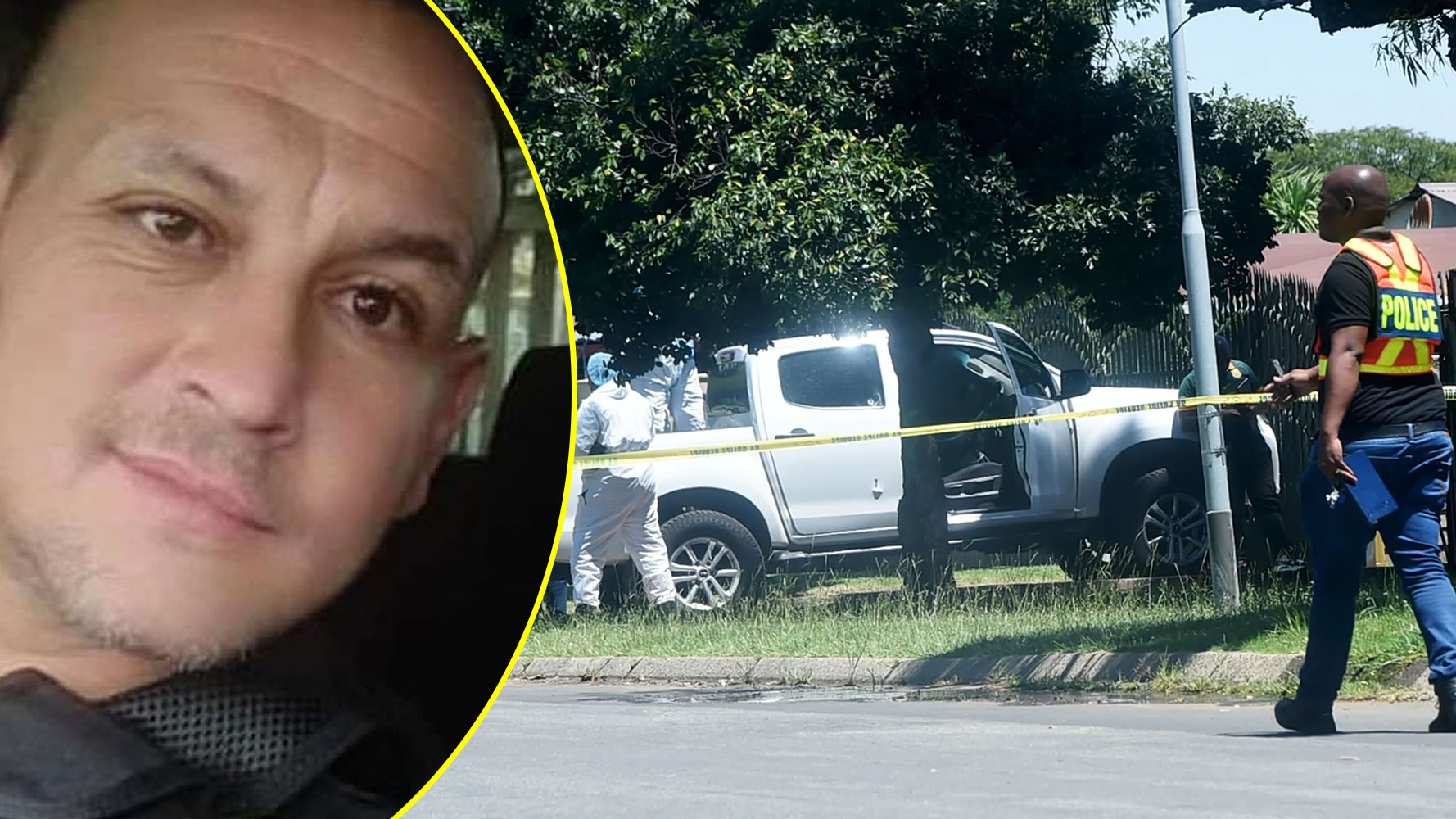
Brakpan, South Africa – The sudden death of police informant Wiandre Pretorius at a Brakpan petrol station has cast a long, dark shadow over the nation's struggle with corruption inside its own police force.
Pretorius, a central figure in the explosive Madlanga Commission hearings, reportedly took his own life on Saturday night, just two days after surviving what he claimed was an assassination attempt. His death silences a key voice, one that was expected to expose a criminal syndicate deeply embedded within the South African Police Service (SAPS).
The official narrative is that Pretorius, 41, shot himself in front of his partner, Sergeant Juan-Mare Eksteen, following an argument. An inquest docket has been opened. However, the timing is profoundly suspicious.
Pretorius was not just a witness; he was a "person of interest" in the murder of another key commission witness, Marius "Witness D" van der Merwe, who was gunned down in December 2025. Furthermore, Pretorius was deeply implicated in the brutal 2022 torture and murder of Emmanuel Mbhense, a case that has become emblematic of the rot within law enforcement.
Police are now openly questioning if the string of deaths is a case of a syndicate "eliminating each other". National police spokesperson Brigadier Athlenda Mathe confirmed that Pretorius was a primary person of interest in van der Merwe's killing. "We had seized his firearms as well as cell phones that are still in police custody of possession for further investigation," Mathe stated, adding, "That particular investigation is still ongoing and it is at an advanced stage."
For the family of Emmanuel Mbhense, the news brings more pain than closure. For three years, they pleaded with authorities for answers about the death of the 51-year-old father of five.
They only learned the horrifying details of his final hours when Van der Merwe testified before the Madlanga Commission, admitting his own role in the crime. Mbhense was tortured at his home in Brakpan on 15 April 2022, and suffered blunt force trauma to the head before his body was dumped in the Duduza dam in Nigel.
"For a long time, we lived with unanswered questions, not knowing how he died, what transpired exactly,” said Mbhense’s brother, Nhlanhla. “The truth only started to surface before the commission. It forced us to relive the horror of his final moments in public, surrounded by strangers. Receiving such devastating news at the same time as everyone else has been very painful."
The family's long wait for justice has been marked by repeated assurances from SAPS and the Independent Police Investigative Directorate (IPID) that arrests were "imminent," yet none have materialised. Their ordeal highlights a devastating failure within the justice system, a system that now appears to be consuming its own.
The Madlanga Commission: A Promise Under Threat
Established in July 2025 by President Cyril Ramaphosa, the Judicial Commission of Inquiry into Criminality, Political Interference, and Corruption in the Criminal Justice System, known as the Madlanga Commission, was meant to be a turning point. Chaired by retired Constitutional Court Justice Mbuyiseli Madlanga, its mandate is to probe explosive allegations by KwaZulu-Natal Police Commissioner Lieutenant General Nhlanhla Mkhwanazi of a sophisticated criminal syndicate that has infiltrated police, prosecution services, and intelligence structures.
The commission’s interim report, delivered in December 2025 after hearing from 37 witnesses, painted a grave picture of institutional decay. It identified wrongdoing by senior officers in the SAPS and the Ekurhuleni Metro Police Department (EMPD), referring major generals, brigadiers, and a sergeant for urgent criminal investigation and suspension.
Pretorius’s testimony was anticipated to be a cornerstone of the commission's next phase. He was reportedly on the verge of revealing the location of hidden documents detailing a conspiracy between police units and organised crime, including the payment of "protection money" to senior officers by zama zama leaders and drug lords. His death is not just a personal tragedy but a calculated blow to the heart of the commission's work. It raises a chilling question: who stands to gain the most from his silence?
A Culture of Brutality and Impunity
The Mbhense case offers a terrifying glimpse into the "hit squad" culture that has been allowed to fester within parts of South African law enforcement. Van der Merwe’s testimony implicated Pretorius in the murder, which was allegedly carried out on the orders of suspended EMPD deputy chief Julius Mkhwanazi. Mkhwanazi has acknowledged being at the scene but denied wrongdoing, claiming he was merely celebrating the recovery of stolen goods.
This culture is not new. Experts point to a long history of "trigger happy" units who believe the justice system is too corrupt to hold criminals accountable, appointing themselves judge, jury, and executioner. One former reservist described a unit where members would "torture, use excessive, brutal force and alter evidence at a crime scene." These rogue elements often operate with a sense of impunity, believing they are "untouchable."
The funding for such operations allegedly comes from secret "slush funds" within Crime Intelligence, originally intended for national security but repurposed for political surveillance and eliminating "troublesome" individuals. Former IPID head Robert McBride has testified about how control of these funds makes some within Crime Intelligence feel "invincible," leading to manipulation and corruption. This toxic environment, as one analyst from the Institute for Security Studies (ISS) described it, is one of "personality clashes, corruption, and years of toxic internal politics" where command-and-control systems have completely broken down.
Witness Protection: A System in Crisis
Pretorius’s death, following an assassination attempt just days earlier, throws South Africa's failing witness protection programme into stark relief. Despite the clear and present danger, the state seemingly failed to provide adequate protection. This is a recurring and tragic theme. Security expert Willem Els from the ISS notes that many potential witnesses hesitate to come forward because they feel vulnerable, allowing criminals to flourish.
The reality of witness protection is far from the cinematic image of bodyguards and safe houses. "Most witnesses are relocated to environments far removed from their familiar surroundings, often in small, isolated towns where anonymity is an absolute necessity," Els explained. "They are stripped of their normal lives; they cannot attend work, engage with family members, or maintain contact with friends." The profound isolation leads many to abandon the programme, often with fatal consequences.
The failure is systemic. Adv. Gerrie Nel of AfriForum's Private Prosecution Unit, which is now representing the Mbhense family, has accused IPID of shielding implicated officers from prosecution. In a letter to IPID, Nel wrote, "We view this as a stratagem to conceal from the public the extent of criminal activity in which members of law enforcement agencies are involved."
Unanswered Questions
As the dust settles at the Brakpan petrol station, a host of critical questions remain, demanding answers if public trust in the justice system is to be salvaged:
1. Why was Wiandre Pretorius not in protective custody? After surviving a clear assassination attempt where his vehicle was hit with 16 bullets, why was a key witness in multiple murder cases and a high-level commission left so exposed?
2. Is there a coordinated effort to eliminate witnesses? With the deaths of Van der Merwe and now Pretorius, are we witnessing a systematic purge by a police syndicate to silence anyone who might testify against them?
3. What is the status of the investigation into Emmanuel Mbhense's murder? For nearly four years, his family has been told arrests are "imminent." Why has no one been charged, despite public testimony admitting involvement?
4. Will the Madlanga Commission be able to proceed effectively? The death of a pivotal witness is a major setback. Can the commission protect its remaining witnesses and ensure the truth is not buried with the dead?
5. Who are the senior officials involved?. Pretorius was allegedly ready to expose high-ranking officers. Will their identities ever be brought to light, or will his death ensure their continued impunity?
The death of Wiandre Pretorius is more than a suicide; it is a symptom of a deep-seated disease within South Africa's law enforcement. For the sake of the Mbhense family, and for the very soul of the nation's justice system, the Madlanga Commission must press on, undeterred, and unearth the chilling truth that Pretorius was silenced for.