

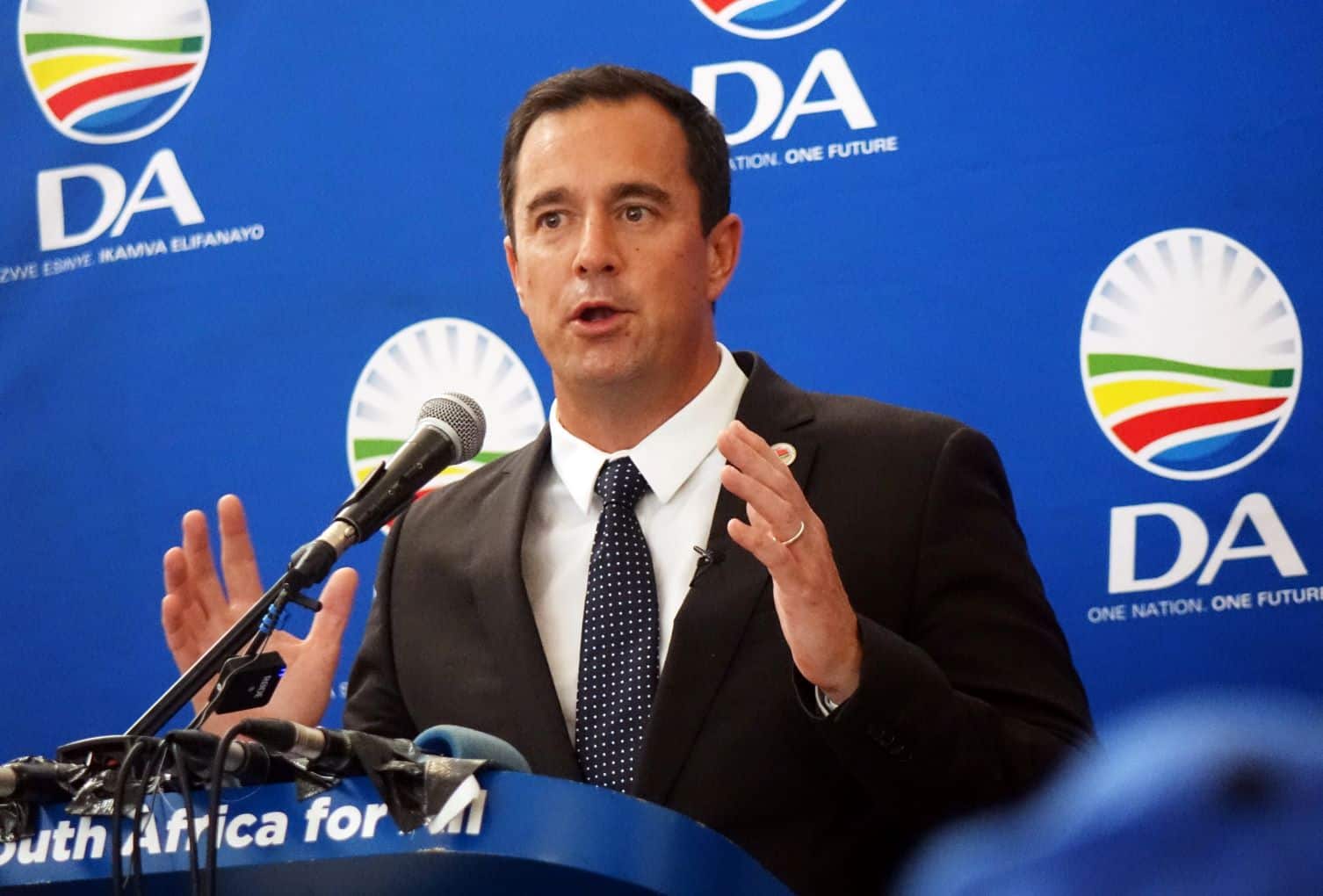
Durban – In a move set to radically alter the landscape of South African opposition politics, John Steenhuisen is expected to announce his withdrawal from the Democratic Alliance (DA) leadership race today. The decision, which insiders describe as a "dramatic twist," is likely to ignite a fierce contest to replace him just months before the party’s elective conference in April.
Until very recently, Steenhuisen’s re-election was generally regarded as a given by some party insiders and analysts. Having thrashed former Johannesburg mayor Mpho Phalatse by 84% to 16% in April 2023, he seemed secure in his position as the "DA boss". However, several party insiders have told Business Day that today’s expected announcement is the culmination of mounting tension that has progressively weakened Steenhuisen’s authority in the party.
The DA has confirmed that Steenhuisen will address the media in Durban, in his home province of KwaZulu-Natal, on matters of “national importance and public interest”. DA insiders said the timing and location are intended to allow Steenhuisen to shape the public narrative of his departure, even as he is being eased out internally, framing his exit as voluntary and statesmanlike rather than the product of internal pressure.
Political analyst Wayne Sussman described the expected withdrawal as a "dramatic development", noting that Steenhuisen had been widely viewed as the presumptive frontrunner. Sussman said donor dynamics played a significant role and the leadership contest unfolding ahead of the 2026 local government elections would be critical in shaping the DA’s positioning within coalition politics and the Government of National Unity (GNU).
Behind the scenes, Steenhuisen has faced sustained pressure. This intensified following allegations raised by former minister of forestry, fisheries & the environment Dion George regarding party spending. While the claims were not formally adjudicated, insiders said they deepened mistrust within senior ranks and sharpened existing factional divisions. The friction between the two senior DA leaders culminated in George’s axing as minister by President Cyril Ramaphosa and his eventual resignation from the party.
At a government level, the tension was significantly worsened by dissatisfaction over Steenhuisen’s handling of the foot-and-mouth disease outbreak. Reporting by the Sunday Times indicated that frustration is particularly acute among Afrikaner constituencies and agricultural donors, with senior figures describing the episode as the “final straw” for critics already uneasy about Steenhuisen’s leadership style.
Agricultural economist Wandile Sihlobo, speaking to Business Day, noted that while farmer anger over the outbreak is understandable, vaccine procurement and disease monitoring must remain under strict state control to protect South Africa’s export markets. Critics in the DA, however, argue that the department of agriculture under Steenhuisen failed to deliver a sufficiently clear and co-ordinated response, undermining confidence among farming communities and donor networks sensitive to biosecurity risks.
Against this backdrop, reports suggest that meetings among senior DA leaders were convened to broker a "dignified" exit for the current leader.
Attention has now shifted to succession. Cape Town mayor Geordin Hill-Lewis is widely regarded as the frontrunner, though DA insiders said he is “reluctant” as he wants to remain Cape Town mayor. While Hill-Lewis previously said he would not contest the leadership while Steenhuisen remained in the race, insiders said the dynamics have shifted.
Speaking to the Financial Mail in January, Hill-Lewis argued that the GNU needs to "turbocharge" reforms, warning that progress on unemployment, poverty and fiscal strain is too slow. His popularity and governing record make him a strong contender, but there is growing caution about his reluctance to leave the mayoralty prematurely. Hill-Lewis governs Cape Town with a stable majority and would be trading a secure executive position for a role within a GNU whose long-term stability and electoral future beyond the next cycle remain uncertain.
That uncertainty has reopened discussions about alternative candidates. Names circulating within party structures include basic education minister Siviwe Gwarube, former Tshwane mayor Cilliers Brink and Gauteng provincial leader Solly Msimanga. While none has formally declared, insiders said Hill-Lewis’ hesitation could prevent an uncontested succession and force a broader leadership contest.
Former DA leader Tony Leon weighed in on the significance of the moment. "In its 25 years, the DA has had four leaders," he said. "Two, Helen Zille and myself, left in uncontroversial circumstances and at a time of our choosing; one did not, Mmusi Maimane."
Leon added: "If John Steenhuisen announces that he is stepping aside, how he does so and the manner of his departure will indicate how uncontroversial that exit really is." When asked who would be best suited to lead the DA, Leon was clear: "Geordin Hill-Lewis, though I’m not trying to influence [the] outcome."
According to political analyst Jonathan Moakes, Steenhuisen’s expected withdrawal is likely to narrow rather than widen the contest, with Hill-Lewis emerging as the most probable successor. Moakes argues that the DA will prioritise avoiding a divisive leadership battle.
He said Steenhuisen is positioned to exit on more controlled terms than Maimane, with his status as a GNU minister making it likely he will retain his cabinet role beyond April—an outcome Moakes said would not occur without the involvement of Federal Council Chair Helen Zille. While a leadership change is unlikely to alter the DA’s short-term participation in the GNU, Moakes noted that the choice of successor will signal whether the party adopts a more oppositional posture or maintains its present governing stance ahead of the next electoral cycle.