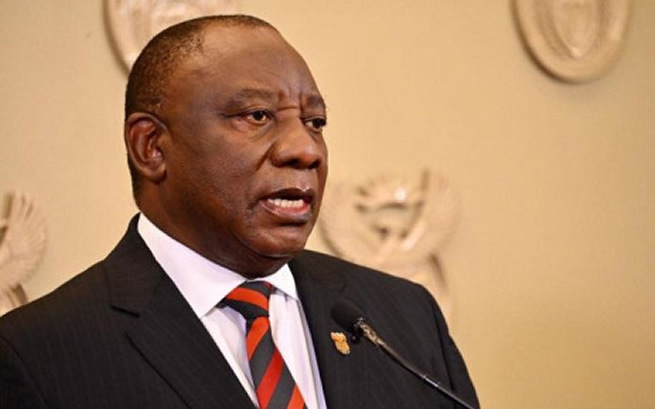
President Cyril Ramaphosa may yet find himself having to explain, directly to Parliament, why a key unit set up to deal with political killings was disbanded, as pressure grows over alleged criminal infiltration, corruption and political interference in South Africa’s criminal justice system.
The Ad Hoc committee appointed to probe these claims is now considering whether to call the president as a witness in connection with the closure of the Political Killings Task Team (PKTT) – a unit that was meant to focus on politically‑motivated murders, especially in hotspots such as KwaZulu‑Natal and Mpumalanga.
Committee chairperson Soviet Lekganyane confirmed that Ramaphosa’s name, together with those of two senior police generals, will be sent to Parliament’s legal advisers for a formal assessment. This step will determine whether the president must physically appear before MPs or whether he will be allowed to respond in writing.
“These three names; General Khan, General Moodley, and the name of the president, will be forwarded to the legal team for assessment. And the legal team, based on the materiality of facts, that would have been presented before the committee, will then conduct that assessment of these potential witnesses and come back and report to the committee, including suggestions on whether they will want them to make a physical appearance or written submissions,” says Lekganyane.
At the heart of the matter is the disbandment of the Political Killings Task Team, which was established to deal with a wave of assassinations linked to local politics, intra‑party battles and contestation over lucrative state tenders. The committee is probing whether that decision weakened the state’s ability to respond to a crisis that has, for more than a decade, stained South Africa’s democratic credentials.
Why the Political Killings Task Team matters
The PKTT was set up in response to a long and bloody history of politically‑linked murders, many of them involving councillors, party branch leaders and activists who stood in the way of corrupt networks or local patronage systems.
KwaZulu‑Natal, in particular, has been singled out in several reports – including the Moerane Commission of Inquiry – as a province where political assassinations have become a tool of competition inside and between parties. Although the original article does not spell out the PKTT’s full history, public records and media reporting show that specialist teams were assembled over time to focus on these killings, often working with crime intelligence and detectives from the Hawks.
Critics of the decision to wind down such dedicated capacity argue that, without a focused team, investigations into political murders risk being treated like ordinary violent crime cases. This, they say, is dangerous in a context where hitmen are often hired by powerful figures with deep pockets, and where witnesses are easily intimidated or eliminated.
By drawing Ramaphosa and top police generals such as General Khan and General Moodley into its line of questioning, the Ad Hoc committee is signalling that it wants clarity on who authorised the disbandment, what reasons were given at the time, and whether proper safeguards were put in place to ensure that political killings would still receive high‑priority attention.
Parliament’s Ad Hoc committee turns up the heat
The Ad Hoc committee was established against a backdrop of rising concern that criminal networks have penetrated law enforcement institutions, and that corruption and political interference are undermining the police, the Hawks and the broader criminal justice system.
Its mandate covers allegations that:
- Criminal syndicates have infiltrated state security and policing structures.
- Senior officials and politicians may have interfered in investigations.
- Structural decisions, such as closing specialised units, may have been taken for reasons that had little to do with public safety.
Within that wider brief, the closure of the PKTT has emerged as a key issue. MPs on the committee have already heard evidence from various witnesses about the scale of political violence and the serious challenges investigators face in bringing masterminds, not just gunmen, to justice.
The possible appearance of the president would mark a rare moment of direct executive accountability to a specialised parliamentary structure on a specific operational decision affecting the fight against political killings. Whether he is called in person or responds in writing, Ramaphosa would be expected to state what advice he received, how Cabinet was involved (if at all), and what oversight he exercised when the task team was shut down or reconfigured.
Legal team to decide next steps
For now, the process remains in the hands of Parliament’s legal advisers, who must give guidance on how best to proceed with the three potential witnesses named by Lekganyane: General Khan, General Moodley and President Ramaphosa.
Their task will be to examine the evidence already placed before the committee and determine:
- Whether these individuals hold information that is material to the committee’s terms of reference.
- Whether their testimony is necessary and proportionate.
- Whether any constitutional or procedural issues arise from summoning a sitting president.
Once the legal team has completed its assessment, it will present its recommendations to the committee, which will then decide whether to issue formal invitations or summonses, and in what form the evidence should be given.
If the legal view is that written submissions are sufficient, the president and the generals may be invited to submit sworn statements addressing specific questions. If, however, the advisers support in‑person appearances, MPs could have the opportunity to question them directly in a public sitting.
Political killings and criminal capture back in focus
This latest development comes at a time when South Africa is once again grappling with high‑profile assassinations and alleged political hits – from councillors and whistle‑blowers to figures in the taxi and construction industries. Parallel to this, there have been ongoing revelations about the extent to which criminal interests may have infiltrated the police and other institutions, a theme that also featured heavily in the State Capture Commission.
Against this backdrop, the decision to dissolve a specialist political killings structure has drawn sharp scrutiny. Families of victims, civil society groups and analysts have for years complained about slow progress in solving such cases, arguing that impunity only encourages more violence.
The Ad Hoc committee’s work, and its move to consider bringing the president into the frame, reflects a growing demand for clear answers on how policy choices and structural changes inside the security cluster have affected the state’s ability to tackle politically‑linked crime.
Ramaphosa’s accountability test
If Parliament’s legal team recommends a direct appearance and the committee agrees, Ramaphosa would face pointed questions from MPs about the PKTT and his broader oversight of the criminal justice system at a time of deep public concern.
For the presidency, this presents both a risk and an opportunity: a risk, because any perceived evasiveness could damage already fragile trust in the state’s commitment to tackle political violence; an opportunity, because full and transparent engagement could help clarify how and why the task team was disbanded and what, if anything, has replaced it.
For now, all eyes are on Parliament’s legal advisers. Their assessment of the names put forward by Lekganyane – “General Khan, General Moodley, and the name of the president” – will decide whether South Africans get to watch their head of state, and the generals under him, account in detail for a decision that may have reshaped the country’s response to political killings.