South African officials are battling to reach two seriously wounded young men caught up in Russia’s war on Ukraine, as a bitter stand-off with the Wagner Group and allegations of high-level betrayal block efforts to bring them home.
After weeks of tense talks, Moscow has now given Pretoria a fresh undertaking that South African diplomats in Russia will be allowed access to the pair, who were severely injured after being “sold into combat” in Ukraine.
The commitment, confirmed late this week by Chrispin Phiri, spokesperson for the Department of International Relations and Cooperation (Dirco), has raised cautious hope that consular officials may finally be able to visit the men.
Yet diplomats have repeatedly been frustrated in recent weeks. Despite earlier assurances from Russian authorities, attempts to locate and see the injured South Africans have been hampered by the fact that they are not in the formal custody of the Russian Armed Forces, but under the control of the Wagner Group.
The notorious, state-funded paramilitary outfit has moved the men between a Moscow hospital and regional medical facilities, making it difficult for Pretoria’s consular staff even to confirm their exact whereabouts, let alone see them in person.
According to government sources, one of the young men has had his left foot amputated after being wounded in combat and still requires further surgery. The second injured man, in a message to a relative this week, said he was lying in hospital but had yet to receive treatment.
“The doctors are examining me, but I am also still waiting to come back from the holidays,”
his message read.
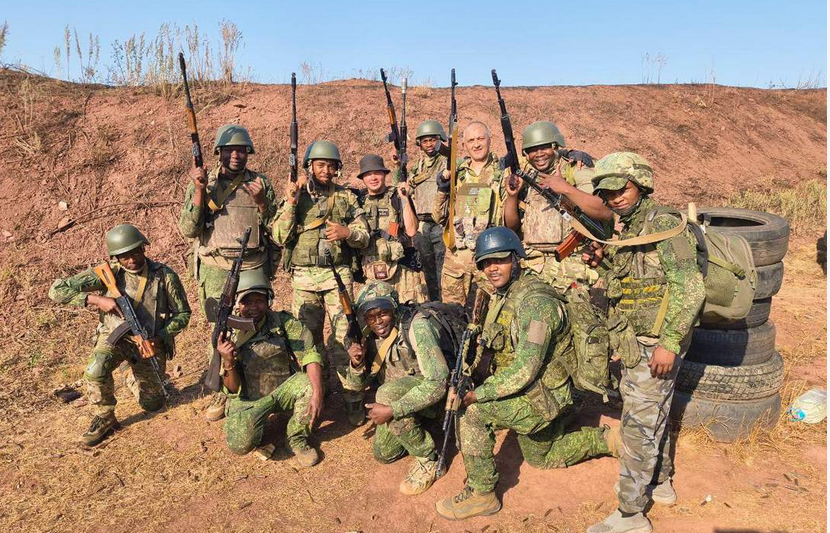
The names of the two have been withheld out of respect for their families, but they are part of a larger group of 17 South Africans who told News24 they were lured to Russia in July under false pretences. They say they were promised training as bodyguards for Jacob Zuma’s uMkhonto weSizwe (MK) Party, only to find themselves pushed towards the frontline in Ukraine’s Donbas region.
Several of the men have described harsh conditions near the frontline and deep despair at being unable to return home.
It has now emerged that securing their release hinges on a money demand. Government sources say that when South African negotiators engaged their Russian counterparts, they were told the Russian state, in principle, had no objection to the men being released. However, the final say rested with the military contractors who recruited them.
At that point, the Wagner Group demanded that it be refunded the money it claims to have paid to the families of some of the recruits. Though there is no precise figure, officials say the amount runs into millions of US dollars. It remains unclear who received this money.
News24 spoke to several of the men and their relatives, all of whom flatly denied that any such payments reached their families.
One of the men said:
What money? This is news. Our families did not receive any money.
He added:
“If money had been sent to our families, they would have told us a long time ago. By now, they would have spoken out and [we would have] told them to return that money so that we can come back home.”
Insiders say these denials support a growing belief within government that the money went instead to members of the Zuma family or individuals who worked with Zuma’s daughter, Duduzile Zuma-Sambudla, in recruiting the young men.
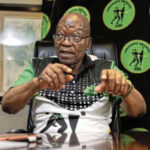
News24 previously reported that senior officials have been in contact with the Zuma family – including the former president himself – to help break the deadlock and secure the group’s release.
A government source with insight into the negotiations said that, on arrival in Russia, the young men were paid the equivalent of about R80 000 each by the Wagner Group, on the condition that most of that stipend be spent in Russia. This meant they had very little to send home. Crucially, this allowance is not the money Wagner now wants refunded.
The refund demand has left the South African state facing what one well-placed insider described as a “twofold dilemma”. On the one hand, there is urgency to get all 17 men back, as officials believe their lives are in danger on or near the frontline. On the other, the state is deeply reluctant to pay what would amount to a ransom.
He said:
The entire process was unlawful from the start and the government had no role in it. A criminal investigation is ongoing. So for the state to pay for their return would pose ethical questions.
He added that the men were effectively “sold into combat”.
Moscow’s stance is also under scrutiny. For years, Russia maintained ambiguity about its relationship with Wagner. But after the 2023 death of the group’s leader, Yevgeny Prigozhin, President Vladimir Putin acknowledged that the outfit was fully funded by the state, and it is now widely understood to fall under the Russian defence ministry’s control, even if it remains a separate legal entity on paper.
“One supposes they have some plausible denial,”
a South African diplomat remarked wryly.
Back home, the MK Party has tried to distance itself from the scandal, placing the blame squarely on one alleged recruiter, Blessing Khoza. Party spokesperson Nhlamulo Ndhlela told News24 recently:
“Khoza was the recruiter.”
Ndhlela said Zuma-Sambudla – whom the men have directly implicated in recruiting them for the Russian war effort – claimed in an affidavit to police that Khoza was the driving force and had “duped” her.
The Hawks have confirmed that Zuma-Sambudla opened a fraud case against one of the people allegedly involved in the recruitment scheme. At the same time, she is herself under investigation for allegedly helping to recruit South Africans to fight for Russia through a sham bodyguard course. In her affidavit, she insisted she was not the driving force and had been “duped”.
Her legal troubles do not end there. The case is being probed alongside a complaint laid by her half-sister, Nkosazana Bonganini Zuma-Mncube, who told police that eight of the 17 men are members of her family. She accused Zuma-Sambudla of contravening both the Prevention and Combating of Trafficking in Persons Act and the Regulation of Foreign Military Assistance Act.
Several of the recruits reported that, once in Russia, they were pressured to sign contracts written only in Russian, a language they do not understand.
A well-placed government source told News24 that Khoza is believed to be in Russia and to have obtained Russian citizenship. Efforts by News24 to reach him have so far been unsuccessful.
Jacob Zuma, in a letter to the Russian defence ministry in September, referred to a South African who had served in the Russian army and helped recruit the men, although he did not name the person.
Meanwhile, families of the 17 men are growing increasingly anxious. On Friday, they were expected to meet KwaZulu-Natal premier officials in Pietermaritzburg, but none turned up. A source close to the families told News24 they had intended to seek a status update on their loved ones and highlight the “daily challenges” the men are facing in Russia.
“Some of the men said they were hallucinating, while some had ailments and mental challenges,”
the source said.
The families also wanted advice on their legal rights, including whether and how to open criminal cases with the police.
South Africa’s group of 17 is not alone. The Wagner Group has been aggressively recruiting young Africans for Russia’s war, often with promises of jobs or study opportunities. Two young men from Botswana, aged 19 and 20, were similarly lured with offers of education in Russia. Their fate is currently unknown.
For now, South African consular officials are still trying to track the movements of the two wounded men and secure access to them, even as the larger battle – over money, responsibility and the lives of 17 young recruits – drags on in Moscow’s corridors of power.