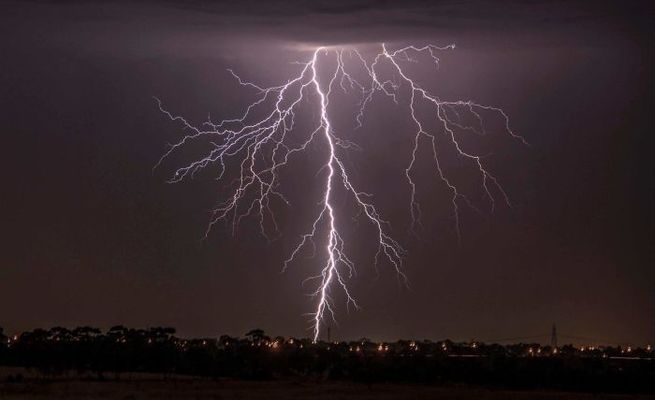
The South African Weather Service (SAWS) has raised critical safety warnings following reports that 40 individuals were struck by lightning in Majaneng, a rural village near Hammanskraal, Gauteng. The severe incident occurred during a fierce thunderstorm that unleashed nearly 2,000 lightning strikes in the region.
The weather service noted that the lightning activity was particularly intense between 12 pm and 10 pm on 3 January, with monitoring systems registering 1,830 strikes during that timeframe. The most alarming hour was identified as between 5 pm and 6 pm, when 713 strikes were detected. This accounted for a staggering 39% of the day's total lightning activity.
“The negative strokes were much stronger, with a maximum of -179.7 kA recorded, indicating an exceptionally powerful lightning strike during the period,” SAWS stated.
South Africa ranks among the world's most lightning-prone countries, particularly in its eastern regions. Long-term observations indicate that areas such as Mpumalanga, Limpopo, and northern KwaZulu-Natal experience the highest densities, with values locally exceeding 15 to 20 flashes per square kilometre. In contrast, Gauteng sees moderate lightning activity, averaging about 5 to 10 flashes per square kilometre, primarily driven by afternoon and evening convective storms during the summer rainfall season.
The weather service explained that injuries from lightning do not always stem from direct hits. “Ground current is the leading cause of lightning-related injuries in South Africa,” they noted. Electrical energy from ground strikes can radiate outward, potentially affecting multiple people in close proximity.
To illustrate the danger, the weather service explained, “Each lightning strike releases enormous energy, heating air within the channel to approximately 30,000°C and generating peak electrical currents around 30,000 amperes. Electrical currents of only a few amperes can be life-threatening to humans.”
Gatherings in open spaces significantly elevate the risk of injury, especially if individuals are clustered near tall objects, metal equipment, or temporary structures like tents that provide little protection.
In light of these dangers, the weather service urged the public to take immediate precautions upon hearing thunder. Individuals should seek refuge in fully enclosed buildings or vehicles with closed windows, steering clear of open fields, hilltops, trees, metal fences, and bodies of water.
If no shelter is accessible, the weather service advises that individuals should “spread out, crouch low with feet together, minimise contact with the ground, and avoid lying flat.” Activities should only resume at least 30 minutes after the last sound of thunder.
The weather service emphasised that victims of lightning strikes do not carry an electrical charge and can be assisted safely if emergency services are contacted promptly.
To further aid public safety, SAWS offers a buffer-zone lightning alert service that provides advance warnings of lightning activity. Communities, event organisers, schools, and workplaces are strongly encouraged to pay close attention to weather alerts, especially during the summer thunderstorm season.
“Lightning-related injuries and fatalities are largely preventable through awareness, preparedness, and timely action,” the weather service stated, urging all South Africans to take safety seriously as they navigate the stormy summer months ahead.
As the nation processes the aftermath of this tragic event, the importance of understanding and respecting the dangers associated with lightning cannot be overstated.