Ministerial Travel Expenses Soar Under GNU, Raising Eyebrows
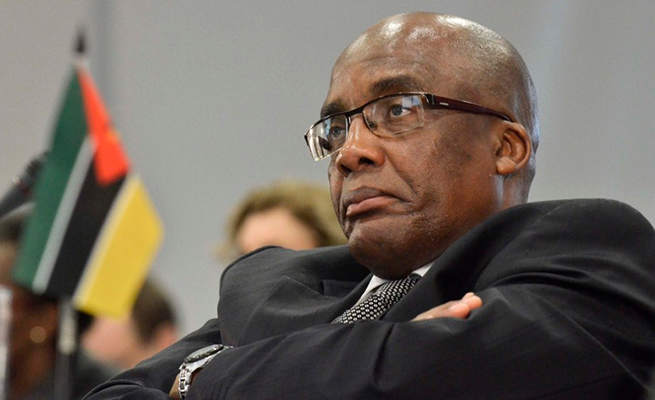
Pretoria – As South Africa grapples with pressing economic challenges, the travel expenses of government ministers are coming under increasing scrutiny. Recent figures reveal that Health Minister Aaron Motsoaledi's travel costs alone have reached a staggering R11.8 million since the formation of the Government of National Unity (GNU) in July last year.
The revelation follows a series of parliamentary questions posed by ActionSA, which is meticulously tracking the travel expenditure of all Cabinet members. According to ActionSA's calculations, the overall travel expenses of the GNU are nearing the R300-million mark, prompting concerns about fiscal prudence and accountability.
Between June and September alone, Motsoaledi's travels, along with those of the officials accompanying him, cost taxpayers R5.6 million. This figure includes R2.8 million spent on trips between February and June this year, and R3.4 million on international travel from July last year to February this year.
In response to ActionSA MP Kgosi Letlape's inquiry about his travel expenses, Motsoaledi detailed four international trips undertaken between June and September. The most costly was a trip to the United Nations General Assembly in New York, USA, from 20 to 27 September, with Motsoaledi accompanied by five officials. The total bill amounted to R2 751 147.70, with accommodation accounting for a hefty R1.645 million.
Prior to the UN trip, Motsoaledi attended the BRICS Health Summit in Brazil on 16 and 17 June, accompanied by three officials. This trip cost R1 325 785.98, with air tickets making up the bulk of the expense at just over R1 million.
From 30 June to 4 July, Motsoaledi visited the UK with three officials for a "National Health System study visit" and the Global Health Senior Leaders Dialogue in London. The trip cost R1 178 231.39, with air tickets again being the biggest cost driver at almost R567 000. Notably, Motsoaledi's return flight and one night's accommodation were covered by the UK Foreign Commonwealth and Development Office.
The least expensive of the four trips was to Lusaka, Zambia, for the World Health Organisation Regional Committee for Africa. The four-day visit, with four officials, cost R315 723.09.
While Motsoaledi's travel expenses have drawn significant attention, his deputy, Joe Phaahla, has also incurred substantial costs. Phaahla's travel expenditure since the start of the GNU amounts to R2 264 732.79. However, it should be noted that two of his three trips were sponsored – one by the World Bank and the other by UNAIDS. Still, Phaahla incurred travel expenditure of just over R1 million during the period.
The travel expenses of other ministers are also raising eyebrows. A recent response to ActionSA's questions revealed that Minister in the Presidency for Planning, Monitoring and Evaluation Maropene Ramokgopa and her officials' trip to the UN General Assembly cost around R1.9 million.
These figures come on the heels of earlier reports detailing Deputy President Paul Mashatile's travel expenses. In June, News24 reported that Mashatile and his entourage's travels had cost taxpayers R7.9 million since the start of the seventh administration, including hotel bills of R900 000 and R2 million for Mashatile and his wife in Tokyo and London.
More recently, ActionSA chief whip Lerato Ngobeni sought further information on Mashatile's travel costs since 30 May 2025. However, Mashatile's response directed the question to the Department of International Relations and Cooperation, stating that the department coordinates his international working visits, including accommodation and other logistical arrangements.
Ngobeni expressed dissatisfaction with this response, and the National Assembly has reportedly returned the reply, urging Mashatile to provide a full and direct answer to the question.
The escalating travel expenses of government ministers have fuelled public anger and calls for greater transparency and accountability. ActionSA has been at the forefront of this issue, using parliamentary questions and legislative proposals to push for reforms. The party has introduced legislation aimed at abolishing deputy minister positions and reducing the perks enjoyed by members of the Executive.
As South Africa faces numerous socio-economic challenges, including high unemployment, poverty, and inequality, the lavish spending on ministerial travel raises questions about the government's priorities and its commitment to fiscal responsibility. The public will be watching closely to see whether concrete steps are taken to curb these expenses and ensure that taxpayer money is used more effectively to address the country's pressing needs.