South Africa Grapples with Prison Overcrowding: Repatriation of Foreign Nationals and Legal Measures Under Consideration
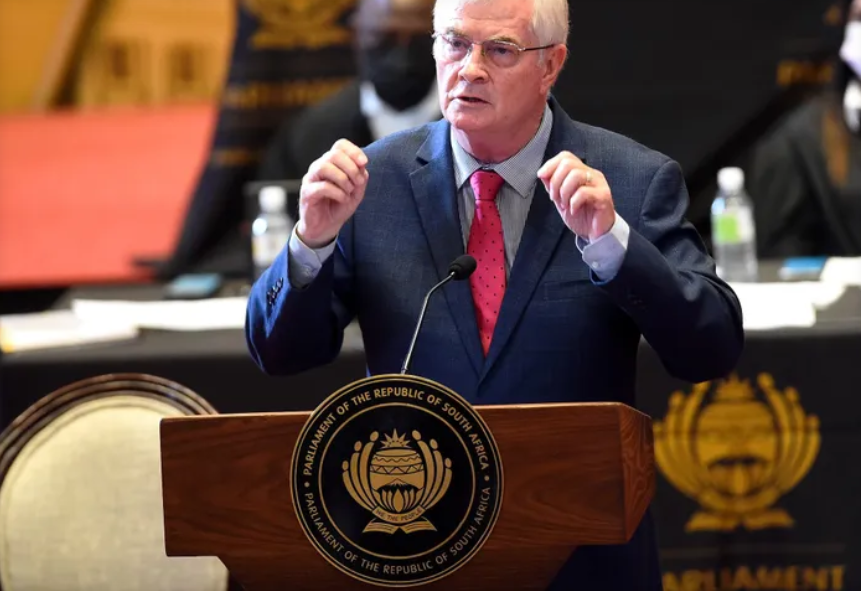
Cape Town — Correctional Services Minister Pieter Groenewald has revealed that the South African government is actively exploring the repatriation of approximately 27,000 foreign nationals currently held in the country's prisons, as part of a broader strategy to alleviate severe overcrowding.
Addressing members of Parliament during a sitting of the Peace and Security Cluster on Tuesday, Groenewald highlighted that remand detention facilities are operating under immense strain, with some exceeding 200% capacity. The significant number of foreign nationals incarcerated in South Africa exacerbates this issue, prompting the department to seek avenues for their return to their respective countries of origin.
"I am on record to say we’re in the process to see what we can do to repatriate them back to countries of origin. In the end, I would like to see that those people are sent back to their countries of origin, but unfortunately, it is an amendment of legislation, and the honourable member will know it’s not a simple thing that you change legislation tomorrow," Groenewald stated, acknowledging the legislative hurdles involved in such a large-scale repatriation effort. He also noted that this process requires legislative amendments, which take time.
The Minister also detailed the financial burden of housing remand detainees, with each individual costing the state over R463 per day. Groenewald said that the department remains committed to addressing overcrowding through a combination of legal tools, including Section 63A, and continued collaboration with the judiciary, DIRCO, and other stakeholders and international partners.
In addition to repatriation efforts, Groenewald outlined other measures being employed to reduce overcrowding, including the use of Section 63A of the Criminal Procedure Act. This provision allows the head of a correctional centre to apply to a court for the release of an accused person or the amendment of their bail conditions as a means to ease overcrowding.
"Yes, the department does invoke Section 63A, which empowers the head of a correctional center to apply to a court for the release of an accused person or the amendment of their bail conditions as a means to ease overcrowding," Groenewald explained.
The criteria for applying Section 63A include accused persons who have been granted bail but are unable to pay the required amount and who are not detained for other offences. Furthermore, the head of a correctional facility must be satisfied that overcrowding poses a material and imminent threat to the human dignity, physical health, or safety of the detainees.
Data from the department indicates varying success rates with Section 63A applications. In the first quarter of 2025, 2,533 cases were referred for possible release, with only 409 applications (16.15%) being successful. The success rate improved in the second quarter, with 506 out of 2,362 cases (21.42%) resulting in release or amended bail conditions.
Groenewald emphasised that the ultimate decision on whether to release a detainee rests with the courts, not with the Correctional Services Department.
"We meet quarterly with the judiciary and the NPA to discuss how we can speed up processes and address the overcrowding problem," Groenewald said, emphasising that while the department could push for more applications, the decision ultimately lies with the court.
The Department of Correctional Services is part of a special task team within the JCPS (Justice, Crime Prevention, and Security) cluster, which regularly meets to find ways to tackle overcrowding. Groenewald reiterated that while the cost of housing remand detainees is high, his department is doing everything it can to alleviate overcrowding, including exploring non-custodial options and working with other departments to increase capacity.
He also noted that the number of remand detainees had increased to between 58,000 and 59,000, making overcrowding even more acute.
Groenewald acknowledged that addressing overcrowding requires a comprehensive and coordinated approach, involving collaboration with the judiciary and other government departments.
"The reality is that we only have so much space. We are in the process of expanding our facilities, but we must also continue working closely with the judiciary and the Department of Justice to find practical solutions," he concluded.