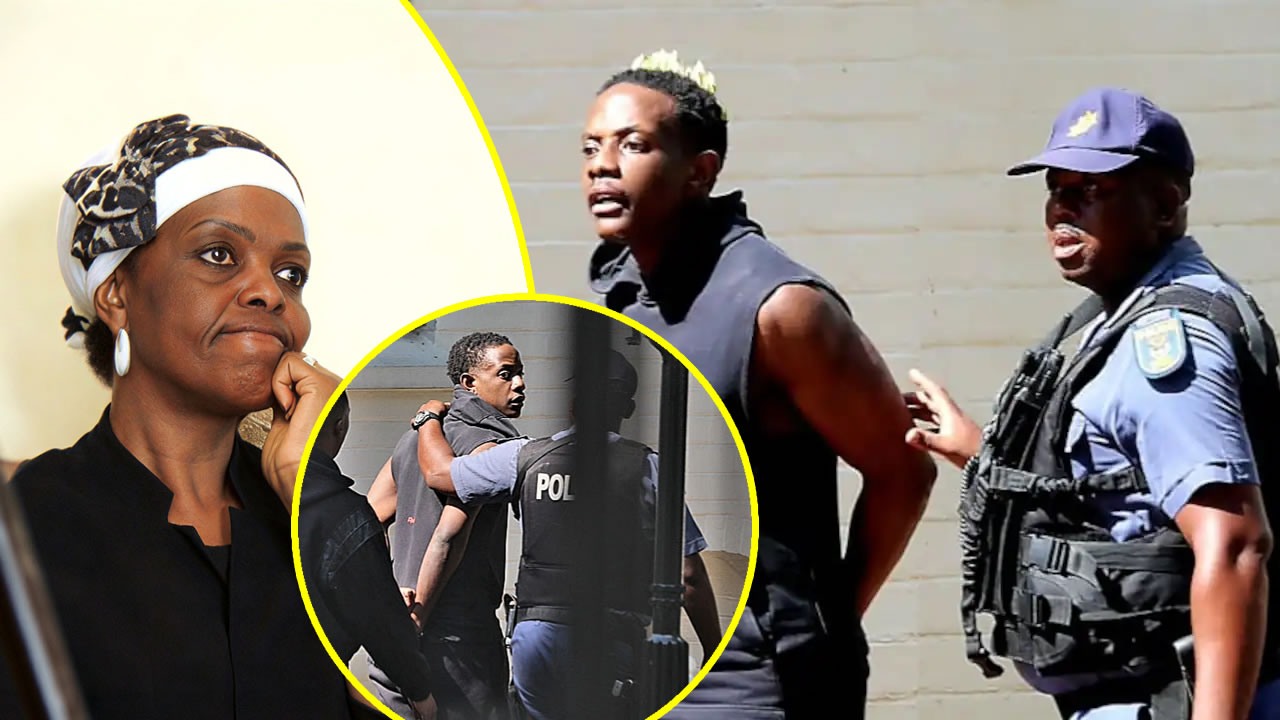
The Alexandra Magistrates Court in Johannesburg has witnessed many high-profile defendants pass through its doors, but few carry the weight of a fallen political empire quite like Bellarmine Chatunga Mugabe. On 11 March 2026, the youngest son of the late Zimbabwean leader Robert Mugabe made a decision that has left legal observers and political analysts across Southern Africa scrambling for answers. In a move that signals a dramatic shift in legal strategy, the 29-year-old and his co-accused, 33-year-old Tobias Matonhodze, abruptly abandoned their application for bail. Instead of fighting for their temporary freedom, the pair has pivoted towards seeking a plea agreement with the state. This sudden retreat from the legal front lines is not merely a procedural quirk; it is a profound admission that the once-untouchable Mugabe family is now navigating a much harsher and less forgiving legal landscape.
For decades, the Mugabe name was a shield, a symbol of absolute power that rendered its bearers effectively immune to the consequences of their actions. Under the 37-year rule of Robert Mugabe, his children lived lives of extraordinary privilege, often punctuated by reports of excess and occasional brushes with the law that were swiftly hushed or dismissed through diplomatic intervention. However, the scene in the Alexandra courtroom suggests that those days of effortless immunity have finally reached their eclipse. Bellarmine now faces a litany of serious charges, including attempted murder, the illegal possession of a firearm and ammunition, pointing a firearm, and defeating the ends of justice. Perhaps most tellingly, he is also accused of contravening South African immigration laws, a charge that would have been unthinkable during his father's presidency when the family moved across borders with the ease of royalty.
The incident that led to this predicament occurred in February 2026 at a residence in the affluent suburb of Hyde Park, Johannesburg. According to police reports and court submissions, a 23-year-old employee at the property was shot and seriously injured. The victim, whose identity has been shielded during the early stages of the proceedings, sustained two gunshot wounds and was left in a critical condition in hospital. Initial reports from the scene were chaotic, with some sources suggesting a dispute that spiralled out of control, while others hinted at the presence of unauthorised firearms within the household. The charge of defeating the ends of justice specifically relates to allegations that Bellarmine and Matonhodze attempted to hide the weapon used in the shooting before police arrived.
Why would a man with the financial resources of the Mugabe family choose to remain in a South African prison cell rather than fight for bail? The official explanation from his legal team is that they are pursuing a plea deal, but the "hidden" pressures behind this decision are far more complex. Our investigation suggests that the Mugabe family is currently caught in a pincer movement of legal battles and shifting political alliances. In Zimbabwe, the family's traditional influence has waned significantly since the 2017 military-assisted transition that saw Emmerson Mnangagwa take power. While the current administration has maintained a veneer of respect for the late founding father's legacy, the practical protection once afforded to his widow, Grace, and their children has largely evaporated.
This waning influence is mirrored in South Africa, where the family once relied on the ANC's historical ties to Robert Mugabe to smooth over diplomatic incidents. One cannot forget the infamous 2017 "extension cord" incident in Sandton, where Grace Mugabe allegedly assaulted a young model, Gabriella Engels. At the time, the South African government granted Grace diplomatic immunity, allowing her to flee the country and avoid prosecution. Today, however, the political climate is different. The South African judiciary has become increasingly sensitive to the perception of "celebrity justice," and the Mugabe family no longer possesses the political capital to demand special treatment. By abandoning the bail bid, Bellarmine may be acknowledging that the "Mugabe factor" is now a liability rather than an asset in a South African courtroom.
The decision to seek a plea deal may also be a calculated move to prevent more damaging family secrets from being aired in open court. A full trial would involve the cross-examination of witnesses, the presentation of forensic evidence, and potentially, a deep dive into the private lives of those residing at the Hyde Park home. For a family that has spent years trying to guard its privacy and the details of its vast international wealth, the prospect of a public trial is a nightmare. A plea agreement allows for a controlled conclusion to the case, potentially avoiding the most sensational details of the shooting and the family's internal dynamics from becoming part of the public record.
This legal crisis does not exist in a vacuum. It follows a series of public setbacks for the Mugabe siblings that suggest a dynasty in terminal decline. Bellarmine himself is no stranger to the Zimbabwean legal system; in August 2024, he was arrested at a police checkpoint in the border town of Beitbridge for disorderly conduct and allegedly assaulting a police officer. Although he was granted bail at the time, a warrant for his arrest was later issued when he failed to appear in court, adding a layer of "fugitive" status to his current South African troubles. His older brother, Robert Mugabe Jr., also faced legal scrutiny in February 2023 when he was arrested in Harare for malicious damage to property after allegedly trashing a friend's house during a dispute.
Perhaps the most significant blow to the family's image of stability came from within. Bona Mugabe, the eldest daughter and once considered the most disciplined of the siblings, filed for divorce from her husband, Simbarashe Chikore, in 2023. The subsequent legal filings were a revelation to the Zimbabwean public, who had long suspected the family's wealth but had never seen it itemised so starkly. The divorce papers listed a staggering portfolio of assets, including 21 sprawling farms, over 25 residential properties in Harare—one of which was valued at $8 million—a mansion in Dubai, and a fleet of luxury vehicles
. This public disclosure of "ill-gotten gains" at a time when most Zimbabweans are struggling with extreme economic hardship further alienated the family from the populace and reduced any remaining public sympathy.
The "hidden" pressures on Bellarmine are also tied to the shifting alliances within the Zimbabwean elite. In the years following Robert Mugabe's death in 2019, the family has had to navigate a delicate relationship with the Mnangagwa government. While they have occasionally appeared at state functions, there is a palpable tension beneath the surface. The government's refusal or inability to intervene in Bellarmine's South African case suggests that the Mugabes are being left to fend for themselves. Some analysts believe that the Zimbabwean authorities may even see the legal troubles of the Mugabe children as a convenient way to further diminish the family's remaining political relevance.
The contrast between the family's former glory and their current predicament is stark. There was a time when the Mugabes were the undisputed first family of Zimbabwe, their every whim catered to by a vast state apparatus. Today, Bellarmine sits in a cell, his fate resting in the hands of a South African magistrate and a legal team looking for a way to minimise his prison sentence. The transition from "untouchable" to "accused" has been swift and brutal. The shooting incident in Hyde Park, regardless of the eventual legal outcome, has stripped away the last vestiges of the Mugabe mystique.
As the case moves towards the next court date on 17 March 2026, the question remains: is this the final eclipse of the Mugabe legacy? The family's attempt to secure a plea deal is a strategic retreat, a recognition that they can no longer win a head-on battle with the law. It is a desperate attempt to salvage what remains of their dignity and to keep their secrets hidden. However, the world is watching, and the narrative of the "fallen dynasty" is becoming harder to ignore. The Mugabe name, once a source of pride and power, has become a burden, a reminder of a bygone era of excess and impunity that the modern legal systems of Southern Africa are no longer willing to tolerate.
In the end, the real reason Bellarmine Mugabe abandoned his bail bid may be the simplest one of all: he realised that the world has changed, even if he hasn't. The walls of the Alexandra Magistrates Court are indifferent to his lineage, and the plea deal he seeks is perhaps the only way to avoid a lengthy prison sentence that would mark the definitive end of the Mugabe era. The "hidden" pressures, the waning influence, and the mounting legal battles of his siblings all point to a single, inescapable conclusion: the Mugabe dynasty has fallen, and its youngest son is now left to face the consequences alone.