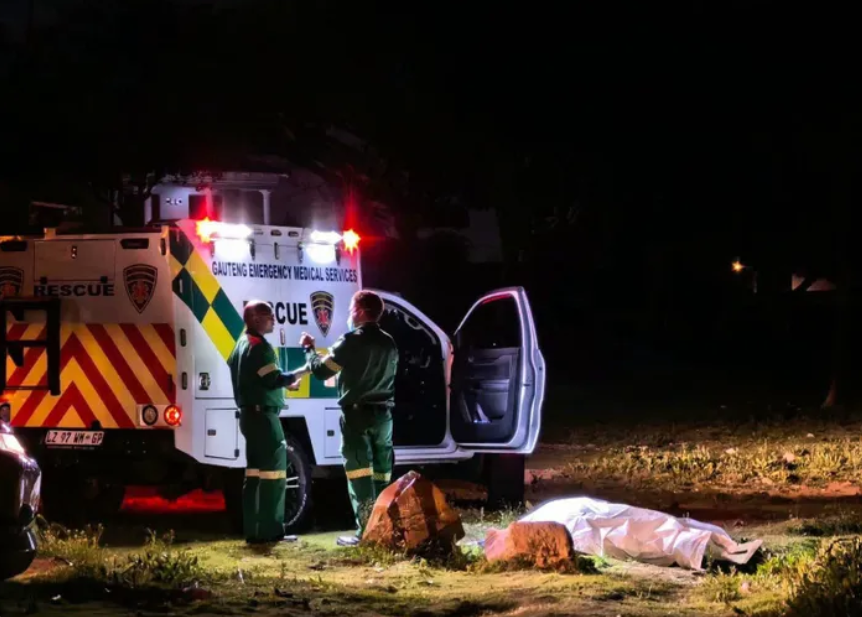
Police have opened an inquest after the body of an unidentified woman was found wrapped in a duvet and lying in a dam in Moroka, Soweto.
The woman, believed to have been in her twenties, was discovered at about 17:00 on Sunday, 20 September. Her identity had not been established at the time of the latest police update, and the circumstances surrounding her death remained unknown.
The discovery has raised fresh concern because it comes while police are investigating the deaths of nine women whose bodies were found at different locations in Ekurhuleni over about two months. However, police have not said that the Moroka case is linked to those investigations.
The Soweto case has been opened as an inquest. This means investigators will first work to establish the woman’s identity, how she died and the circumstances that led to her body being found in the dam. A postmortem and forensic examination are expected to form part of that process.
Gauteng police spokesperson Colonel Dimakatso Nevhuhulwi said the circumstances were not known at this stage.
“The circumstances surrounding the incident are unknown at this stage,” Nevhuhulwi said.
The police have not released the woman’s name, the exact location of the dam or details about the condition of the body beyond the fact that it was wrapped in a duvet. No arrests have been announced in connection with the Moroka discovery.
Investigators will need to determine whether the woman died at the dam or whether her body was taken there after her death. They will also need to establish when she died and identify any evidence that could show who may have been responsible.
The duvet may be examined for fingerprints, fibres or other evidence, while the surrounding area could provide clues about how the body reached the water. Investigators may also seek information from people living near the dam, anyone who was in the area on Sunday afternoon and anyone who may have seen a vehicle or people acting suspiciously.
Police appealed to anyone with information to come forward. Information can be provided at the nearest police station, through Crime Stop on 08600 10111 or anonymously using the MySAPS application.
The appeal is especially important because the woman has not yet been identified. Her family may not know that she has died, or may already have reported her missing in another area. A missing-person report, dental information, fingerprints, medical records or DNA could assist police in confirming who she was.
The Moroka discovery is not being presented by police as the tenth case in the Ekurhuleni investigation. The nine Ekurhuleni deaths occurred in areas including Kempton Park, Pomona, the R21, Clayville, Rhodesfield, Olifantsfontein, KwaThema and Dawn Park. Until investigators find evidence connecting the cases, the Soweto inquest remains a separate matter.
The nine Ekurhuleni cases
The first woman in the Ekurhuleni series was found on 15 July in a field in Kempton Park. She was 37 and was found naked with her hands bound with cable ties. A suspect was arrested two days later, but her identity and cause of death have not been publicly disclosed.
On 17 July, 32-year-old Itumeleng Kekana went missing in Kempton Park. Her family searched hospitals, police stations and mortuaries before her body was found on 3 August on Great North Road in Pomona.
Kekana left behind her parents and a 14-year-old daughter. Her disappearance and death became one of the cases that increased fear among women and families in the area.
On 24 August, the body of another 32-year-old woman was found partially clothed near the R21. Her identity and cause of death have not been publicly disclosed.
On 7 September, the body of a woman believed to be in her late twenties was found in a river in Clayville, near the Mall of Tembisa. She was wearing only her underwear. Police have not publicly identified her.
Three days later, on 10 September, a woman’s body was found near the R21 in Kempton Park. Her family later identified her as 28-year-old Gracious Nkomo. Police said she was found partially clothed.
Around the same time, 38-year-old Elizabeth “Tsontso” Moselakgomo was found dead behind a hotel in Rhodesfield after going out for her usual run. Her family later identified her, and she was buried over the weekend in Mpumalanga.
On 14 September, a partially naked woman with bruising was found in Olifantsfontein. She had not been publicly identified at the time of the latest update.
The following day, 38-year-old Dineo Evelyn Motapane was found beside a road in KwaThema, Springs. Preliminary pathology findings indicated that she had been strangled. Her family identified her at Springs Mortuary.
The ninth woman was found on 17 September in an open area on Lama Street in Villa Lisa, Dawn Park. She was believed to be about 30 and was found partially clothed, wearing a blue T-shirt and pink underwear. Police said she had suffered a fatal throat injury.
One man and two women were arrested over the weekend in connection with the Dawn Park murder. The three suspects were arrested by members of the Gauteng Murder and Robbery Unit and were expected to appear in the Boksburg Magistrate’s Court on Monday, 21 September.
The arrests relate to the Dawn Park case. They do not mean that the three accused people have been linked to all nine deaths, and police have not confirmed that one person or group is responsible for the wider series.
Acting National Commissioner of the South African Police Service Lieutenant General Puleng Dimpane said all nine murder investigations were receiving priority attention.
“We remain committed to ensuring that these investigations are pursued with the urgency and determination they require. Our investigators are following all available leads and are working tirelessly to bring those responsible to justice,” Dimpane said.
The investigation into the Ekurhuleni deaths includes forensic work, witness interviews and efforts to establish the final movements of each victim. Police must determine whether the cases share evidence, locations, suspects or methods, or whether the similarities are coincidental.
The Moroka inquest will now follow its own path. Investigators must first give the unidentified woman a name, notify her family and establish what happened to her. If evidence later shows a connection to the Ekurhuleni deaths, police can reassess the scope of the investigation.
For now, the discovery in Soweto is a separate tragedy involving a woman whose family may still be searching for her. Police are appealing for information so that she can be identified and the circumstances of her death can be properly established.