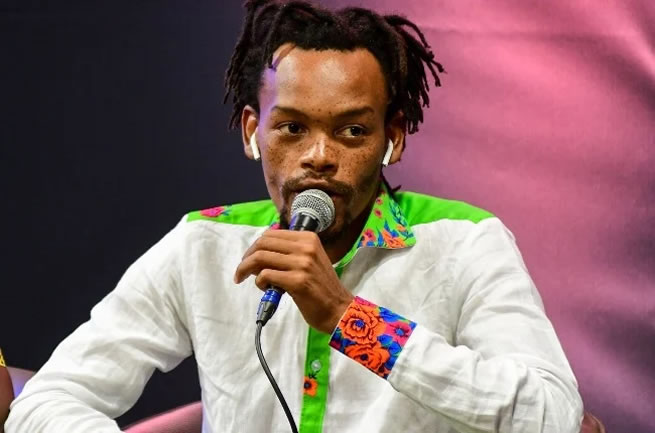
Nota Baloyi Ordered to Apologise to Black Coffee Following High Court Ruling
Johannesburg – Controversial music executive and activist Nhlamulo “Nota” Baloyi has been instructed by the Johannesburg High Court to issue a formal apology to Grammy Award-winning DJ Nkosinathi “Black Coffee” Maphumulo. The ruling, delivered by acting judge Gian Louw during a virtual hearing on Tuesday, marks the latest development in an ongoing legal battle between the two prominent figures.
The legal action was initiated by Maphumulo, who filed an urgent court application seeking to restrain Baloyi from making further statements that linked him to criminal activity, abuse, and what he considered questionable financial dealings. The acclaimed DJ argued that Baloyi’s recent social media posts were defamatory and posed a significant threat to his reputation.
Judge Louw approved Maphumulo’s draft order, albeit with some amendments. The full written reasons for the ruling are yet to be released, leaving room for speculation and further analysis of the court’s decision-making process.
Despite this setback, Baloyi has made it clear that he intends to challenge the court's decision. Speaking after the hearing, Baloyi vowed to appeal the order once the judge’s full reasoning becomes available. He maintains that his statements have been misinterpreted and that he never explicitly accused Black Coffee of engaging in any criminal conduct.
The seeds of this legal confrontation were sown earlier this year. In November, Maphumulo made an initial attempt to secure an emergency ex parte order against Baloyi. However, according to Baloyi, this initial attempt was dismissed by the court. The details surrounding the dismissal of this earlier application remain unclear, adding another layer of complexity to the unfolding legal drama.
In his responding papers, Baloyi launched a scathing attack on Black Coffee, accusing the DJ of leveraging his considerable wealth, influence, and celebrity status to bully and intimidate ordinary South Africans who dare to criticise him. This accusation forms a central pillar of Baloyi’s defence, framing the case as a David-versus-Goliath battle between a powerful celebrity and an outspoken critic.
Baloyi didn't stop there. In a counterapplication, he requested the court to dismiss Black Coffee’s case entirely. Furthermore, he is seeking R25,000 in compensation for the alleged distress caused to his mother as a result of Maphumulo's actions. This move adds a personal dimension to the legal proceedings, highlighting the emotional toll that the dispute has taken on Baloyi's family.
Adding another layer to his demands, Nota seeks a court order prohibiting Maphumulo and his associates from contacting him directly. He is also seeking to bar the DJ from contacting any member of his family outside official legal channels. This request underscores the depth of the animosity between the two men and the lengths to which Baloyi is willing to go to protect himself and his family from what he perceives as harassment.
The case has attracted significant attention in South Africa, where both Black Coffee and Nota Baloyi are well-known figures. Black Coffee's global success as a DJ and producer has made him a national icon, while Nota Baloyi has gained notoriety for his outspoken views on the music industry and various social issues.
The public interest in the case is fuelled by the contrasting personalities of the two protagonists and the broader implications of the legal battle for freedom of speech and the limits of criticism in the public sphere. As the case progresses through the courts, it is likely to continue to generate headlines and spark debate about the responsibilities of public figures and the boundaries of acceptable discourse.
The next stage in the legal proceedings will be Baloyi's appeal, which will hinge on the judge's full written reasons for the initial ruling. Legal experts suggest that the appeal could focus on the interpretation of Baloyi's statements and whether they meet the legal threshold for defamation. The court will also need to consider the public interest in allowing open debate and criticism, even when it is directed at prominent individuals.
Regardless of the eventual outcome, the case has already had a significant impact on the reputations of both Black Coffee and Nota Baloyi. The allegations and counter-allegations have been widely publicised, and the legal battle has undoubtedly taken a personal and professional toll on both men. As the saga continues to unfold, it serves as a reminder of the power of social media, the importance of responsible communication, and the potential consequences of public disputes.