

For over two decades, the term "BEE" has been the golden ticket in the South African boardroom. It was the system that decided who got the government tenders, who sat in the executive chairs, and ultimately, who became the next generation of billionaires. But that era is officially drawing to a close. As of February 2026, the traditional framework of Broad-Based Black Economic Empowerment (B-BBEE) is being dismantled and replaced by something far more centralised and, some argue, far more dangerous.
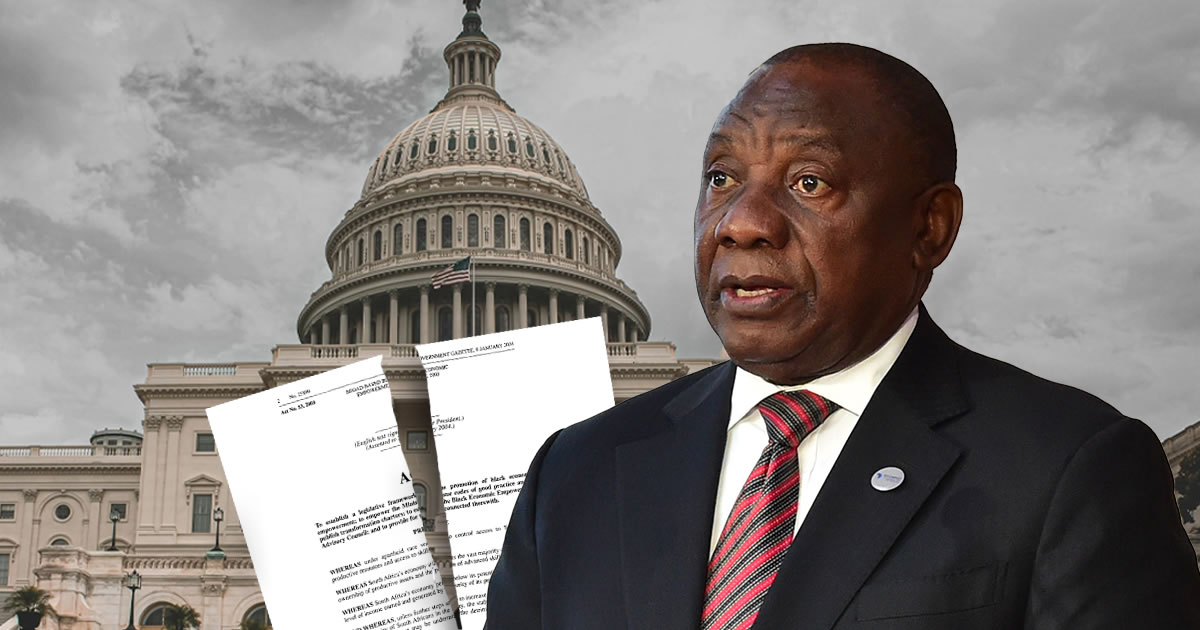
The quiet revolution began on 29 January 2026, when Trade, Industry and Competition Minister Parks Tau gazetted a set of draft amendments to the B-BBEE Codes of Good Practice. Known as Draft Gazette 54032, these proposals introduce a radical new mechanism: the Transformation Fund. While the government paints this as a way to "accelerate industrialisation," critics see it as the ultimate rebranding of state-guided cronyism. This is no longer just about compliance; it is about the state taking direct control of the billions of rands that businesses used to spend on their own empowerment initiatives.
Under the old rules, companies had a level of autonomy. If you ran a large firm, you were required to spend roughly 3% of your Net Profit After Tax (NPAT) on Enterprise and Supplier Development (ESD). You could choose which black-owned small businesses to support. You could mentor a local logistics firm, integrate a black-owned manufacturer into your supply chain, and ensure that your compliance money actually built a symbiotic relationship. It was often criticised as a "box-ticking exercise," but the money stayed in the private sector.
The new Statement 400 changes everything. The government is now incentivising businesses to stop managing their own ESD programmes and instead "donate" that 3% of profit directly into the centralised Transformation Fund. In exchange, they get an easy path to B-BBEE points. It is a "pay-to-play" model that simplifies life for the corporate C-suite but effectively severs the link between big business and small, independent black entrepreneurs.
The scale of this "gamble" is staggering. The Transformation Fund aims to raise an initial R20 billion, a figure boosted by a massive R10.8 billion loan from the African Export-Import Bank. Over five years, the government hopes to channel R100 billion through this vehicle. Minister Parks Tau has been clear about the motive, stating in the gazetted draft that the state "cannot achieve transformation alone" and that the fund is a "vehicle for tangible change to ensure economic growth is shared by all South Africans."
However, the "Codesa Compromise" echoes loudly in these new corridors of power. During the early 1990s, the Convention for a Democratic South Africa (CODESA) was the site of the original deal that ended apartheid. While it secured political freedom, many activists have long argued that it left economic power in the hands of a few. Today, the spat between President Cyril Ramaphosa and DA leader John Steenhuisen over the "Codesa Compromise" has resurfaced. Steenhuisen and the DA have been vocal in their scorn, with the DA’s trade and industry spokesperson, Toby Chance, calling the fund a case of massive state overreach.
Chance was scathing in a recent blog post, writing: "This amounts to the state telling business, ‘We are better at spending your money than you are’, despite the dreadful track record of the state’s financing institutions." He further argued that "funding decisions must be made by professional investment managers who target innovation, job creation and growth, not racial box-ticking."
The fear is that this "centralised pot" will become a new feeding trough for the politically connected. After a decade of State Capture, where state-owned enterprises were hollowed out by systematic looting, the idea of handing R100 billion to a state-guided fund has raised red flags across the country. Even within the business community, there is a sense of "madness" at the proposal. While investment manager 27four has been brought in to add a layer of professional management, the ultimate oversight remains political.
Fatima Vawda, managing director of 27four, attempted to calm these fears at a launch event, stating: "We believe transformation is not a tick-box exercise; it is the foundation for a stronger, more resilient economy. The Transformation Fund is a powerful mechanism to ensure capital flows to where it is needed most."
But where exactly is that capital needed? According to the new rules, the fund will focus on "black industrialists" in the manufacturing and industrial sectors. This sounds noble, but it raises the question: who qualifies as a "black industrialist"? The Institute of Race Relations (IRR) has been a fierce critic of the status quo, highlighting the absurdity of elite enrichment. Makone Maja, campaign manager for the IRR, recently asked: "Is it reasonable that Patrice Motsepe is eligible for BEE? Why should those people still be eligible [for] programmes that could be going to people who are truly impoverished?"
The IRR argues that the "BEE premium"—where the government pays more for goods and services to meet racial quotas—actually creates deeper levels of poverty by draining the national fiscus. They advocate for a model of economic inclusion based on need and poverty rather than race. This sentiment is shared by the "Free SA" movement, which launched a national campaign in January calling for the total repeal of race-based laws. Reuben Coetzer, spokesperson for Free SA, was direct: "South Africans know that B-BBEE has failed. It is time to repeal it entirely and replace it with a new empowerment model based on need, not race."
The timing of this shift is also suspicious. With the 2026 State of the Nation Address (SONA) still fresh in the public's mind, Ramaphosa’s promise to act "with speed" seems to be manifesting in these aggressive policy pivots. By centralising the funds, the government can bypass the slow, fragmented process of individual corporate programmes. But "speed" in the hands of the state often leads to a lack of transparency.
For the average South African, the "Death of BEE" as we know it means a change in who gets rich next. The "preferred supplier" status that many small black-owned businesses relied on is under threat. If big corporations find it easier to simply write a cheque to the Transformation Fund to get their points, they will stop looking for local black-owned suppliers to mentor. The symbiotic relationship that was supposed to build a broad-based middle class is being sacrificed for a centralised state fund that will likely benefit a new, even more exclusive group of "industrialists" with the right political connections.
Mzi Dayimane, CEO of the National Empowerment Fund (NEF), defends the move as essential for survival. "South Africa’s economic renewal depends on our ability to back black industrialists and entrepreneurs with the funding, networks and market access they need to thrive," he said. Yet, history has taught us that the bigger the pot, the fiercer the fight for the ladle.
We are moving into an era where the government is no longer just the referee of transformation; they are now the player, the coach, and the stadium owner. By stripping away the complex legal jargon, the reality is simple: the government is taking your money, pooling it into a giant pot, and deciding for themselves who the winners and losers will be in the new South African economy.
The "Codesa Compromise" was supposed to be the foundation of a fair society, but as these new rules take effect, it feels more like a blueprint for a new kind of economic exclusion. Whether you call it progress or a "rebranding" of cronyism, one thing is certain: the rules of the game have changed, and the old elite are being shuffled out to make room for a new group of state-sanctioned millionaires. This is the ultimate guide to the new economic landscape of South Africa—a landscape where the state holds all the cards, and the private sector is left to simply sign the cheques.