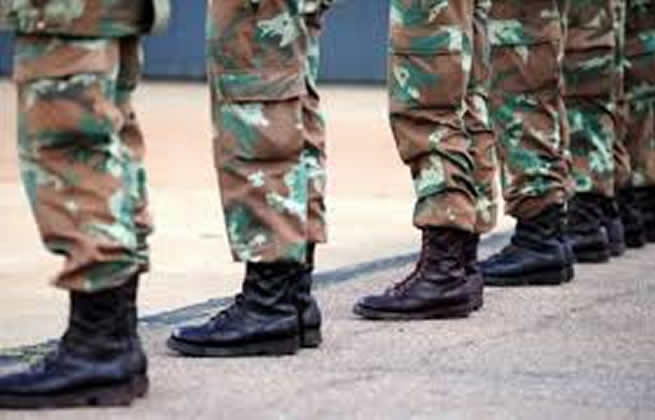
In a decisive move aimed at curbing rampant organised crime, President Cyril Ramaphosa has announced the deployment of the South African National Defence Force (SANDF) to support police operations across the country.
This unprecedented intervention targets what the President described as “mafia-style groups” and criminal gangs, particularly those wreaking havoc in the construction sector and other economic hubs. The decision, unveiled during the recent State of the Nation Address (SONA), signals a significant escalation in the government’s fight against criminality, acknowledging the severe threat these groups pose to the nation’s stability and economic prosperity.
The deployment will see soldiers on the streets of South Africa’s two biggest economic hubs, Gauteng and KwaZulu-Natal, areas that have been particularly hard-hit by extortion, violence, and sabotage orchestrated by these criminal syndicates.
For years, construction mafias have disrupted major infrastructure projects, demanding protection fees and a share of contracts, often resorting to intimidation and violence. Similarly, street gangs have terrorised communities, engaging in drug trafficking, illicit mining, and other criminal activities that undermine law and order. The presence of the SANDF is intended to provide a robust deterrent, bolster police capacity, and restore a sense of security to affected areas.
President Ramaphosa underscored the gravity of the situation, stating that organised crime represents the most immediate threat to South Africa’s economic recovery and social cohesion. He highlighted the sophisticated nature of these criminal networks, which often operate with impunity, exploiting vulnerabilities in the justice system and corrupting public officials.
The deployment of the army, therefore, is not merely a show of force but a strategic measure to dismantle these syndicates and bring their members to justice. This initiative is part of a broader government strategy to strengthen law enforcement agencies, enhance intelligence gathering, and improve coordination between various security apparatuses.
Public reaction to the announcement has been mixed, reflecting the complex and often contentious debate surrounding the role of the military in domestic policing. Many citizens, weary of the pervasive crime and the apparent inability of the police to contain it, have welcomed the deployment as a necessary and long-overdue measure. They argue that the gangs have terrorised neighbourhoods for too long, and that a decisive show of force is required to reclaim public spaces and restore order. The hope is that the SANDF’s presence will create a safer environment for businesses to operate, attract investment, and allow communities to thrive without fear.
However, civil society organisations and human rights advocates have expressed concerns about the potential for the militarisation of policing. They warn that deploying soldiers, who are trained for combat rather than community engagement, could lead to an increase in human rights abuses and an erosion of democratic freedoms.
Critics argue that the root causes of crime, such as poverty, unemployment, and inequality, must be addressed through socio-economic interventions rather than purely security-focused solutions. There are also fears that the army’s presence could exacerbate tensions in already volatile communities, potentially leading to unintended consequences and further instability. The debate highlights the delicate balance between maintaining law and order and upholding constitutional rights in a democratic society.
Despite these concerns, the government maintains that the deployment is a temporary measure, carefully calibrated to address a specific and urgent threat. The SANDF will operate under strict rules of engagement, working in conjunction with the South African Police Service (SAPS) to ensure that their actions are lawful and proportionate.
The success of this operation will depend not only on the effectiveness of the military intervention but also on the government’s ability to implement comprehensive reforms within the police force and the broader justice system. Ultimately, the deployment of the army is a stark reminder of the challenges facing South Africa in its quest for a safer and more prosperous future, and the critical need for a multi-faceted approach to tackle the scourge of organised crime.