In a worrying revelation that underscores the cracks in South Africa's law enforcement system, Parliament’s Select Committee on Security and Justice was told on Wednesday that at least 202 prisoners who escaped from police custody remain unaccounted for. This figure highlights a persistent problem that continues to trouble communities and officials alike, as escapes from holding cells and courts show no signs of letting up.
The briefing came from Deputy Police Minister Cassel Mathale, who stepped in for Police Minister Professor Firoz Cachalia and national police commissioner General Fannie Masemola, both of whom had other commitments. Mathale presented stark statistics that painted a picture of ongoing challenges within the South African Police Service (SAPS). According to the data, between April and December last year, there were 284 escapes across 205 incidents. Out of those, only 82 prisoners have been rearrested, leaving a significant number still free. Most of these incidents happened at police station holding cells or during wrongful releases at police stations and courts.
Despite SAPS reporting a 9% decrease in escapes compared to the same period the previous year, members of Parliament raised serious doubts about whether this improvement truly reflected the reality on the ground. This scepticism was evident in the questions posed by MPs, who pointed to recent events that suggested the problem was far from under control. For instance, just a day before the briefing, three people escaped from a holding cell at a police station in Paulpietersburg in northern KwaZulu-Natal. One has since been rearrested, but two remain at large, adding to the tally of fugitives.
ANC MP Pitso Noe was among the most vocal, describing the situation as deeply concerning. “This looks institutionalised. How is this happening? What does intelligence tell us?” he asked, questioning whether the police were doing enough to get to the root of the issue. His comments echoed the frustration felt by many, as escapees often return to terrorising communities, committing further crimes and evading capture.
Similarly, DA MP Nicholas Gotsell highlighted flaws in the system that might be skewing the numbers. He pointed to SAPS’s reliance on manual data capturing, which he argued led to discrepancies in reporting. “How do you reconcile your national improvement with the lived reality of people in this province?” he asked, specifically referencing spikes in escapes in areas like the Western Cape. Gotsell called for independent verification of the statistics to ensure transparency and accuracy, emphasising that public trust was at stake.
The discussion also touched on accountability within the police force. MPs expressed worry that while some officers had been charged in connection with escapes, none had been dismissed. According to the briefing, ten officers were suspended without pay, and others were undergoing what SAPS described as “progressive disciplinary processes.” This lack of decisive action raised eyebrows, with committee chairperson Jane Seboletswe Mananiso noting that infrastructure problems were a key factor. She pointed out that many incidents occurred at police stations and court holding facilities, where conditions were substandard.
Divisional Commissioner for Visible Policing and Operations, Lieutenant General Maropeng Mamotheti, acknowledged these challenges during the session. She revealed that 130 police station cells nationwide were non-functional, including 12 in the Western Cape that were in the process of being repaired. “SAPS has a directive to rearrest escapees within 24 hours. However, this target is not always met,” she said, explaining that manual data capturing often delayed the recording of rearrests. These admissions shed light on the systemic issues plaguing the force, from outdated facilities to procedural bottlenecks.
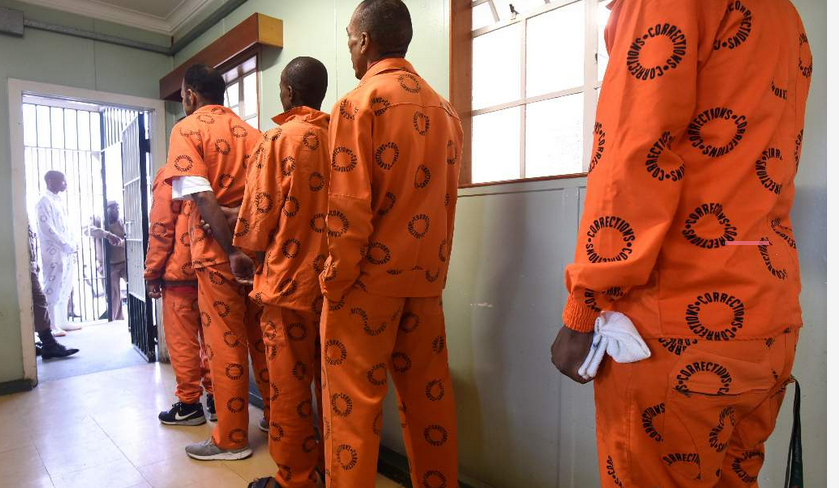
Amid these broader concerns, specific cases brought the problem into sharper focus. For example, Correctional Services officials are now facing potential disciplinary action after convicted lifer Thulani Gcaleka escaped from the Sevontein Correctional Centre near Pietermaritzburg. Gcaleka, who is serving a life sentence for serious crimes including attempted murder, attempted rape, rape, common robbery, and housebreaking, was part of a team on cleaning duty at the prison farm when he fled. Department of Correctional Services spokesperson Singabakho Nxumalo provided details, stating that preliminary reports indicated the escape happened during these routine duties. “An internal investigation has been instituted to establish the full circumstances surrounding the incident. The department will act without hesitation against any form of security breach or deviation from prescribed standard operating procedures,” Nxumalo said.
He further elaborated, “The outcome of the investigation will guide the necessary disciplinary action and corrective measures to be undertaken in line with the Correctional Services Act. The rearrest of the escapee remains a priority.” Nxumalo urged the public to assist, saying, “Anyone who may spot him or has information regarding his whereabouts is urged to immediately report this to the nearest police station or correctional facility.” He added that necessary resources had been mobilised to ensure Gcaleka’s swift apprehension.
This incident is not isolated. In August last year, seven awaiting-trial prisoners escaped from a moving police van while being transported from the Dundee Magistrate’s Court to a prison in Ladysmith. The escape took place on Limit Hill Road in Newcastle, where the prisoners, who were facing charges of robbery and housebreaking, kicked open the back door of the vehicle and fled into a nearby forest in Model Kloof. News24 reported that a source described how the prisoners jumped out while the van was in motion, highlighting the risks involved in such transports.
Even more recently, in a similar vein, a 25-year-old man accused of killing a police officer and two Road Traffic Inspectorate officers escaped from custody. According to the Hawks in KwaZulu-Natal, Lungisani Valentine Mkhize fled between the R34 and N2 in Empangeni. Hawks spokesperson Lieutenant Colonel Simphiwe Mhlongo explained that while Mkhize was on his way to court for the judgment in the triple murder case, he allegedly assaulted a police captain, forced open the vehicle, and escaped.
These events illustrate a pattern of vulnerabilities in the criminal justice system, from poorly maintained facilities to lapses in security protocols. In response, Mathale appealed to the committee for support in recruiting more police officers, arguing that additional personnel would bolster the fight against crime and help prevent future escapes. “Mathale appealed to the committee to support efforts to recruit more police officers, and said additional personnel would strengthen the fight against crime and help prevent further escapes.”
As South Africa grapples with these issues, the revelations from the committee hearing serve as a stark reminder of the work needed to restore confidence in the system. With escapees still at large and communities on edge, the focus now turns to implementing real changes, from upgrading infrastructure to ensuring stricter oversight. This ongoing saga not only highlights the challenges faced by SAPS and Correctional Services but also the broader implications for public safety in the country.