

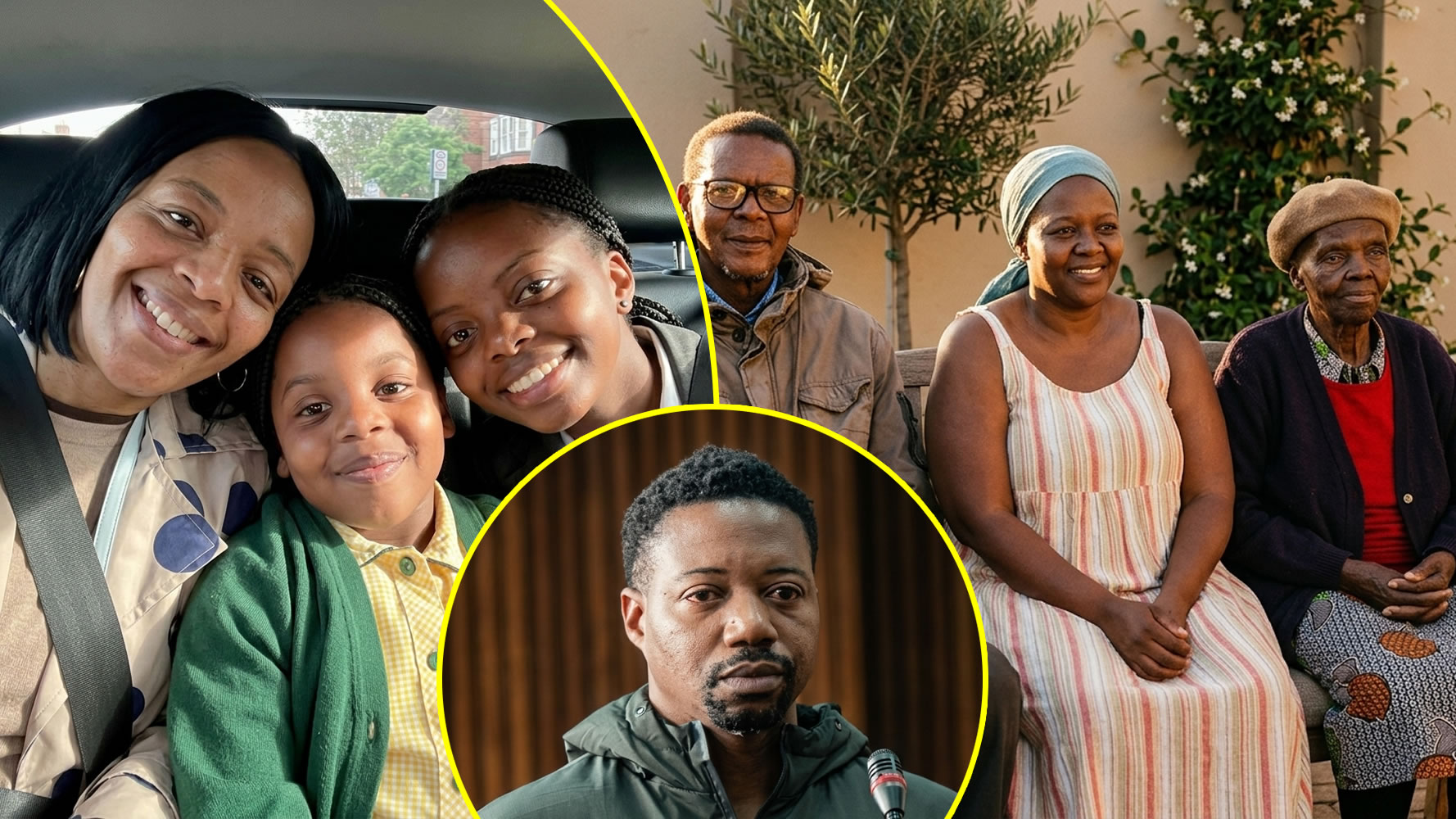
Ndodana Mkhanyisi Tshuma's bid to resolve the South African charges standing between him and extradition to the United Kingdom has been delayed again, after his lawyer told a Johannesburg court that he cannot remember signing a plea agreement or admitting guilt.
The British citizen of Zimbabwean origin, also known as Mark Tshuma, appeared at the Johannesburg Magistrates' Court on 10 November. The matter was postponed to 7 December to allow further discussions between Tshuma and his legal team over the agreement, which was meant to settle local firearm, ammunition and immigration offences.
The delay places his claimed memory loss and mental distress at the centre of two linked but separate processes. South Africa must first deal with the charges brought against him there. Only after that can the authorities move forward with the request to send him to Britain, where he is wanted in connection with the deaths of his wife and two daughters.
Tshuma's lawyer, Chrispen Machingura, told reporters outside court that changes had been made to the plea agreement and that the parties still needed to check the facts behind the admissions it contained.
"After the amendment has been effected, we still have to go through the process of verifying those facts to support the plea that is there, so that we can have a conviction in the end. An agreement is there, yes, but the verification of it is what is going through court now," he said.
Machingura said Tshuma continued to say that he did not remember signing the document. The defence, he said, would not want to proceed with a guilty plea if its client could not recall the matters he was admitting.
Zimbabwean-born British citizen
triple murder-accused Ndodana Mkhanyisi Tshuma’s defence lawyer Chrispen Machingura has cited mental distress and severe lack of sleep as his client's grave challenges stalling proceedings, arguing Tshuma cannot remember agreeing to a guilty plea bargain, hence can't legally confirm a process he does not recall.— TheNewsHawks (@NewsHawksLive) November 11, 2026
"When you have an accused person saying I don't remember something, if you proceed with a guilty plea, are you convicting him on what he knows or what he doesn't know? That's the dilemma that the court is facing now," Machingura said.
He added: "If he says he does not remember, eventually the court might be forced to enter a plea of not guilty, then go to trial. That's where we are".
The defence has also raised severe lack of sleep and mental distress as concerns affecting Tshuma's ability to follow the proceedings and give instructions. But the court has not, in the latest reported hearing, made a finding that he is mentally unfit or ordered a formal psychiatric assessment. The immediate question remains whether he can confirm the contents of the local plea agreement.
What the plea agreement requires
The agreement was negotiated under section 105A of South Africa's Criminal Procedure Act. It allows a prosecutor and an accused person, with legal representation, to reach a written agreement on a guilty plea and sentence. It is not final simply because a document has been signed or because an accused person previously entered a plea.
Before accepting it, the court must question the accused directly. The magistrate must establish that he confirms the agreement and the admissions in it, understands the allegations to which he has agreed to plead guilty, and entered the agreement freely and voluntarily, in sound and sober senses and without improper influence.
That questioning is the point now holding up the local case. If Tshuma tells the court that he cannot remember what he signed, the magistrate must still establish whether he understands and accepts the agreement before recording a conviction under it. The court cannot treat the lawyer's assurance, the paperwork or an earlier plea as a substitute for the accused's own confirmation.
If the magistrate is not satisfied that the accused admits the charge or that the guilty plea should stand, section 105A provides for a not-guilty plea to be recorded. The trial would then start afresh before another presiding officer, unless Tshuma waived that right. In a separate ordinary guilty-plea process, section 113 similarly directs a court that doubts whether an accused is legally guilty to record a not-guilty plea and require the prosecution to proceed. In either route, the effect is not an automatic end to the case; it can mean a longer prosecution on the South African charges.
That distinction matters. A claim of distress or memory loss does not by itself dispose of the firearm or immigration case, and it does not amount to a ruling on whether Tshuma can be extradited. It raises a question the court must resolve before it can rely on the proposed guilty plea and sentence.
The local charges relate to Tshuma's arrest in South Africa. He has faced charges over unlawful possession of a firearm and ammunition, as well as contravening immigration rules after arriving in the country while wanted by British authorities. The case has been handled separately from the UK murder investigation, even though the local proceedings have become a practical barrier to his transfer.
When a mental-health inquiry can be ordered
South African law also provides a formal process for examining whether an accused person can understand court proceedings and make a proper defence. Under section 77 of the Criminal Procedure Act, if it appears to the court that mental illness or intellectual disability has made an accused incapable of understanding the proceedings, the court must direct an inquiry and a report under section 79.
That is a different question from whether an accused was mentally responsible at the time of an alleged offence. The current issue, if it reaches a formal inquiry, would be whether Tshuma can understand the South African case and participate in his defence now. Poor sleep and distress are part of what his lawyer has raised, but the law's test concerns the accused's capacity to understand the proceedings because of mental illness or intellectual disability.
A court-directed assessment can involve examination by mental-health professionals and, where ordered, detention at a psychiatric hospital or another designated place for periods of up to 30 days at a time. The report must address the accused's mental condition and whether he can understand the proceedings well enough to make a proper defence. No such finding has been announced in Tshuma's case, and the postponement to December is for further engagement over the plea agreement.
If a court were to find him fit to proceed, the domestic prosecution could continue. If the plea agreement cannot be confirmed, the case could move towards a trial on the local charges. If an inquiry found he could not understand proceedings, the court would have to address the consequences for those proceedings and his custody. None of those outcomes has yet been decided.
The distinction makes the mental-health issue significant without turning it into an automatic escape route. The court has to determine the facts of the plea and, if a proper basis is raised, whether a statutory fitness inquiry is needed. Until it does, the case remains in the process of establishing what Tshuma says he remembers and what he can understand.
Extradition remains tied to the South African case
The extradition request concerns three murder charges authorised by the Crown Prosecution Service in Britain. Tshuma's wife, Nothabo Zandile Tshuma, 42, and their daughters Natalie, 15, and Nala, five, were found dead at the family home in Great Denham, near Bedford, on 6 July. Tshuma was arrested in Johannesburg on 10 July following an international search. He remains in South African custody.
Under section 11 of South Africa's Extradition Act, the Minister of Justice may defer a person's surrender to a foreign state while criminal proceedings against that person are pending in South Africa. If the domestic case results in a prison sentence, surrender may be delayed until that sentence has been served. The provision is one reason the local charges need to be concluded before Tshuma can be transferred to Britain.
The section number is important: the statutory power to postpone surrender while domestic proceedings remain pending is set out in section 11, not section 13. Section 13 concerns an appeal against an extradition committal order. The extradition process itself remains distinct from the local case and includes the South African court's examination of the request and a decision on surrender.
The extradition hearing has been postponed to 7 December, the same date now set for further proceedings on the plea agreement. The overlapping timetable means the local dispute is delaying progress towards a hearing on Britain's request, but it does not mean that the murder investigation has stopped.
A South African court has also authorised the handover of a cellphone seized from Tshuma to British authorities under a mutual legal assistance request. The device is to assist UK investigators with their murder inquiry. That evidence-sharing step can proceed while Tshuma remains in South Africa and the extradition proceedings are delayed.
A family waiting for answers
The deaths have left the Khumalo and Magonya families grieving while they follow court proceedings in a country far from the home where the three victims died. In a statement, relatives described Nothabo as a daughter, sister, mother and friend, and remembered Natalie and Nala as girls with their lives ahead of them.
"Every passing day brings another painful reminder of their absence. Every delay feels like another wound," the family said. They have also thanked South African investigators, prosecutors and authorities for their work, while saying the distinction between the local case and the UK murder proceedings is painful because the path to accountability for their relatives' deaths remains unfinished.
The legal steps now ahead are narrower than the grief the family describes. At the next appearance, the court is expected to continue addressing whether Tshuma can confirm the plea agreement or whether the domestic charges must proceed by another route. Any formal question about his capacity would require a separate legal and medical process.
For now, the proposed agreement remains unresolved, the local charges remain before the South African court and the extradition hearing has not reached its conclusion. The next date, 7 December, will determine whether the plea process can move forward or whether another stage of proceedings is needed before Tshuma can be sent to face the British case.