A Zimbabwean man has been arrested after police uncovered what they believe was a sophisticated document-production operation in a Johannesburg flat, where South African identity documents, passports, driving licences and other official papers were allegedly being made and sold.
The arrest in Hillbrow has again drawn attention to the underground market in identity and immigration documents in South Africa. Police said the 47-year-old suspect was caught last Thursday after officers received information that a Zimbabwean national was selling fraudulent documents from his flat. He was expected to appear in court on Tuesday.
The arrest was made during Operation Okae Molao, a police operation targeting crime in the Johannesburg central business district. Officers followed up the tip-off and went to the flat, where they found the suspect allegedly manufacturing and distributing a range of documents normally issued by government departments and other official institutions.
The haul included more than 95 South African identity documents, birth certificates, smart identity cards and passports. Police also found bank statements, Covid-19 certificates, work permits, South African Police Service firearm licence competency certificates, Sassa cards, bank cards and other essential documents.
Police spokesperson Lieutenant-Colonel Mavela Masondo said: "Upon searching the premises, police discovered documents that include more than 95 South African identity documents, birth certificates, smart identity cards, passports, bank statements, Covid-19 certificates, work permits, SAPS firearm licence competency certificates, Sassa cards, bank cards and other essential documents.
"There is a possibility that more charges would be added pending the investigation."
The discovery suggested that the flat was being used as more than a place to store papers. Investigators found documents connected to several parts of everyday life, from access to social assistance and banking services to employment, travel and firearm licensing. The mixture of documents meant the operation could serve people seeking to establish or change their identity, obtain access to services or create a legal-looking paper trail.
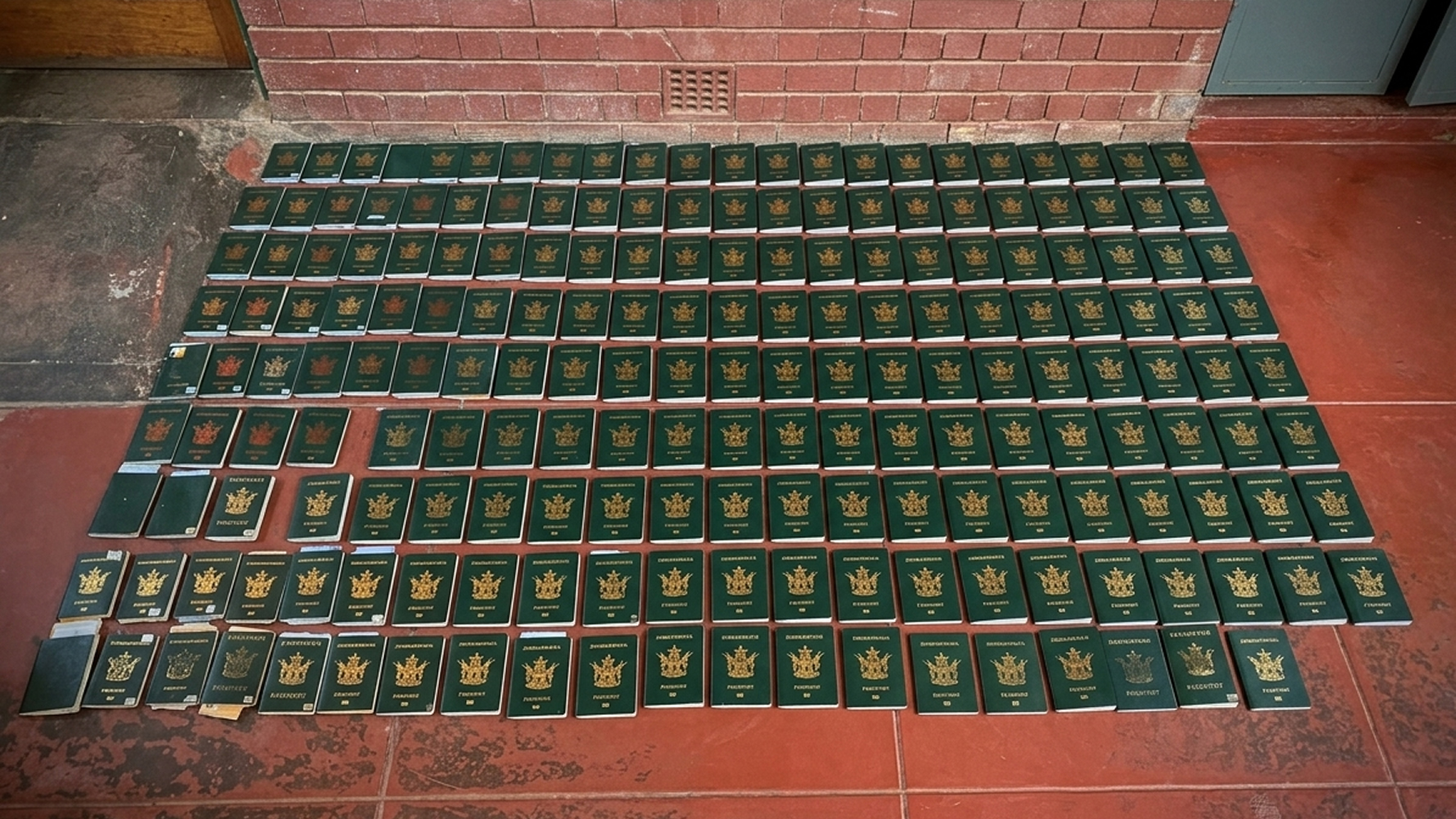
The arrest followed another major passport-related case in South Africa, in which a 43-year-old Zimbabwean national was detained in Mpumalanga after police found 582 passports hidden inside his vehicle. Officers also seized more than R147,000 in cash, some of it found inside the passports and some in a concealed compartment in the vehicle.
The man was stopped on 8 December 2025 after a multidisciplinary police team intercepted a white Chevrolet Utility with Gauteng registration plates at about 1pm. The team included the Middelburg Flying Squad, the Nkangala District Anti-Hijacking Team and Waterval Boven police. The vehicle was searched after officers received information about its movements.
Some of the passports belonged to Zimbabwean nationals, while others were linked to people from Mozambique and Malawi. Police found around R20,000 wrapped in a black plastic bag, taking the total cash recovered to approximately R147,300. The bakkie was impounded as investigators examined how the passports had been collected, where they were going and who was due to receive them.
Captain Mpho Nonyane-Mpe, the provincial police spokesperson in Mpumalanga, said: "Investigation thus far suggests that the driver was probably going to meet someone the next day to have the passports stamped. Police are of the view that the recovered cash was meant for payment,"
The suspect was charged with contravening South Africa's Immigration Act, fraud and money laundering. He was expected to appear before the Waterval Boven Periodical Court. Acting provincial police commissioner Major General Zeph Mkhwanazi said investigators would continue pursuing the people connected to the passport haul.
"We are following up this matter and will not leave any stone unturned. At this stage, the possibility of more arrests cannot be ruled out. We will ensure that those who are involved are brought to book," he said.
The passport seizure pointed to a system in which documents can be moved between countries and handed to intermediaries for fraudulent immigration endorsements. Police suspected that the passports were being transported for illicit stamping, with the cash intended to pay people involved in the process.
For many Zimbabweans working in South Africa without the permits needed for long-term employment, maintaining a valid immigration record is a pressing concern. Zimbabwean visitors are generally allowed short stays in South Africa, but workers who remain beyond the permitted period can face problems when they try to renew their status, travel home or return to their jobs. That pressure has created business for intermediaries who promise to arrange stamps, permits or other paperwork.
The cases have also placed renewed focus on the security of South African identity documents. A fraudulent identity document can be used to open a bank account, apply for benefits, obtain employment, secure accommodation or pass through checkpoints. Fake passports and travel records can be used to disguise movements across borders, while forged work permits can enable people to remain employed without the documents required by authorities.
The Hillbrow operation contained documents linked to social grants, banks, employment and policing, while the Mpumalanga case involved hundreds of passports and a substantial amount of cash. Together, the seizures show the range of services offered by document brokers, from producing new identity papers to arranging apparently official stamps in existing passports.
Gauteng police commissioner Lieutenant-General Elias Mawela praised residents who provided information that led to the Hillbrow arrest. He said police visibility on the streets had been increased, but information from the public remained important when criminal activity took place inside homes and flats.
"I would like to thank the community members who continue to be the eyes and ears of the police. As much as we have intensified police visibility on the streets, we still rely on information from the community about the crimes taking place indoors. We promise to act swiftly and decisively when we are given information.
"This arrest is attributed to community members who would not allow crime to be committed under their watch. We appreciate and salute such community members. Working together, we can bring crime to minimal," Mawela said.
The investigation into the Hillbrow flat was expected to continue, with police examining the equipment, documents and contacts linked to the operation. Further charges could be added as officers trace the people who supplied the papers, paid for them or intended to use them.
The Mpumalanga case was also expected to widen beyond the driver, as police worked to identify the owners of the passports and the people who were due to stamp them. The discovery of passports belonging to nationals from several countries suggested that the network reached beyond one nationality and operated across established travel routes in the region.
Both cases began with police action based on information received from the public or from law-enforcement sources. In Hillbrow, a tip-off took officers to a flat allegedly operating as a one-stop shop for fraudulent South African documents. In Mpumalanga, information led police to a vehicle carrying hundreds of passports and cash. The arrests have given investigators two substantial sets of evidence as they work to expose the wider networks behind the trade in false identities and manipulated immigration records.