

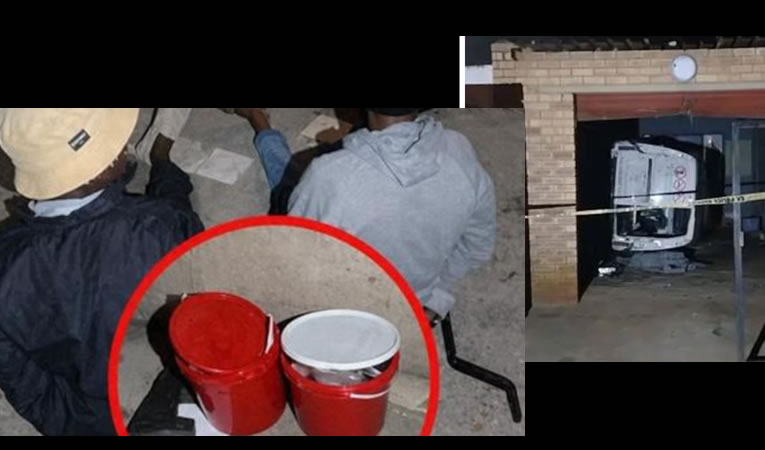
Soweto, Gauteng – A routine operation to recover a hijacked vehicle in Naledi, Soweto, took a horrifying turn last week when Johannesburg Metropolitan Police Department (JMPD) officers made a gruesome discovery: two buckets filled with suspected human organs. The chilling find, made inside a stripped state vehicle, has sent shockwaves through the community and ignited fears of a sinister organ trafficking syndicate operating in Gauteng. Two male suspects have been apprehended, now facing charges that could unravel a dark criminal enterprise.
The macabre discovery unfolded around July 9, 2026, when JMPD’s Tactical Response Unit, acting on intelligence, tracked a hijacked government van to Naledi. What began as a standard vehicle recovery mission quickly escalated into a scene of profound horror. Inside the stripped vehicle, officers stumbled upon the buckets, their contents revealing a potential crime far more disturbing than mere vehicle theft.
According to reports from various media outlets, including SABC News and The Citizen, the JMPD officers were following up on a tip-off about a car being stripped in the area. Their vigilance led them to the hijacked state vehicle, but the sight that greeted them inside was beyond anything they could have anticipated. The suspected human organs were immediately seized, and forensic analysis is now underway to determine their origin, type, and whether they belong to one or multiple individuals.
Two male suspects were arrested on the scene. They now face serious charges of Possession of a Hijacked Vehicle and the deeply disturbing charge of Possession of Human Organs. The suspects are currently in custody at Naledi SAPS, where investigations are ongoing. While initial reports from some sources mentioned the involvement of the South African National Defence Force (SANDF) and Gauteng police in a broader operation, the JMPD is consistently credited with the direct arrest and discovery.
This incident immediately raises alarming questions about the possibility of organ harvesting and trafficking, a heinous crime that preys on vulnerable individuals. The illicit trade in human organs is a global black market, often linked to organised crime syndicates that exploit poverty and desperation. If confirmed, this discovery would point to a deeply disturbing level of criminal sophistication and depravity operating within South Africa.
Community leaders and residents of Soweto have expressed profound concern and revulsion at the news. The idea that such a gruesome trade could be happening on their doorstep has instilled fear and prompted calls for a thorough and transparent investigation. The discovery not only highlights the pervasive issue of vehicle hijacking but also exposes a potential new dimension of organised crime that threatens the very fabric of human dignity.
The investigation will undoubtedly be complex, requiring meticulous forensic work to identify the source of the organs. This could involve DNA analysis to potentially link them to missing persons cases, or to determine if they were harvested from deceased individuals. The outcome of these forensic tests will be crucial in understanding the full scope of the crime and bringing all perpetrators to justice.
This incident also casts a spotlight on the broader challenges faced by law enforcement in combating organised crime. The seamless integration of vehicle hijacking with such a macabre discovery suggests a multi-faceted criminal operation. It underscores the need for enhanced intelligence gathering, inter-agency cooperation, and robust legal frameworks to tackle these evolving threats.
As the suspects remain in custody and the forensic investigations continue, the public awaits answers. The case of the hijacked state vehicle and its horrifying cargo serves as a stark and chilling reminder of the dark underbelly of crime that South Africa continues to battle. The pursuit of justice in this case is not merely about recovering stolen property or prosecuting two individuals; it is about uncovering the truth behind a potentially horrific human rights violation and dismantling any syndicate involved in such an abominable trade. The communities of Gauteng, and indeed the nation, demand nothing less than a full and uncompromising investigation into this truly gruesome discovery.