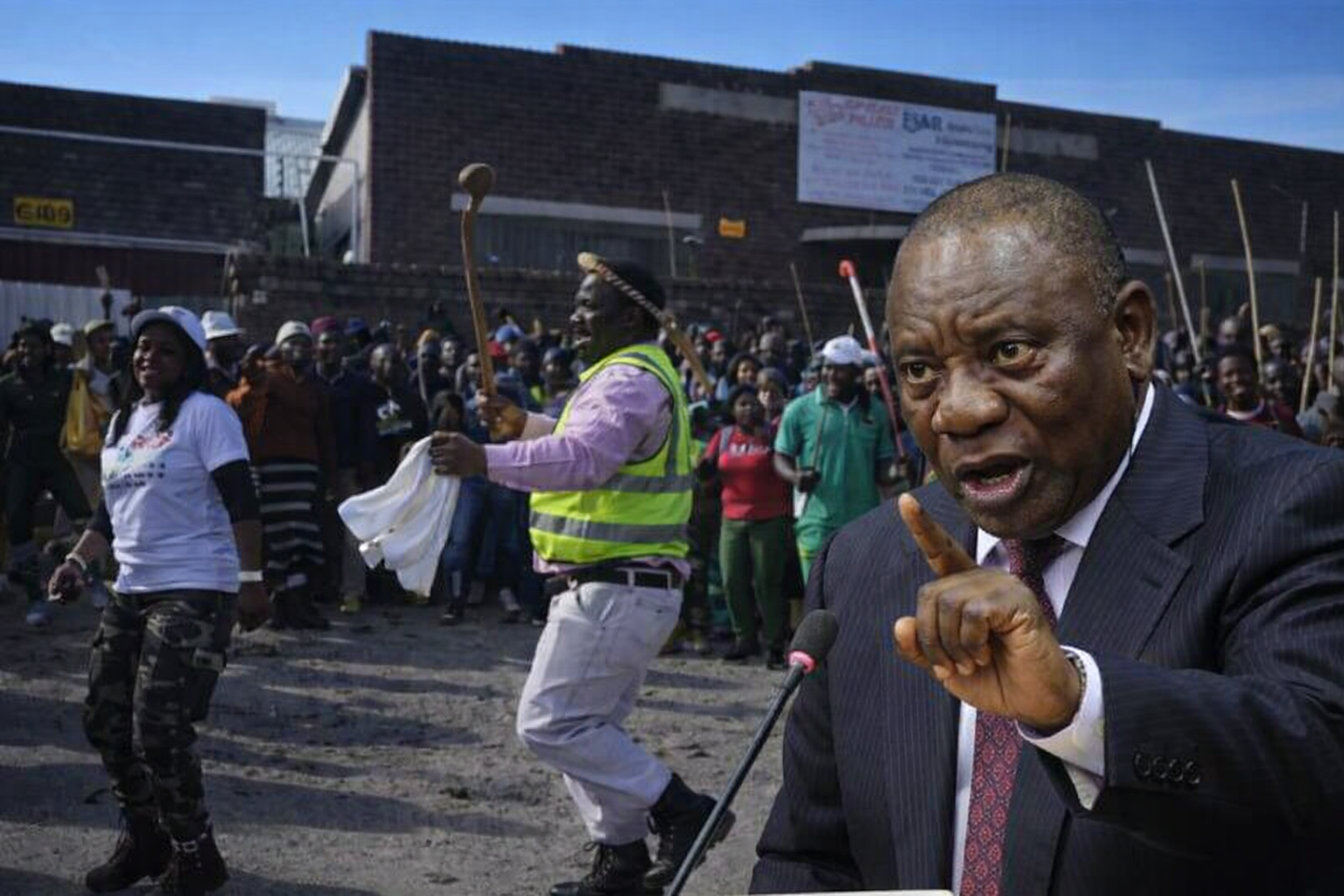
Nasrec, South Africa – President Cyril Ramaphosa has firmly dismissed the June 30 deadline imposed by anti-illegal immigration groups for undocumented foreign nationals to depart South Africa, labelling it “unnecessary.” Speaking on the sidelines of Youth Day commemorations at Nasrec on Tuesday, the President asserted that the government is actively implementing comprehensive measures to tackle immigration challenges and will not tolerate any attempts to destabilise the nation.
The ultimatum, spearheaded by organisations such as the March and March movement, has called for all undocumented foreign nationals to leave South Africa by the end of June, threatening unspecified “further action” if their demands are not met. However, the government has unequivocally distanced itself from this deadline, reiterating that the enforcement of immigration laws remains the sole prerogative of the state.
“The so-called 30th of June, in my view, is not an event that is even necessary because we are addressing the challenges that our people are facing,” Ramaphosa stated, emphasising the government’s proactive stance. He highlighted that the measures already announced by his administration have been largely well-received by South Africans, who view them as crucial and effective steps towards resolving the complex issue of immigration.
In a stern warning, President Ramaphosa urged citizens to refrain from taking the law into their own hands, underscoring that immigration enforcement is the exclusive responsibility of government officials. “No South African must take any action against any person from any of our African sister countries. That is the responsibility of government and government officials,” he declared, reinforcing the state’s monopoly on legitimate force and legal process.
The President further cautioned that authorities would not condone any efforts to foment instability under the guise of addressing concerns about illegal immigration. “We must not allow South Africans to be duped and to be misled by those who want to foster instability in our country. We will not allow that,” he asserted, signaling a robust response to any potential unrest.
Assurances were also given regarding public safety, with Ramaphosa stating that security forces are prepared to ensure peace and order. “Security forces in our country are going to ensure that there is no instability and there’s no disruption of the lives of our people,” he confirmed, aiming to allay fears of widespread civil disturbance.
Addressing the nature of recent marches linked to illegal immigration, Ramaphosa suggested that some participants appeared to harbour intentions beyond mere protest. “With regards to a number of those who are making a lot of noise about these marches that are taking place, there does seem to be an intention to destabilise the country. The clear message is that we are not going to allow that,” he reiterated, drawing a clear line between legitimate concerns and attempts at subversion.
He added that the government would not permit the genuine concerns of its citizens to be exploited by individuals with what he termed “nefarious intentions.” “Our people have heard the message, and we are taking action and we are implementing the interventions that are, in the end, going to address those needs,” Ramaphosa affirmed, seeking to reassure the public that their grievances are being heard and acted upon through official channels.
Responding to criticisms that the government had only begun to act under pressure from anti-illegal immigration organisations, the President defended his administration’s record. “We have actually been doing a lot of work changing our immigration laws and also empowering our immigration officials to address these specific issues,” he explained, indicating that legislative and administrative reforms have been ongoing.
Ramaphosa framed migration as a broader economic challenge, noting that many individuals entering South Africa are primarily seeking better opportunities. “The challenge of immigration that we’re facing is, in the end, an economic one because those who come to our country are, in the main, economic migrants or refugees,” he elaborated, pointing to the socio-economic drivers behind cross-border movements.
He stressed South Africa’s commitment to collaborating with countries across the region and the continent to address the fundamental causes of migration. “We want the whole region and the continent to address this issue together with us, so that we address the root cause of why people would leave their own country and come to what they see as an economic oasis,” Ramaphosa stated, advocating for a regional, collaborative solution.
The President also vehemently rejected claims of xenophobia among South Africans, attributing such accusations to misinformation. “There’s a lot of disinformation that is aimed at tarnishing the image of South Africa,” he said, adding emphatically, “The one thing that South Africans are not is xenophobic. South Africans are not xenophobic and we are addressing their concerns.” This strong denial aims to counter negative narratives and protect the nation’s international standing.
In a significant diplomatic revelation, Ramaphosa disclosed that he had recently engaged with the President of Malawi, who expressed understanding of South Africa’s challenges and pledged cooperation. “I spoke to the president of Malawi just a few days ago, and he said to me, ‘We understand the challenge and the problems that you are facing. We are with you, and we are there to support you. We will work with your government to enable those who want to leave and those who may be undocumented to leave peacefully,’” Ramaphosa quoted, highlighting a constructive bilateral approach.
To further clarify its position and combat misinformation, South Africa plans to dispatch envoys to various countries on the continent. “My envoys are going to be leaving to various countries on the continent to deal specifically with the disinformation and with the position that government has taken on this issue,” he announced. “We are addressing these issues, both the concerns of those who are outside our country and those who are inside our country,” Ramaphosa concluded, signalling a multi-pronged strategy to manage both internal and external perceptions of South Africa’s immigration policies.