South Africa’s government has announced sweeping measures to clamp down on illegal immigration as xenophobic protests continue to flare across the country. The inter-ministerial committee on immigration, established by President Cyril Ramaphosa earlier this month, has vowed to step up enforcement while acknowledging the damage recent unrest has caused to the nation’s international reputation.
Justice and Constitutional Development Minister Mmamaloko Kubayi revealed that 143 people have been arrested for inciting violence against foreigners, while thousands more have been detained for breaching immigration and labour laws. “We want to reassure all South Africans that government is firmly in control and actively managing the challenge of illegal immigration,” she said at a media briefing.
Violence In Mossel Bay
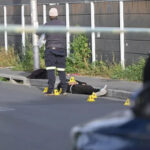
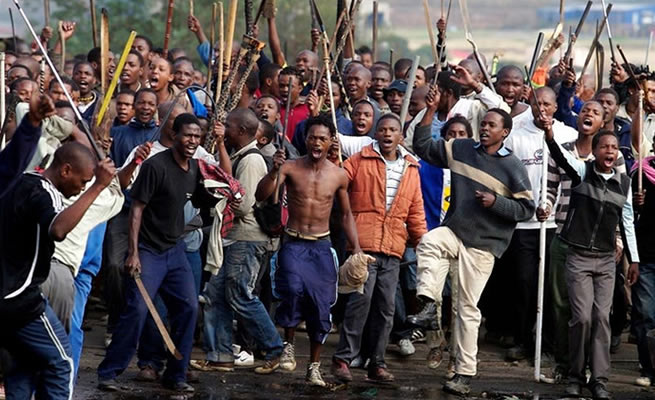
The clampdown follows deadly unrest in Mossel Bay in May, where two Mozambican nationals, Thomas Chunguane (27) and Danilo Muianga (43), were fatally assaulted. Protesters torched homes and attacked foreign nationals in informal settlements, reportedly angered by the employment of foreign workers in local construction projects.
Kubayi confirmed that on 3 June, 15 foreign nationals were arrested during inspections at construction sites in Mossel Bay. A similar operation in Newcastle, KwaZulu-Natal, the following day saw another 15 foreigners detained, along with a business owner accused of employing undocumented workers. On Friday, 35 people were arrested in Tshwane, including two business owners, for allegedly hiring undocumented immigrants.
Thousands Arrested
According to Kubayi, more than 7 400 foreign nationals were arrested in the past month alone for contravening the Immigration Act. Since the start of the year, over 40 000 undocumented foreigners have been detained. “This is some of the work that is being done, and it’s going to intensify and expand as we continue,” she said.
The Border Management Authority (BMA) has deployed advanced technology, including drones and body cameras, to monitor ports of entry by land, air, and sea. Static checkpoints and roadblocks have been set up along major corridors such as Beit Bridge to intercept illegal crossings.
Repatriation Efforts
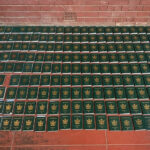
The government is also reviving the special immigration court at the Lindela Repatriation Centre in Limpopo to expedite deportations. Kubayi noted that Ghana, Nigeria, and Mozambique have already repatriated citizens fearing persecution in South Africa. Malawi has requested assistance for nearly 7 000 nationals wishing to return home.
“So far, 980 Malawians have been deported from Lindela on 10 June as part of the crackdown,” Kubayi said. With thousands more awaiting repatriation, she appealed to the private sector to help fund transport costs. “You are needing almost 100 buses to be able to repatriate, and that is why we want to call on stakeholders or the business community to support the government.”
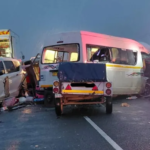
Malawi has dispatched 14 buses, while South Africa has provided eight, but demand far exceeds capacity. Mozambique has repatriated hundreds of citizens by road, Ghana has flown home 618 nationals, and Nigeria has repatriated 268 citizens this week.
Damage To South Africa’s Image
Kubayi admitted that the wave of anti-foreigner protests has hurt South Africa’s image abroad. “The brand, it is hurting. We can’t lie about it, the backlash,” she said. South African artists have seen performances cancelled across the continent in protest. “One artist did reach out to me to say all her gigs were cancelled. She was mad. This is an income lost by a South African.”
International Relations Minister Ronald Lamola has been grappling with diplomatic fallout, including Ghana’s call for the African Union to place South Africa’s xenophobic protests on the agenda at its upcoming mid-term coordination meeting. Kubayi was blunt: “These malicious campaigns are intentionally orchestrated to damage South Africa’s hard-earned international reputation.”
Government’s Position
Kubayi stressed that South Africa is not a xenophobic nation, but conceded that perceptions of hostility towards foreigners have grown. She reiterated that only law enforcement officers are entitled to demand proof of legal status from foreign nationals.
“All those who are protesting on our streets are within their constitutional rights to do so. We must, however, remind ourselves that constitutional rights are accompanied by obligations and responsibilities. One of these is peaceful protest and avoidance of violence and lawlessness in exercising this right,” she said.
Lamola has condemned xenophobia but suggested that some allegations of murder and assault abroad may be attempts to “paint a narrative” undermining South Africa’s human rights record.
The government insists that its crackdown is aimed at illegal immigration, not foreigners in general. Kubayi concluded: “We are saying to South Africans, ‘Let’s be responsible.’”