
The Cost of Silence: Inside the Wesbank Massacre and the Extortion War Gripping the Cape
The laughter of a Saturday evening social gathering in Wesbank was silenced not by the cooling autumn air, but by the clinical, rhythmic crack of a semi-automatic weapon. On the evening of 16 May 2026, a modest home in Strandveld Street became the latest coordinates for a tragedy that has become all too familiar in the Western Cape’s gang-ravaged suburbs. By the time the echoes of the gunfire had faded, four lives were extinguished, and a seven-year-old boy was left bleeding on the pavement, a survivor of a massacre he was never meant to witness.
The child, whose name is being withheld for his protection, was shot in the leg as he played or sat near the adults. He is currently receiving medical attention in a nearby facility, but the physical wound is merely the surface of the trauma. He is one of three survivors from a group of seven who were targeted in what appears to be a cold-blooded execution.
According to witnesses and bystanders, the group was enjoying a small party, "chilling outside" in the relatively mild evening weather. There was no warning. There were no heated arguments or visible signs of a brewing conflict. There was only the sudden appearance of a lone gunman who emerged from the shadows and began to fire indiscriminately into the group.
A source close to the investigation, speaking to the Daily Voice on the condition of anonymity, described a scene of absolute carnage. "The group was chilling outside when all of a sudden a random shooter came out of nowhere," the source revealed. The witness detailed the devastating toll on a single family: "A man’s wife was shot, and his brother, the wife’s friend, and a friend of the brother. All four of them are dead. The wife’s friend’s child was shot in the leg. The child is in hospital."
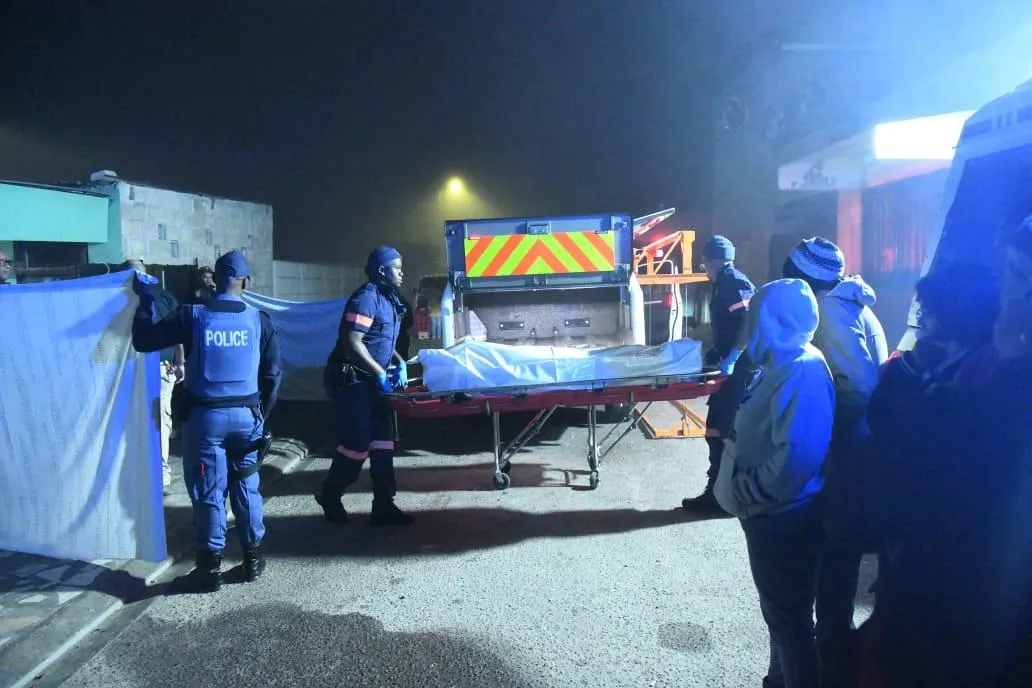
The victims, three women and one man aged between 32 and 39, were declared deceased on the scene by emergency medical personnel. Their bodies lay under the harsh glare of police floodlights for hours as forensic teams combed the area for spent casings and DNA evidence. The presence of the South African National Defence Force (SANDF) soldiers and members of the Anti-Gang Unit (AGU) on the scene served as a grim reminder of the militarised state of policing required in these neighbourhoods.
Colonel André Traut, a spokesperson for the South African Police Service (SAPS), confirmed the details of the investigation. "Western Cape police are investigating four counts of murder and one count of attempted murder following a shooting incident in Wesbank on Saturday evening, 16 May 2026," Traut stated. "At approximately 8pm, SAPS members responded to a complaint in Strandveld Street, Wesbank, where they discovered three adult females and one adult male, aged between 32 and 39, with gunshot wounds. Preliminary investigation suggests that the incident may be gang-related."
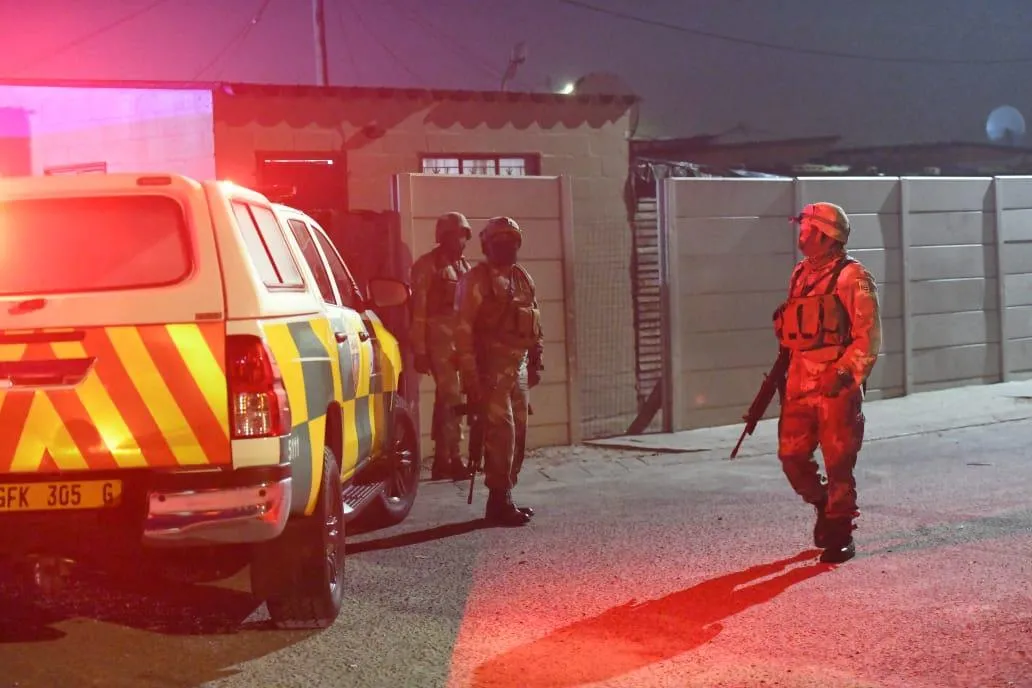

However, the term "gang-related" is often a convenient shorthand that obscures a more complex and predatory reality. In Wesbank, the motive appears to be rooted in a burgeoning and violent "extortion economy" that has seen criminal syndicates move beyond drug trafficking into the systematic bullying of local residents and small businesses.
Mvano Magula, a spokesperson for the Wesbank Community Policing Forum (CPF), was more direct about the causes of the bloodshed. "The shooting is the result of extortion groups and gangsterism," Magula told the Daily Voice. "We unfortunately do not have any information in terms of which gangs."
This incident in Strandveld Street was not an isolated burst of violence. It was part of a particularly bloody weekend for Wesbank, where two additional people were shot and killed in separate incidents, bringing the local death toll to six within forty-eight hours. Across the broader Cape Flats, the statistics are even more staggering. In the first two weeks of April 2026 alone, gang violence claimed the lives of 84 people, with 36 killed in a single week. The sheer volume of casualties has led many to describe the situation not as a crime wave, but as a low-intensity civil war.
The "extortion economy" mentioned by the CPF refers to the "protection fees" demanded by gangs from anyone who operates a business, or even those simply trying to live in peace. From the spaza shops on the corner to the construction sites building new infrastructure, no one is exempt. Failure to pay these "taxes" often results in the kind of indiscriminate violence seen on Saturday night. Investigative research into the region's gang structures reveals that these groups are increasingly professionalised, using violence as a tool for territorial control and financial gain.
The death of Mark Lifman in late 2024 was thought by some to be a turning point in the battle against organised crime in the Western Cape, but instead, it appears to have created a power vacuum that smaller, more volatile factions are now fighting to fill. These factions lack the discipline of older syndicates, leading to more "random" shootings where innocent bystanders—and children—are frequently caught in the crossfire.
Anroux Marais, the Western Cape Minister of Police Oversight and Community Safety, expressed her outrage at the latest massacre. "This loss of life is absolutely senseless," she said. "I am outraged that a young child has yet again been caught in the crossfire of this senseless violence. The psychological and emotional impact of witnessing and surviving such an incident has long-lasting consequences for the minor involved, the grieving families, and the broader community."
Marais’s frustration highlights a growing rift between the provincial government and the national police service over how to handle the crisis. While the city has allocated a record-breaking R6.8 billion to its Safety and Security Directorate for the 2026/2027 financial year, the violence continues to escalate. The deployment of the SANDF is often seen as a "plaster on a gaping gunshot wound," providing a temporary visual deterrent but failing to dismantle the underlying criminal networks.
The challenge for investigators is the wall of silence that often follows such attacks. In communities like Wesbank, where the police are seen as unable to provide permanent protection, residents are understandably terrified of speaking out. "Residents who know who is responsible must come forward anonymously," Minister Marais urged. "Silence only empowers these criminals. Communities must join the fight against illegal firearms and gangs who continue to use these weapons to spread fear and destruction."
Yet, for the people of Strandveld Street, the fear is tangible. When a gunman can walk into a social gathering and execute four people in front of a child, the message sent to the community is clear: no one is safe, and the law is a distant concept. The seven-year-old survivor will eventually leave the hospital, but he will return to a neighbourhood where the shadows of the gunman still linger.
The investigation into the four counts of murder continues, with SAPS calling on anyone with information to contact Crime Stop on 08600 10111 or use the MySAPS mobile application. As the forensic teams pack away their equipment and the SANDF patrols move on to the next hotspot, the families of the deceased are left to pick up the pieces of lives shattered by a conflict they never chose to join.
The tragedy in Wesbank is a microcosm of a larger struggle for the soul of the Cape Flats. It is a struggle between those who wish to build a community and those who wish to extract every cent of value from it through the barrel of a gun. Until the extortion networks are dismantled and the flow of illegal firearms is stemmed, the laughter of a Saturday night will continue to be a dangerous luxury.