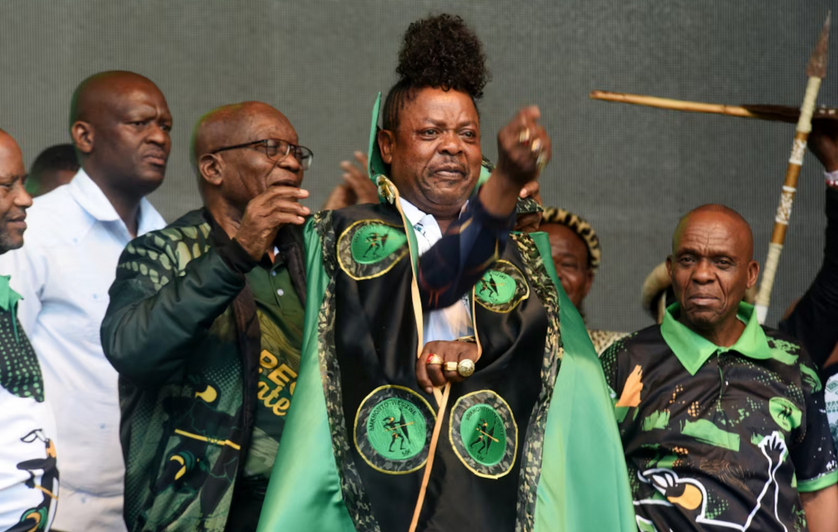
In a political bombshell that has sent ripples through South Africa's political landscape, legendary Tsonga disco musician and reality TV star Gezane Eric Nkovani, famously known as Papa Penny, has dramatically resigned from both the uMkhonto weSizwe (MK) Party and his position as a Member of Parliament. Citing a litany of internal attacks, vilification, and reputational damage from within the party's Limpopo leadership, Papa Penny's exit marks a significant blow to the nascent political force and raises serious questions about its internal stability. His departure, just months after enthusiastically joining the party, underscores the turbulent nature of South African politics and the personal toll it can take on high-profile figures.
The Heartfelt Resignation: A Tale of Betrayal
Papa Penny's decision, confirmed in a heartfelt message released on Friday, May 15, 2026, laid bare the deep-seated frustrations that led to his exit. He spoke of experiencing "attacks, vilification and belittling" at the hands of individuals within the MK Party. This was not a casual parting; it was a departure born of perceived betrayal, particularly from the Limpopo leadership. For a figure who had publicly and passionately endorsed the MK Party, even dumping his long-standing allegiance to the ANC, this internal strife proved to be an insurmountable hurdle. His words painted a picture of a dedicated member who felt his contributions and reputation were being undermined, making his continued involvement untenable.
The Zuma Connection: Loyalty vs. Party Politics
Crucially, Papa Penny made a clear distinction between his respect for former President Jacob Zuma and his disillusionment with the party's internal machinery. He expressed profound gratitude to Zuma, stating it was an honour to serve under his leadership. This highlights a common theme in South African politics where personal loyalty to charismatic leaders can sometimes overshadow allegiance to the party structure itself. Papa Penny's issue was not with the party's founder but with the alleged "jealous" individuals and the internal dynamics that he felt were toxic and detrimental. This nuanced stance suggests that while Zuma's influence remains strong, the day-to-day operations and regional leadership of the MK Party may be struggling to maintain cohesion and manage internal dissent.
From ANC to MK, and Now What?
Papa Penny's political journey has been as colourful as his musical career. His highly publicised defection from the ANC to the MK Party in May 2024 was seen as a significant coup for the new political entity, bringing with it his considerable celebrity appeal and a potential boost in voter numbers, particularly in his home province of Limpopo. His presence was meant to add a vibrant, relatable face to the party's campaign. His sudden departure now leaves a void and raises immediate questions about the impact on the MK Party's image and its support base, especially as the political landscape heats up. Will his exit trigger a domino effect, or will the party manage to contain the damage? For Papa Penny himself, the future is uncertain. Will he return to the ANC, seek a new political home, or retreat from the political arena entirely to focus on his music and reality television career? His next move will undoubtedly be watched closely by both political analysts and his legions of fans.
Internal Strife: A Red Flag for the MK Party?
Papa Penny's resignation is not an isolated incident. Reports and rumours of internal conflict and high-profile exits have plagued the MK Party, suggesting a deeper struggle for control and direction within its ranks. The departure of a figure with such popular appeal, citing internal attacks, serves as a significant red flag. It indicates that the party, despite its rapid rise, may be grappling with fundamental issues of governance, leadership, and unity. For any political party, especially a relatively new one, maintaining internal cohesion is paramount. The public nature of Papa Penny's grievances could deter potential supporters and further fuel perceptions of instability. As the MK Party navigates these turbulent waters, the challenge will be to address these internal issues transparently and effectively, or risk losing more than just a celebrity MP. The saga of Papa Penny's political journey continues to be a compelling narrative, reflecting the volatile and often unpredictable nature of South African politics.