

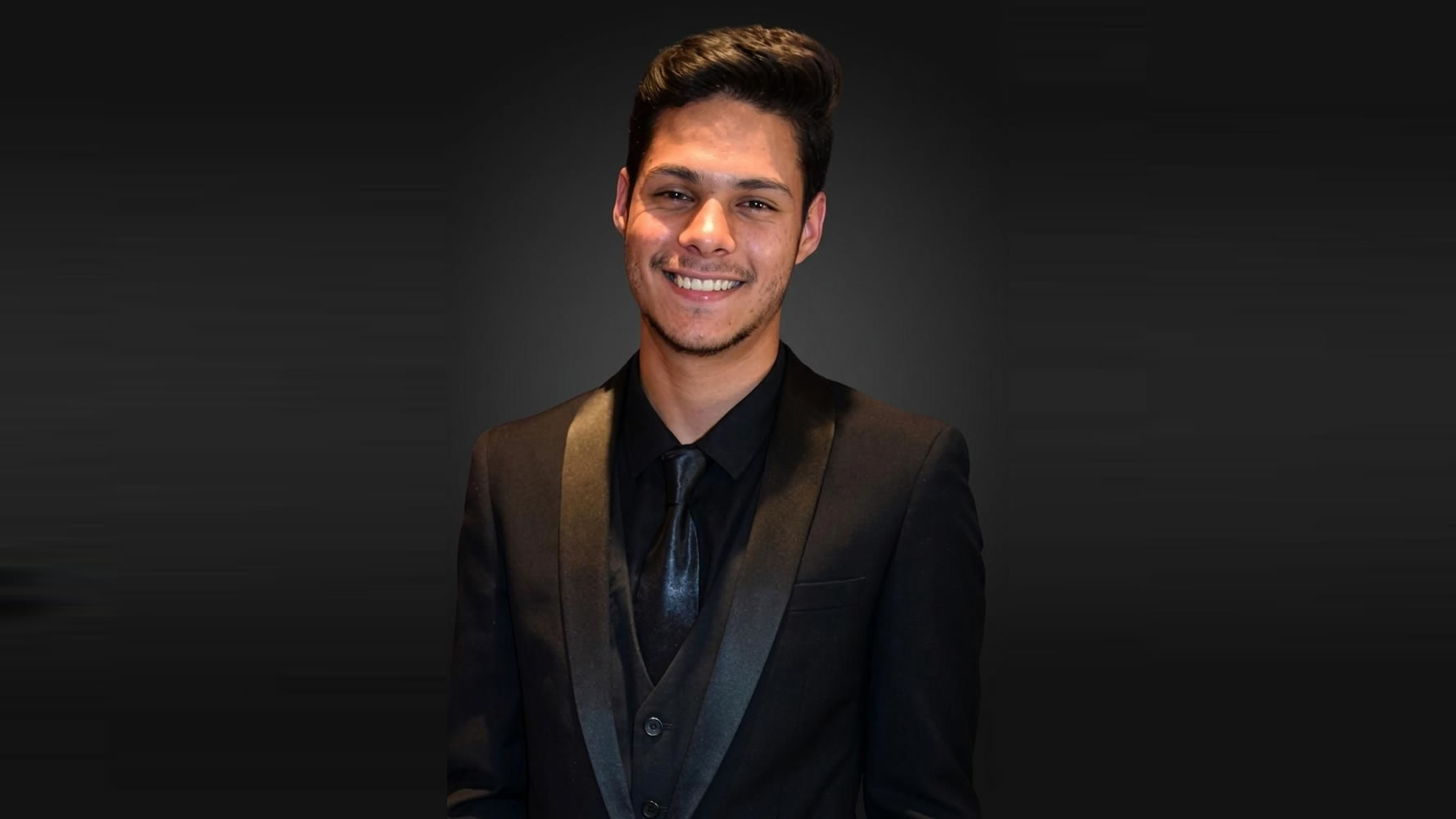
The Imam Who Never Was: A Mother's Grief and the Moral Crisis of the Cape Flats
The evening of Thursday, April 23, 2026, was meant to be a simple return to routine for 25-year-old Muhammad Shakur Makda. For weeks, the quiet discipline of Ramadan had kept him close to home, his focus turned inward toward faith and family. As the holy month concluded, he felt the need to stretch his legs, to breathe in the cooling air of Eagle Park, a suburb in the Grassy Park area of Cape Town. He told his mother he was going for a walk—a mundane, everyday act that, in the volatile landscape of the Cape Flats, has increasingly become a gamble with fate.
Two hours later, his mother's world was shattered. Shakur lay on the cold tarmac of 14th Avenue, his body riddled with bullets. He had been shot in the ear, the neck, the chest, and the arm. He was not a gangster; he was not a criminal. By all accounts, he was a young man with a profound sense of purpose, a "happy soul" who spent his days looking for work and his nights dreaming of a higher calling. He wanted to be an Imam, a spiritual leader who would guide his community toward peace. Instead, he became another statistic in a relentless wave of violence that is tearing the social fabric of Cape Town apart.
The tragedy of Shakur Makda is not an isolated incident. It is a symptom of a deeper, more systemic rot that has turned residential streets into literal battlefields. Just 24 hours before Shakur was gunned down, 24-year-old Moegamat Uzair Kannemeyer was murdered on Eagle Road in Pelican Park, just a stone's throw away. The proximity of these killings, both in time and geography, has left the residents of the Southern Suburbs reeling. For the families left behind, the pain is compounded by a chilling revelation from the authorities: Shakur was likely killed in a case of mistaken identity.
"He went for a walk as he always would," his mother recalled, her voice heavy with the weight of a loss that no parent should ever endure. "He had not been for a walk in a while, since Ramadan, and he decided that day to go for one. We found out about two hours later because they were trying to find me. Someone recognised him and said it was my son."
The details of the night are a haunting montage of domestic normalcy interrupted by sudden, lethal aggression. Neighbours reported hearing the sharp crack of gunfire and instinctively ducking for cover. Before the shots rang out, some heard the sounds of an argument—a brief, heated exchange on the street that ended in a spray of lead. By the time the witnesses felt safe enough to look outside, the perpetrators had vanished into the shadows, leaving only the silence of the night and the broken body of a young man who had committed no crime other than being in the wrong place at the wrong time.
The investigation into Shakur's murder has uncovered a disturbing technical detail that highlights the professionalised nature of the violence currently plaguing the region. According to police sources, the ballistics report linked the bullets used to kill Shakur to an attempted murder that occurred just one week prior, on approximately April 16, 2026. This suggests that the same firearm, and potentially the same group of individuals, is moving through the community with impunity, striking multiple targets in a short span of time.
Captain FC Van Wyk, a spokesperson for the South African Police Service (SAPS), confirmed that Grassy Park police have registered a murder case. "Circumstances surrounding a shooting incident on Thursday at about 7.40pm at 14th Avenue, Eagle Park, in which a 25-year-old male was shot and fatally wounded, are under investigation," he stated. "SAPS members responded to a shooting incident at the mentioned address, and on arrival, they found the body of the victim, who sustained several gunshot wounds to the body. The motive for this shooting incident forms part of the police investigation."
For the Cape Town Ulama Board (CTUB), the death of a young man who aspired to the pulpit was a bridge too far. The organisation, which represents religious leaders across the city, has shifted from offering condolences to demanding radical structural change. Shaykh Sayed Ridhwaan Mohamed, an executive member of the board, spoke with a palpable sense of urgency about the "moral crisis" facing the Cape Flats.
"Within the past days, our streets have been turned into battlefields," Shaykh Mohamed said. "The Cape Town Ulama Board is reeling from the senseless killing of yet more young men's lives cut short by a wave of violence that is tearing the fabric of our society apart. We refuse to watch from the sidelines."
The board's response was swift. On Tuesday, April 28, 2026, they convened a High-Level Crime Response Meeting. The gathering was not merely a forum for grievances; it was a strategic summit attended by Members of Parliament, including Khalid Sayed MPL, civic leaders, and safety authorities. The objective was clear: to confront the scourge of gangsterism and drugs that has turned neighbourhoods like Grassy Park, Eagle Park, and Pelican Park into high-risk zones.
The most significant outcome of this meeting was the launch of the Community Guardianship Desk. This new initiative is designed to bridge the gap between formal law enforcement and the communities they serve. To lead this effort, the CTUB has recruited a veteran of the front lines: retired police commander Colonel Dawood Laing. Known for his uncompromising stance against gang syndicates during his tenure in the SAPS, Colonel Laing's appointment signals a shift toward a more intelligence-driven, community-focused approach to security.
"This is not just a policy issue; it is a moral crisis," Shaykh Mohamed added. "As religious leaders, we hold a profound responsibility to protect our youth and restore peace to our neighbourhoods. We are demanding an immediate, unified commitment to action. We must reclaim our communities before more mothers are left to mourn."
The tragedy of the "mistaken identity" theory is perhaps the most difficult aspect for Shakur's family to process. It suggests a level of recklessness among the gunmen that is almost as terrifying as premeditated murder. In the twisted logic of gang warfare, a target is often defined by a silhouette, a jacket, or a presence on a particular corner. Shakur, a helpful and friendly young man who was simply enjoying a post-Ramadan stroll, may have been nothing more than a victim of a lethal error.
"My son was looking for work," his mother explained. "He did not deserve it; he was a happy soul, friendly and helpful. He told a friend that he wants to become an Imam. We are coping and accepting that he is in a better place. But we want justice. I would like to talk to those people who shot him and ask them why."
The "why" is a question that echoes across the Cape Flats. It is a question asked by the family of Uzair Kannemeyer, whose body was found just five metres from his home. It is a question asked by the residents of Lavender Hill, who recently marched in their hundreds to protest the crossfire that frequently claims the lives of children. The answer, however, is often buried in the complex web of socio-economic despair, the allure of the drug trade, and the systemic failure of the state to provide adequate protection to its most vulnerable citizens.
In the week following Shakur's death, the presence of the South African National Defence Force (SANDF) under Operation Prosper has been noted in several hotspots. While the deployment of soldiers on civilian streets is a controversial measure, many in Grassy Park see it as a necessary evil—a temporary shield against a level of violence that local police are often too under-resourced to contain.
Yet, as Colonel Dawood Laing has pointed out in his new role, the military and police can only do so much without the active cooperation and intelligence of the community. The Community Guardianship Desk aims to foster this cooperation, encouraging residents to speak out without fear of retribution. It is a tall order in a landscape where "snitching" is often a death sentence, but for many, the alternative—continued silence while their sons are slaughtered—is no longer an option.
As the sun sets over Eagle Park today, the streets are quieter, but the tension remains. The 14th Avenue scene of the crime is no longer cordoned off, but the memory of the evening of April 23 is etched into the minds of those who live there. For Shakur Makda's mother, the house feels emptier, the future he spoke of now a collection of "what ifs."
The story of Shakur Makda is a reminder that the cost of crime is not just measured in lives lost, but in the potential that is extinguished. A future Imam, a man who could have spent decades preaching peace and providing guidance to the youth of Grassy Park, was silenced by individuals who likely didn't even know his name. The quest for justice for Shakur is now more than a police matter; it is a test of whether a community, led by its spiritual and civic leaders, can finally say "enough" and reclaim the peace that every citizen deserves.
"We are coping," his mother said, her words a testament to the resilience of the human spirit in the face of unimaginable cruelty. But coping is not the same as healing. True healing for the Cape Flats will only begin when the guns are silenced, and young men like Shakur can walk their streets without fear, their only concern being the dreams they hope to achieve.