

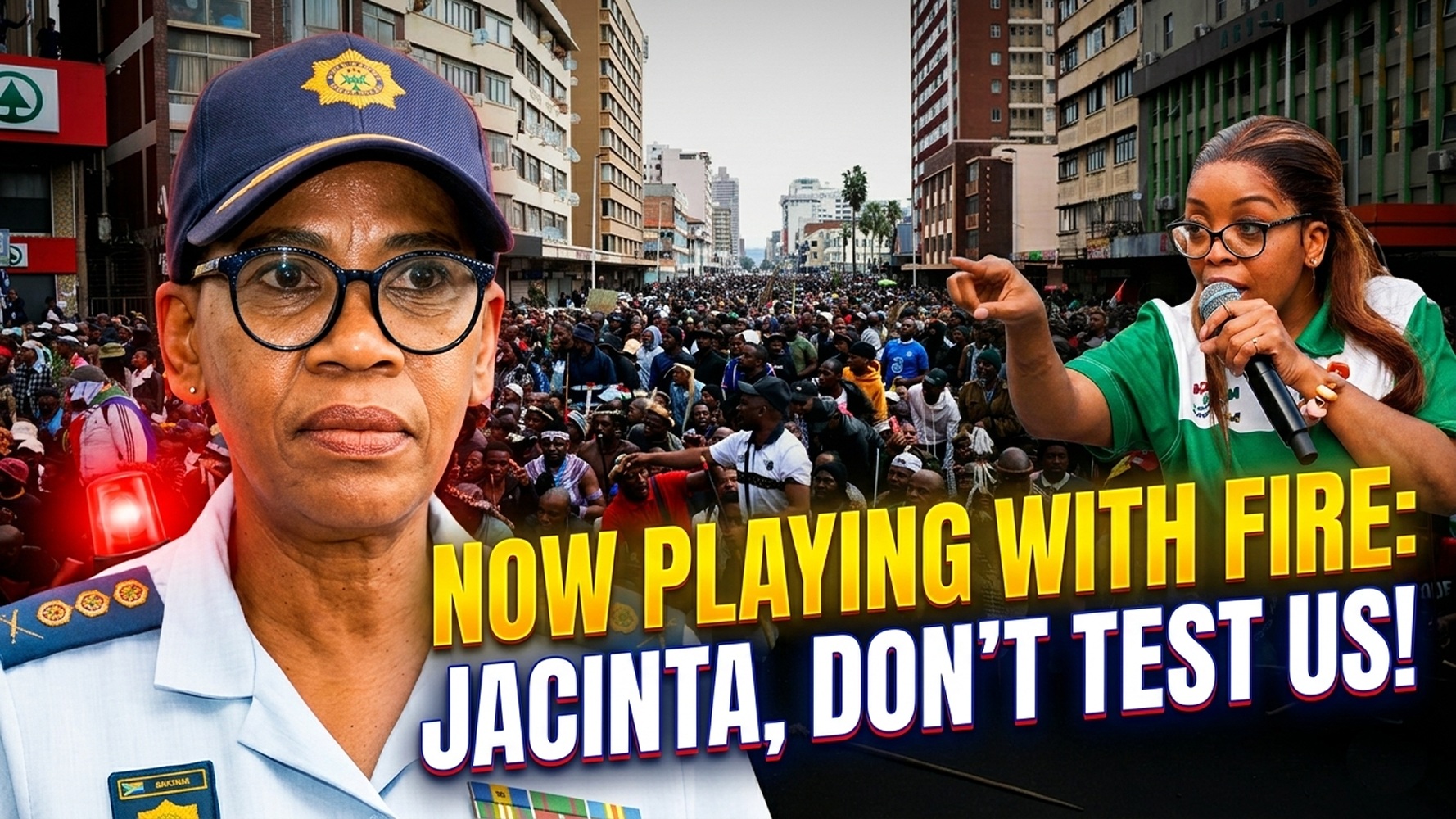
Welcome to John Brown Updates! I'm John Brown, and today we're diving deep into a critical situation unfolding in South Africa, bringing you the latest news and a comprehensive documentary-style look at a major geopolitical standoff. The headline "March and March now playing with fire: Natjoints issues strong warning" captures the essence of the heightened tensions in Durban as regional leaders gather for the 46th Southern African Development Community (SADC) Summit.
This isn't just about an undocumented individual attempting to breach high-level security accreditation by posing as a performing artist; it's the visible tip of a massive security iceberg gripping the coastal city. The eThekwini Metropolitan Municipality is under an unprecedented security lockdown, with leaders from 16 SADC member nations convening at the Inkosi Albert Luthuli International Convention Centre. While official statements highlight the need to protect visiting presidents and high-level foreign delegations, independent intelligence reviews suggest a much deeper security crisis at play.
At the heart of this extraordinary security deployment is a fierce political storm ignited by anti-immigrant civic formations. The immediate catalyst stems from an aggressive online mobilisation campaign spearheaded by Jacinta Ngobese-Zuma, the prominent leader of the March and March movement. This organisation, which emerged in March 2024, campaigns against undocumented immigration, having previously orchestrated widespread demonstrations on 30 June 2026. These past events, though largely orderly, saw isolated incidents of unrest, property damage, and intimidation, prompting several African governments, including Malawi, Nigeria, and Ghana, to organise emergency repatriation for their citizens. Undeterred, March and March vowed to sustain weekly protests, targeting the SADC Summit as their next major stage to send a resolute message about national sovereignty and immigration policies.
This direct challenge prompted an immediate, uncompromising response from the National Joint Operational and Intelligence Structure, known as Natjoints. SAPS Deputy National Commissioner Lieutenant General Tebello Mosikili, who chairs Natjoints, briefed journalists in Durban, detailing a multi-agency security operation. The convention centre precinct and surrounding coastal arteries have been designated a strict red zone, with rigorous access controls and heavy tactical patrols. Natjoints issued an unyielding message: while peaceful and lawful protest is a protected constitutional right, criminal acts, intimidation, property damage, or disruption of this major international event will not be tolerated and will face severe legal consequences. Security commanders cautioned the public against testing the resolve of the armed forces, emphasising their readiness to respond decisively and proportionally to any security breach. This operational readiness was demonstrated when security forces intercepted the undocumented foreign national attempting to gain accreditation with false claims, leading to an immediate arrest.
The underlying tensions fueling these extensive security measures extend beyond immediate protest logistics, tapping into deep-seated socioeconomic grievances across South Africa. Cross-border migration remains one of the most explosive political topics in the country. While diplomatic summits often promote regional economic integration and the free movement of people, local infrastructure, public healthcare facilities, and urban labour markets, particularly in hubs like Durban, are under immense strain. Critics argue that SADC resolutions often advance open-border policies without providing realistic solutions to curb undocumented border crossings or compensate host municipalities bearing demographic pressures.
The rise of civic movements like March and March reflects growing domestic frustration with the perceived disconnect between state-level diplomatic aspirations and grassroots socioeconomic realities. The movement’s registration as a formal non-governmental organisation, with aspirations to replicate the institutional lobbying power of groups like AfriForum, signals a strategic shift towards organised political opposition against prevailing immigration policies. While technocrats at the summit attempt to steer agendas toward formalised documentation and bilateral labour quotas, the core dilemma remains unresolved. Civil society watchdogs point out that while Pretoria champions pan-African solidarity, local taxpayers absorb the compounding costs of expanded public service delivery and contested housing settlements. The presence of regional heads of state in Durban provided an unavoidable forum where these bilateral grievances could no longer be ignored, even as security forces maintained an unyielding ring of steel around the convention venue.
The heavy security lockdown in Durban triggered mixed reactions. Business chambers welcomed the uncompromising security posture, viewing the successful hosting of international gatherings as vital for KwaZulu-Natal’s economic reputation. Law enforcement authorities drew upon experiences from past major global engagements, like the G20 Leaders’ Summit, to reassure the public of their matured capabilities. They commended law-abiding citizens who exercise their constitutional rights peacefully, distinguishing between legitimate public demonstration and criminal opportunism. Conversely, civil rights organisations raised concerns about potential overreach, warning that heavy-handed policing and sweeping traffic restrictions could infringe upon legitimate civic expression and disrupt ordinary commerce. Despite logistical frictions, law enforcement maintained that national security and the protection of foreign dignitaries remained the absolute priority, with intelligence structures continuously assessing the security environment.
As the regional summit concludes its deliberations, the events in Durban have laid bare the complex intersection of regional diplomacy and domestic socioeconomic friction. The unyielding stance adopted by security structures successfully deterred major physical disruptions, ensuring visiting heads of state could deliberate without intimidation. However, the foundational grievances voiced by domestic movements—rooted in anxieties over illegal immigration, infrastructural strain, and economic disparity—will not dissipate simply because a diplomatic summit has concluded under heavy guard. As South Africa navigates its dual identity as a champion of African integration and a sovereign state struggling with domestic service delivery, the tensions witnessed in Durban serve as a powerful reminder that regional policies cannot succeed without addressing the foundational concerns of ordinary citizens. The state has proven its ability to secure a city and protect visiting dignitaries; the true test, however, lies in whether regional leaders can translate diplomatic dialogue into sustainable, long-term solutions for the region's socio-economic challenges.
What are your thoughts on how governments should balance regional diplomatic integration with domestic security concerns, and do you believe stricter border controls are the answer? Please leave your opinions in the comments section below.
#SouthAfricaLatestNews, #BreakingNews, #Documentary, #SADCSummit, #DurbanSecurity, #IllegalImmigrationSA, #MarchAndMarch, #NatjointsWarning, #JohnBrownUpdates, #AfricanIntegration