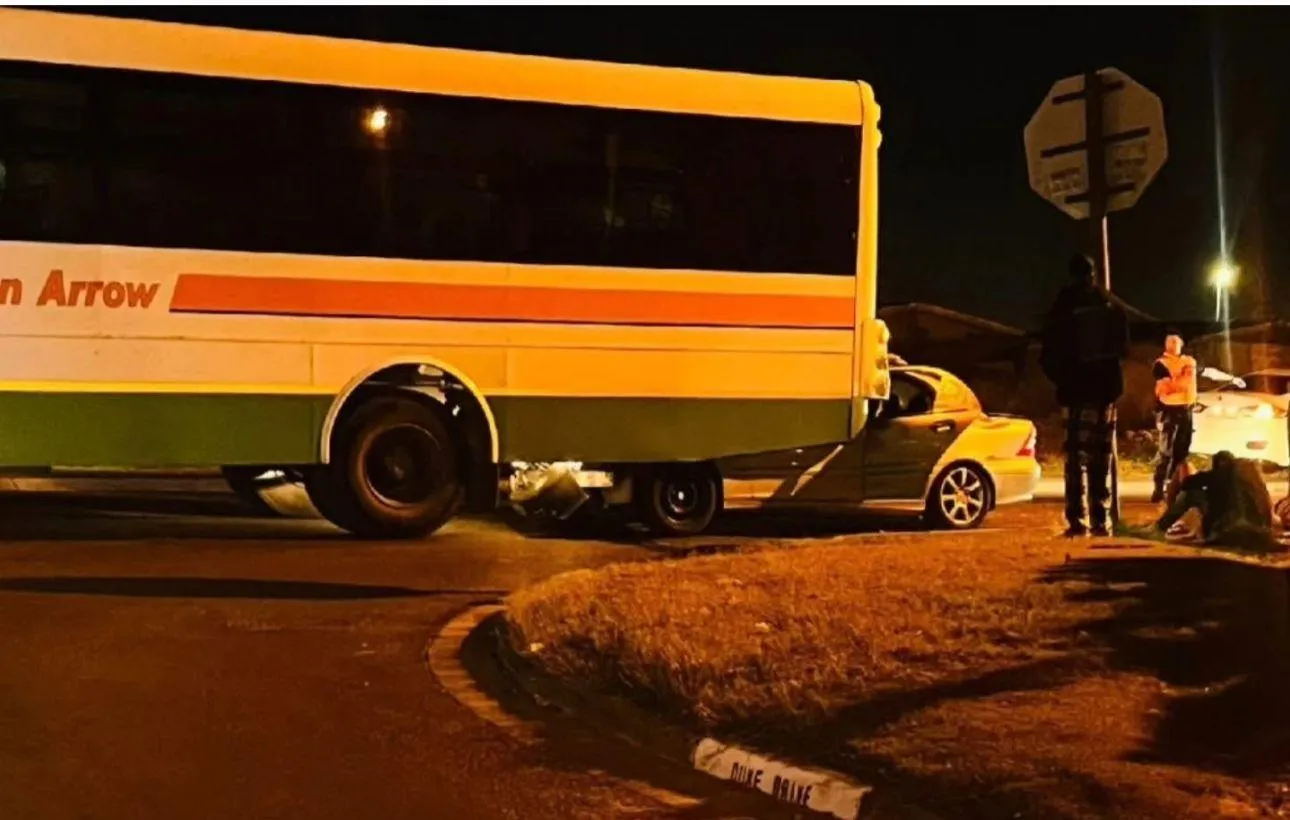
Tragedy in Eerste River: Mercedes-Benz Driver Killed in Fatal Pre-Dawn Collision with Stationary Bus
EERSTE RIVER, WESTERN CAPE – In the quiet, pre-dawn hours of Monday, 13 April 2026, the silence of Eerste River was shattered by a violent collision that has once again highlighted the treacherous nature of the Western Cape’s roads during the early morning commute. A silver Mercedes-Benz, carrying five occupants, careened into the rear of a stationary Golden Arrow bus, resulting in the immediate death of the driver and leaving four others hospitalised with varying degrees of injury.
The incident, which occurred at approximately 5:00 am at the intersection of Bobs Way and Duke Street, has prompted a culpable homicide investigation by the South African Police Service (SAPS). As investigators piece together the final moments leading up to the crash, the community is left grappling with the reality of another life lost on a stretch of road that residents have long claimed requires better lighting and stricter traffic enforcement.
The Fatal Morning
According to official police reports, the Mercedes-Benz was travelling along Bobs Way when it slammed into the back of the bus. The impact was so severe that the driver of the luxury sedan was declared deceased on the scene by emergency medical services. The four passengers in the vehicle, whose identities have not yet been released, sustained multiple injuries and were rushed to a nearby medical facility for urgent treatment.
Constable Ndakhe Gwala, a spokesperson for the police, confirmed the details of the tragedy.
"This office confirms that Kleinvlei police attended an accident scene at the corner of Bobs Way and Duke Street, where a motor vehicle collided with a bus on Monday, 13 April 2026, at around 5am," Gwala stated. "Upon arrival, they found a silver Mercedes-Benz with five occupants. The driver of the motor vehicle was declared dead on the scene, while four passengers sustained various injuries and were transported to a medical facility."
The Golden Arrow bus, a staple of the Cape Town metropolitan transport system, was fortunately empty of passengers at the time of the collision. However, the psychological toll on the bus driver was significant. Bronwen Dyke-Beyer, spokesperson for the Golden Arrow Bus Service, confirmed that their employee required medical attention following the crash.
"Based on the information available at this stage, a Golden Arrow bus was stationary when it was struck from behind by a third-party vehicle," Dyke-Beyer explained. "There were no passengers on board the bus at the time. However, the bus driver was treated for shock following the incident. Our thoughts are with the families and loved ones of those affected during this difficult time."
A Pattern of Peril
This fatal accident is not an isolated incident in the region. Only weeks prior, the Western Cape Government had launched its 2026 Easter Road Safety Plan, an intensive operation designed to curb the rising tide of road fatalities. Despite 24/7 enforcement, vehicle fitness checks, and increased visibility, the province continues to struggle with high numbers of accidents, particularly during the "high-risk" windows of early morning and late evening.
Recent data from the Provincial Traffic Services indicates that the risk of crashes in the Western Cape has been exacerbated by recent wet weather and poor visibility. On 3 April 2026, authorities issued a specific alert regarding wet road surfaces, noting that even experienced drivers were falling victim to reduced traction and longer braking distances. While it is not yet confirmed if weather played a role in the Eerste River crash, the 5:00 am timing suggests that low light levels were almost certainly a factor.
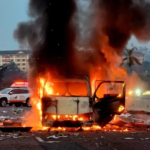
Furthermore, the Golden Arrow Bus Service has been at the centre of several safety-related incidents in the first quarter of 2026. In mid-March, a Golden Arrow bus collided with a CPUT student shuttle in District Six, resulting in serious injuries and the subsequent suspension of the bus driver. In a separate, more sinister incident on 26 March, a bus was set alight in an apparent protest-related attack, highlighting the various dangers faced by public transport operators and commuters alike.
The Intersection of Concern
Residents of Eerste River have frequently voiced their frustrations regarding the safety of Bobs Way. The intersection with Duke Street is a known bottleneck for commuters heading towards the N2 and the industrial hubs of Blackheath and Kuils River.
"The visibility at that time of the morning is appalling," says one local resident who wished to remain anonymous. "You have buses stopping to pick up workers, and you have cars trying to beat the traffic. Without proper street lighting and visible policing, these accidents are bound to happen."
The "N2 Edge Project," a R114 million investment aimed at repairing safety infrastructure on the nearby N2 highway, has focused on preventing smash-and-grab robberies and stone-throwing attacks. However, community leaders argue that similar investments are desperately needed for the secondary arterial roads like Bobs Way, which carry thousands of residents every day.
The Investigative Focus
The Kleinvlei police have registered a case of culpable homicide, a standard procedure in South Africa when a death results from a motor vehicle accident. The investigation will focus on several key areas: the speed of the Mercedes-Benz at the time of impact, the mechanical condition of the vehicle, and whether the stationary bus was parked in a designated area with its hazard lights appropriately engaged.
Forensic investigators were seen on the scene for several hours on Monday morning, meticulously measuring skid marks and the debris field. The silver Mercedes-Benz, now a mangled wreck of steel and glass, serves as a grim reminder of the fragility of life.
A Community in Mourning
As the four injured passengers begin their recovery, the family of the deceased driver faces the arduous task of arranging a funeral and seeking answers. The loss of a life in such a sudden and violent manner leaves a void that no police report or official statement can fill.
The Western Cape’s road safety crisis is a complex puzzle involving infrastructure, enforcement, and driver behaviour. While the provincial government continues to roll out new initiatives, such as the "Roads4U" mobile app launched in March 2026 to allow residents to report road hazards, the human cost remains devastatingly high.
For the people of Eerste River, the morning of 13 April will be remembered not for the start of a new week, but for the tragedy that unfolded at the corner of Bobs Way and Duke Street. As the investigation continues, the call for safer roads grows louder, echoing the grief of a family whose loved one will never return home.
The Golden Arrow Bus Service has reiterated its commitment to cooperating fully with the authorities. "We are providing all necessary support to our driver and will assist the SAPS in any way possible to ensure a thorough investigation," Dyke-Beyer added.
As the sun rose over the scene on Monday, the wreckage was eventually cleared, and the flow of traffic resumed. But for those involved, and for a community weary of road-side memorials, the impact of this collision will be felt for a long time to come.
The broader implications of this accident extend beyond the immediate tragedy. It serves as a stark reminder of the vulnerabilities inherent in our daily commutes. The intersection of Bobs Way and Duke Street, now marked by the remnants of this fatal encounter, stands as a testament to the urgent need for comprehensive road safety measures. The community's calls for improved lighting and stricter enforcement are not merely complaints; they are pleas for the preservation of life.
In the wake of this incident, local authorities are under increased pressure to address the systemic issues that contribute to such accidents. The reliance on public transport, coupled with the high volume of private vehicles, creates a volatile mix on the roads of Eerste River. The tragic loss of the Mercedes-Benz driver underscores the critical importance of vigilance and adherence to traffic regulations by all road users.
As the investigation by the Kleinvlei police progresses, the findings will undoubtedly shed light on the specific circumstances that led to this devastating collision. However, the broader conversation about road safety in the Western Cape must continue with renewed urgency. The lives lost on these roads are not just statistics; they are individuals with families, friends, and futures that have been abruptly cut short.
The commitment of the Golden Arrow Bus Service to support their driver and assist in the investigation is a necessary step in the aftermath of such an event. Yet, it is the collective responsibility of the community, local government, and law enforcement to ensure that the roads of Eerste River, and indeed the entire Western Cape, become safer for everyone. The memory of the driver who lost their life on that fateful Monday morning should serve as a catalyst for meaningful change, ensuring that such tragedies become a thing of the past.
Fact Box: Road Safety in the Western Cape (2026)
- Easter Road Safety Plan: Launched March 2026, focusing on 24/7 enforcement and alcohol checks.
- Key Risk Factors: Poor visibility, wet road surfaces, and high-speed collisions with stationary objects.
- Public Transport Safety: Multiple incidents involving Golden Arrow buses reported in the first quarter of 2026, including collisions and arson attacks.
- Infrastructure Investment: R114 million N2 Edge Project currently underway to improve safety on major commuter routes.