

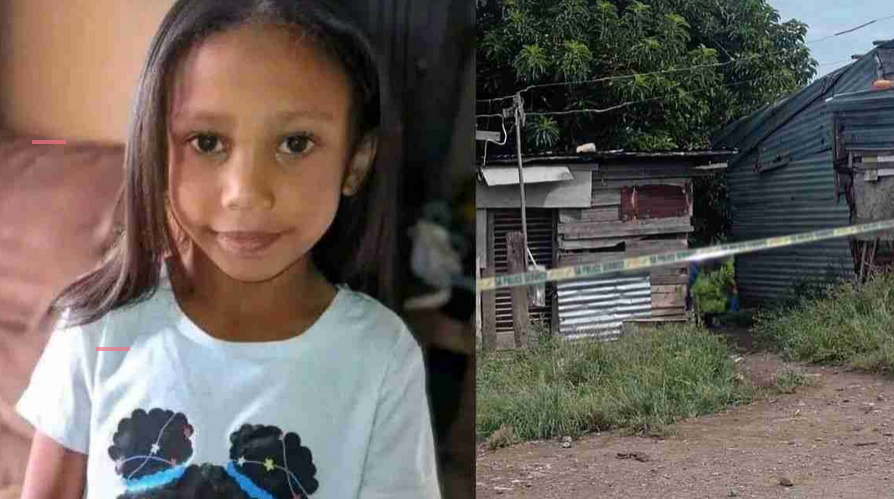
Some stories cannot be read in the same way as others. They are too heavy, too painful and too close to the deepest fears of any parent or family member. The death of a seven-year-old girl in KuGompo, East London, is one of those stories. The confirmed details that are publicly available remain limited, but what is already known is enough to leave a community stunned. The Buffalo City Metropolitan Municipality said it was shocked and deeply saddened after the child’s body was found at a nearby dumpsite in Second Creek. Even stripped of every other detail, that fact alone is devastating. A child who should have been safe, known and protected instead became the centre of a tragedy that has shaken her neighbourhood and placed a grieving family in the public eye.
Komani News reported that the municipality issued a statement describing the case as serious and distressing, and said the incident had deeply affected the local community. It also made clear that the death of the child had stirred wider concern about violence against vulnerable people, especially women and children. In the municipality’s words:
“The loss of such a young life is not only a tragedy for her loved ones, but a painful reminder of the urgent crisis of violence against women and children that continues to affect society.”
That statement is important because it recognises that this is not only a private family tragedy. It is also part of a national wound. South Africa has repeatedly been forced to confront cases involving children and women who fall victim to violence in homes, streets, open land and neglected community spaces. Each new case carries its own sorrow, but together they form a pattern that many citizens now see as a moral emergency.
The location where the body was found adds another layer of pain. A dumpsite is not merely an empty place. In the public imagination, it represents abandonment, neglect and indignity. For a family already dealing with unimaginable grief, the knowledge that their child was found in such a place deepens the horror. For neighbours, it creates a lingering sense that danger may be closer than they feared. Ordinary spaces begin to feel threatening. Parents look again at the routes children take, the places they play and the moments when they are briefly out of sight.
At the time of publication, authorities had not yet released further public detail about suspects or the exact circumstances of the child’s death, and it remained unclear whether any arrests had been made. That lack of detail is frustrating, but it also reflects the need for caution in cases involving a minor. Speculation can quickly do harm. False claims can travel faster than verified information. For that reason, careful reporting requires staying with what has actually been confirmed, while still acknowledging the depth of the public response.
What has been confirmed is that Buffalo City Executive Mayor Princess Faku was expected to visit the family, together with councillors and senior municipal officials, to offer support and condolences. Such visits do not solve crimes, but they do matter. They signal that the family has not been forgotten and that the case has reached a level where local leadership cannot look away. In tragedies involving children, official silence often feels cold and unbearable. Visible support does not erase the loss, but it can at least show that the child’s life is being treated with the seriousness and dignity it deserves.
The case also forces a broader conversation about what safety really means in vulnerable communities. Too often, public debate focuses on crime only when it reaches spectacular or politically useful levels. Yet the greatest measure of safety is much simpler: can children move through their neighbourhoods without becoming victims? Can families trust that when a child goes outside, the community and the state are strong enough to protect them? When the answer feels uncertain, the damage extends far beyond one case. It reaches into the daily psychology of a community.
In KuGompo, that anxiety is now impossible to ignore. The municipality’s statement described residents as shocked and struggling to come to terms with what had happened. That reaction makes sense. Crimes involving children often shatter a community’s emotional balance because they violate something basic. Adults may accept that the world carries danger, but there remains a deep expectation that children should be shielded from the worst of it. When that expectation collapses, anger and sorrow rise together.
There is also a harsh social truth underneath this case. Violence against children does not emerge only from criminal acts in isolation. It often grows in places where poverty, weak protection systems, fear and silence overlap. Communities then carry the burden from both sides: they face the immediate horror of the crime and the longer pain of knowing that their area may already have been under strain before the tragedy happened. That is why calls for justice in such cases are never only about one arrest. They are also about the need for a visible sign that children matter enough for the full weight of the system to move quickly and clearly.
This story should not be approached as spectacle. Its power lies in its human truth. A little girl is gone. A family has been thrown into grief. A community is trying to understand what happened. Officials have publicly condemned the killing and promised support, but the hardest question remains unanswered: who did this, and when will justice come? Until that answer is found, KuGompo will be left with the kind of silence that follows terrible news, where every parent holds a child a little closer and every neighbour waits for the next update with dread.