

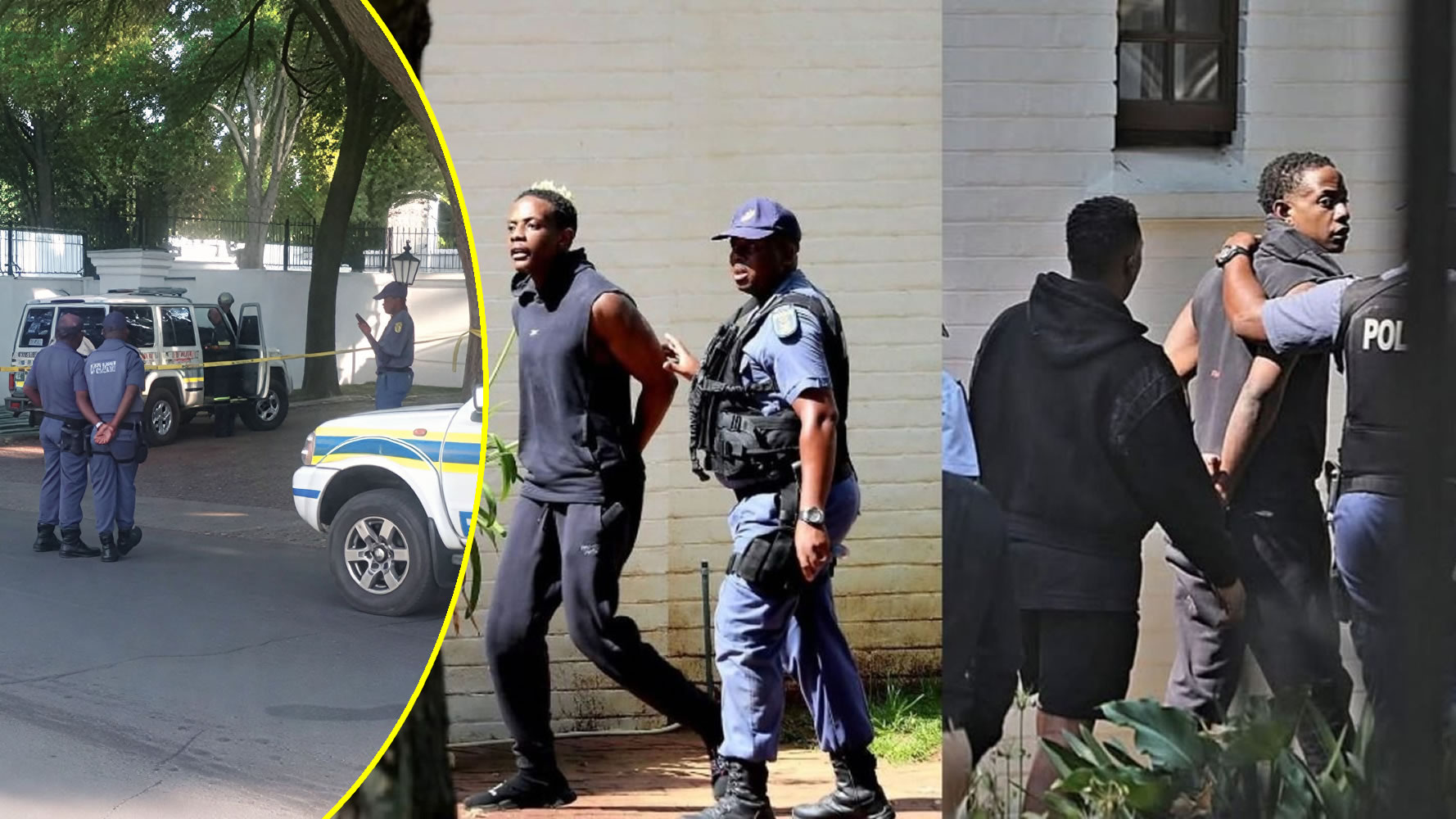
JOHANNESBURG – A dramatic twist has emerged in the attempted murder case against Bellarmine Chatunga Mugabe, the youngest son of Zimbabwe's late former President Robert Mugabe. As the legal proceedings prepare to unfold in the Alexandra Magistrate's Court, his defence team is poised to present a controversial argument: that the victim's gunshot wounds were, in fact, self-inflicted. This audacious claim has transformed what was already a high-profile case into a complex legal and forensic puzzle, leaving many questioning the true narrative behind the chaos of that Hyde Park night.
The incident, which occurred on Thursday, 19 February 2026, at Chatunga Mugabe's opulent residence in Johannesburg's exclusive Hyde Park suburb, saw 23-year-old Sipho Mahlangu, a gardener and security guard at the property, sustain critical injuries from a gunshot. Mahlangu remains in hospital in a critical condition, fighting for his life. The South African Police Service (SAPS) swiftly responded to the scene, leading to the arrest of 28-year-old Chatunga Mugabe and an unidentified bodyguard or associate. Both are facing charges of attempted murder.
At the heart of this unfolding drama is the defence's assertion that Mahlangu intentionally shot himself. This strategy, hinted at by Chatunga's legal representatives, including lawyer Ashley Mugiya, introduces a layer of intrigue that challenges conventional understanding. According to a City Press report, Bellarmine Mugabe himself informed police that his security guard, Sipho Mahlangu, had shot himself. The question that immediately arises is: why would a gardener deliberately inflict such a severe injury upon himself, potentially to frame a member of the prominent Mugabe family? This line of defence suggests a desperate attempt to absolve Chatunga Mugabe, or perhaps, as his legal team implies, there is a grain of truth in this extraordinary claim.
Forensic experts and legal observers are now scrutinising the medical feasibility of such a scenario. Self-inflicted gunshot wounds, particularly those intended to frame another individual, are exceedingly rare and typically leave distinct forensic signatures. The trajectory of the bullet, the presence or absence of gunshot residue on the victim's hands or clothing, and the distance from which the shot was fired are all crucial elements that forensic pathologists will meticulously examine. Experts note that distinguishing deliberate self-inflicted body damage from assault represents a significant challenge to the forensic expert.
A staged scene often presents inconsistencies that can be uncovered through thorough investigation. The absence of the firearm, which remains unaccounted for despite extensive searches by SAPS divers and K9 units at the Hyde Park property, including the swimming pool, further complicates the forensic picture. The police spokesperson, Colonel Dimakatso Nevhuhulwi, confirmed the ongoing search for the weapon, stating, “When we arrived at the scene, we found the man injured”. The missing gun adds a significant piece to this complex puzzle, making the prosecution's task of proving intent and the defence's claim of self-infliction equally challenging.
This is not Chatunga Mugabe's first brush with the law. His life, often characterised by lavish displays of wealth and a penchant for controversy, has been punctuated by several legal entanglements. Reports indicate a history of legal issues, including an arrest in 2025 following a violent altercation at a gold mining concession in Mazowe, Zimbabwe, and a roadblock confrontation near Beitbridge. His lifestyle, a stark contrast to the economic realities faced by many Zimbabweans, has frequently drawn criticism. The Hyde Park residence itself, a symbol of his family's affluence, has reportedly been the scene of frequent gunshots, according to claims from local residents. This background paints a picture of a young man accustomed to a life of privilege, but also one seemingly prone to conflict.
The shadow of his mother, Grace Mugabe, also looms large over these proceedings. Grace Mugabe herself faced a high-profile legal battle in South Africa in 2017, when she was accused of assaulting model Gabriella Engels with an extension cord in a Sandton hotel. While she initially claimed diplomatic immunity, this was later overturned as
"unlawful" by the High Court in 2018, leading to an arrest warrant being issued. Her alleged assault on Engels, where she claimed self-defence against a supposed knife attack, bears a chilling resemblance to the current defence strategy employed by her son. This historical context adds another layer of complexity to the current case, raising questions about the family's repeated encounters with South African law and their attempts to navigate legal challenges.
The current legal battle is shaping up to be a high-stakes "chess game" in the Johannesburg courts. The defence, by suggesting a self-inflicted wound, is attempting to shift the narrative dramatically, placing the onus on the prosecution to not only prove Chatunga Mugabe pulled the trigger but also to definitively disprove the highly unusual claim of self-harm. This requires meticulous forensic evidence, including ballistics, wound analysis, and potentially psychological evaluations to understand the plausibility of such an act.
The missing firearm is a critical piece of this puzzle. Its absence fuels speculation and complicates the investigation significantly. If the gun were found, forensic analysis could determine if it was indeed the weapon used, and further tests could reveal fingerprints or DNA evidence, potentially corroborating or refuting either side of the story. The fact that SAPS divers and K9 units were deployed to search the property, including the swimming pool, underscores the seriousness with which authorities are treating the missing evidence. The search for the gun is not merely about finding a weapon; it is about uncovering a crucial piece of the truth that could sway the entire case.
Community reactions to the incident have been varied, but a sense of alarm within the Zimbabwean community in South Africa is palpable. Many are closely watching the proceedings, acutely aware of the historical context and the implications for justice and accountability. The "high life to handcuffs" narrative, often associated with Chatunga Mugabe, resonates deeply, highlighting the perceived impunity of certain individuals. The incident has reignited discussions about the conduct of foreign nationals, particularly those with powerful connections, within South African borders.
Adding to the dramatic flair of the case are reports that Chatunga Mugabe reportedly locked himself in a room and refused to come out when SAPS initially arrived at the scene. Furthermore, he is said to have collapsed twice while in custody. These details, while not directly related to the central charge, contribute to the public perception of the events and the individual involved, painting a picture of a chaotic and high-pressure situation.
The defence strategy hinges on the improbable. For Sipho Mahlangu to have shot himself to frame Chatunga Mugabe, a motive of extraordinary malice or desperation would need to be established. Could a gardener, allegedly in an altercation over his absence from work, resort to such an extreme act? The defence will likely attempt to paint a picture of a disgruntled employee, but without compelling evidence, this remains a challenging proposition. The prosecution, on the other hand, will need to present a clear and coherent case demonstrating Chatunga Mugabe's culpability, supported by forensic evidence and witness testimonies.
This case is more than just an attempted murder trial; it is a test of the South African justice system's ability to handle high-profile individuals, irrespective of their family name or influence. The outcome will undoubtedly be scrutinised both locally and internationally, with many eager to see if justice will be served, or if the "hidden truth" behind the headlines will remain elusive. The legal "chess game" promises to be a captivating and contentious affair, with each move by the prosecution and defence holding significant weight in determining the fate of Chatunga Mugabe and the legacy of his family.