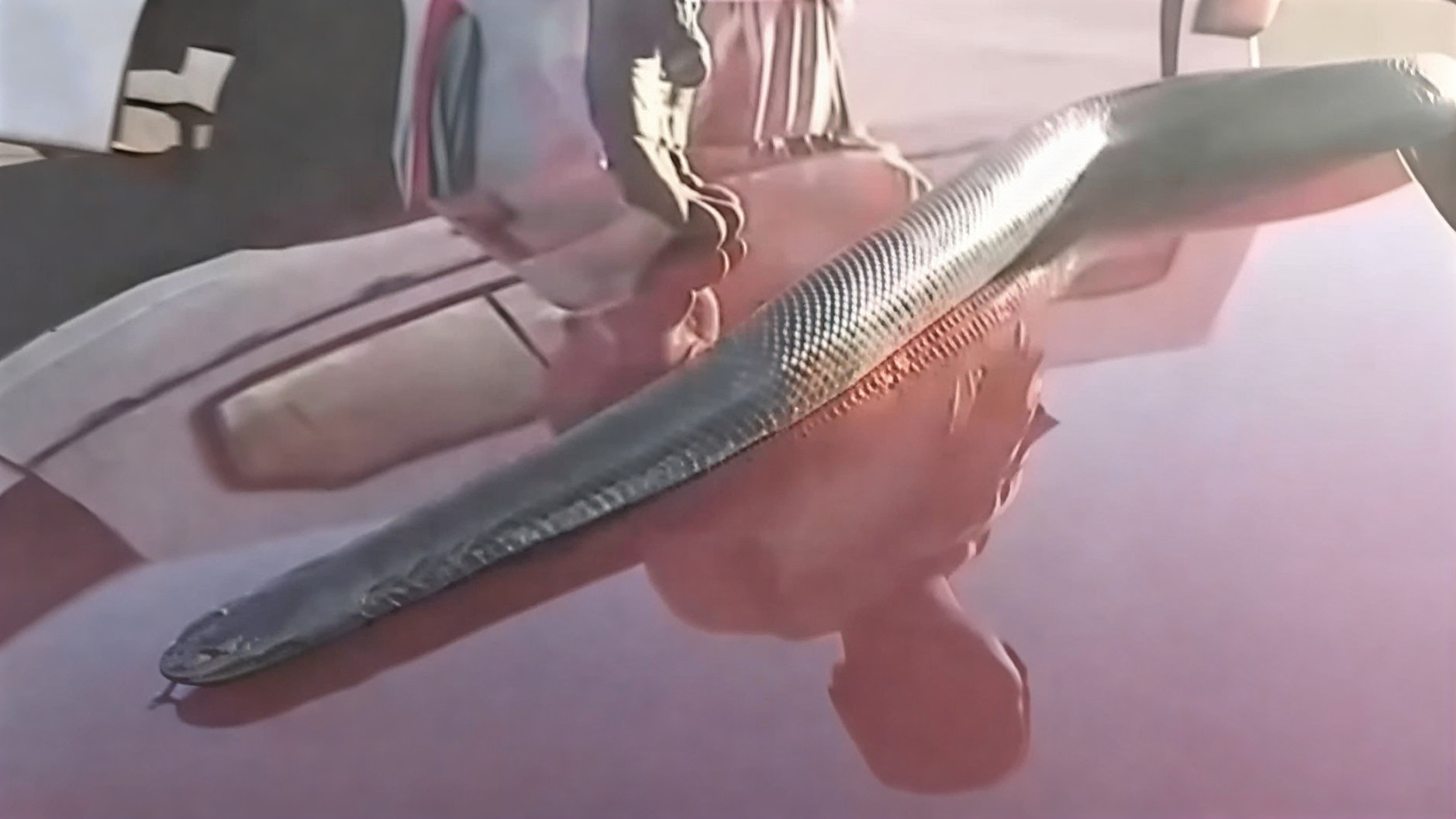
Cape Town – A recent viral video depicting the brazen street sale of a live mole snake in Khayelitsha has cast a harsh spotlight on the persistent and often brutal world of illegal wildlife trafficking in South Africa. This incident, now under investigation by CapeNature, underscores a broader, more complex issue involving protected species, traditional beliefs, and a thriving black market that preys on the nation's rich biodiversity.
The footage, widely circulated across social media platforms, shows a man openly offering a large reptile for sale at the bustling intersection of Swartklip and Spine roads. This particular spot is well-known for its informal retail activity, where a myriad of goods are exchanged daily. However, the commodity on offer in this instance was far from ordinary.
CapeNature spokesperson Petro van Rhyn confirmed the creature in question was a mole snake (Pseudaspis cana), a species indigenous to South Africa and commonly found throughout the Western Cape. Van Rhyn noted the snake appeared to be "dehydrated / stressed".
Mole snakes are not just any reptile; they are a protected indigenous species under the Western Cape Nature Conservation Ordinance 19 of 1974. This legal designation means that any activities involving these snakes—including their removal from the wild, keeping them in captivity, transporting them, or selling them—require specific permits.
"A permit would be required for the snake in the video (i.e. taking from the wild, keeping, transporting etc.)," stated van Rhyn, unequivocally adding, "It is not legal" to sell wildlife on the street without proper authorisation. The investigation is set to determine if offences were committed under conservation or animal welfare legislation, with the Animals Protection Act also potentially applicable due to the snake's apparent mistreatment.
This incident is not an isolated occurrence but rather a symptom of a larger, more insidious problem. South Africa, with its unparalleled natural heritage, faces a constant battle against wildlife crime. The illegal trade in indigenous species not only poses a significant threat to biodiversity but also inflicts immense suffering on the animals involved. CapeNature has consistently warned the public that removing wildlife from its natural habitat is an offence that places considerable stress on the animals and jeopardises local ecosystems.
The Allure of the Serpent: Traditional Beliefs and Misconceptions
The demand for snakes and other reptiles in South Africa is multifaceted, often intertwined with traditional beliefs and practices. In many African cultures, snakes hold profound symbolic significance, frequently associated with water, ancestral spirits, and even immortality. For instance, in Zulu tradition, consuming raw snake liver is believed to offer protective charms, while mamba fat and other snake products are extensively used in traditional medicine, known as 'muti'. Snake skin, too, is sought after for its perceived ability to ward off 'bad muti' and provide protection.
The mole snake itself, known as 'ibhola' in Xhosa culture, carries its own set of cultural associations. While sometimes feared, it is also respected in certain contexts, reflecting the complex relationship between humans and wildlife in traditional African societies. These deeply ingrained beliefs, while part of cultural heritage, can inadvertently fuel the illegal trade when individuals seek out specific species for traditional remedies or rituals without understanding or adhering to conservation laws.
However, it is crucial to distinguish between legitimate traditional practices and exploitative, illegal activities. The illegal trade often capitalises on these beliefs, leading to the capture and sale of protected species under inhumane conditions, as evidenced by the distressed mole snake in the viral video. Misconceptions and a lack of awareness regarding conservation laws further exacerbate the problem, making it difficult to curb the illicit market.
A Pattern of Illegality: Recent Incidents and Convictions
The mole snake incident follows closely on the heels of other significant wildlife crime busts in the Western Cape. Just days before the viral video emerged, on 12 February 2026, a 41-year-old Spanish citizen, Mr David Navarro Roman, was convicted in the Vredendal Regional Court for the illegal possession and importation of 22 Armadillo Girdled lizards (Ouroborus cataphractus) and one speckled dwarf tortoise (Chersobius signatus). Roman was apprehended by CapeNature and the South African Police Service (SAPS) on 29 November 2025, while residing at a hotel in Vredendal.
His conviction encompassed three charges: two under the Western Cape Ordinance 19 of 1974 for the unlawful possession and importation of protected wild animals without the necessary permits, and a third charge under the Prevention of Organised Crime Act 121 of 1998. The court sentenced Roman to two years in prison, suspended for five years, for each of the three charges, and imposed a substantial fine of R500,000.00. The confiscated animals were subsequently forfeited to CapeNature and placed in a suitable facility for proper care.
Dr Ashley Naidoo, CapeNature’s CEO, voiced serious concerns regarding the escalating illegal collection of reptiles, highlighting that such widespread, unregulated exploitation threatens to drive species like the Armadillo Girdled lizard to extinction. These lizards, which live in groups, are particularly vulnerable to local extinction when entire populations are harvested for the illegal pet trade, as their remaining natural populations are unlikely to recover due to low distribution.
Beyond these high-profile cases, incidents of individuals being found with snakes in unusual circumstances are not uncommon. In January 2026, two suspects, aged between 21 and 28, were arrested in Okiep for the possession of protected wildlife. While specific details of the species involved were not immediately available, such arrests underscore the pervasive nature of this illicit trade. There have also been past reports of snakes found in public transport, such as a live python discovered in a box in a Mthatha taxi in 2006, and more recently, a highly venomous Cape cobra reportedly transported inadvertently in a taxi before hiding in a petrol bowser. While these latter incidents may not always directly link to illegal trade, they highlight the potential for dangerous encounters when wild animals are mishandled or illegally transported.
The Fight for Conservation: A Collective Responsibility
The ongoing investigations into the mole snake incident and the recent conviction of David Navarro Roman serve as stark reminders of the continuous efforts required to combat wildlife crime. The legal framework, including the Western Cape Nature Conservation Ordinance and the Animals Protection Act, provides the necessary tools for authorities to prosecute offenders. However, enforcement alone is not enough.
Public awareness and participation are critical in safeguarding South Africa's natural heritage. CapeNature actively urges members of the public to refrain from purchasing wild animals and to report any incidents involving the illegal trade or mistreatment of wildlife to the relevant authorities. The success of conservation efforts hinges on a collective responsibility, where citizens act as vigilant custodians of their environment.
The illegal trade in mole snakes, Armadillo Girdled lizards, and other protected species represents a significant threat to the ecological balance and ethical treatment of animals. As investigations continue and legal proceedings unfold, these cases serve as a crucial call to action, demanding greater vigilance, stricter enforcement, and a renewed commitment from all sectors of society to protect South Africa's irreplaceable wildlife for future generations.