

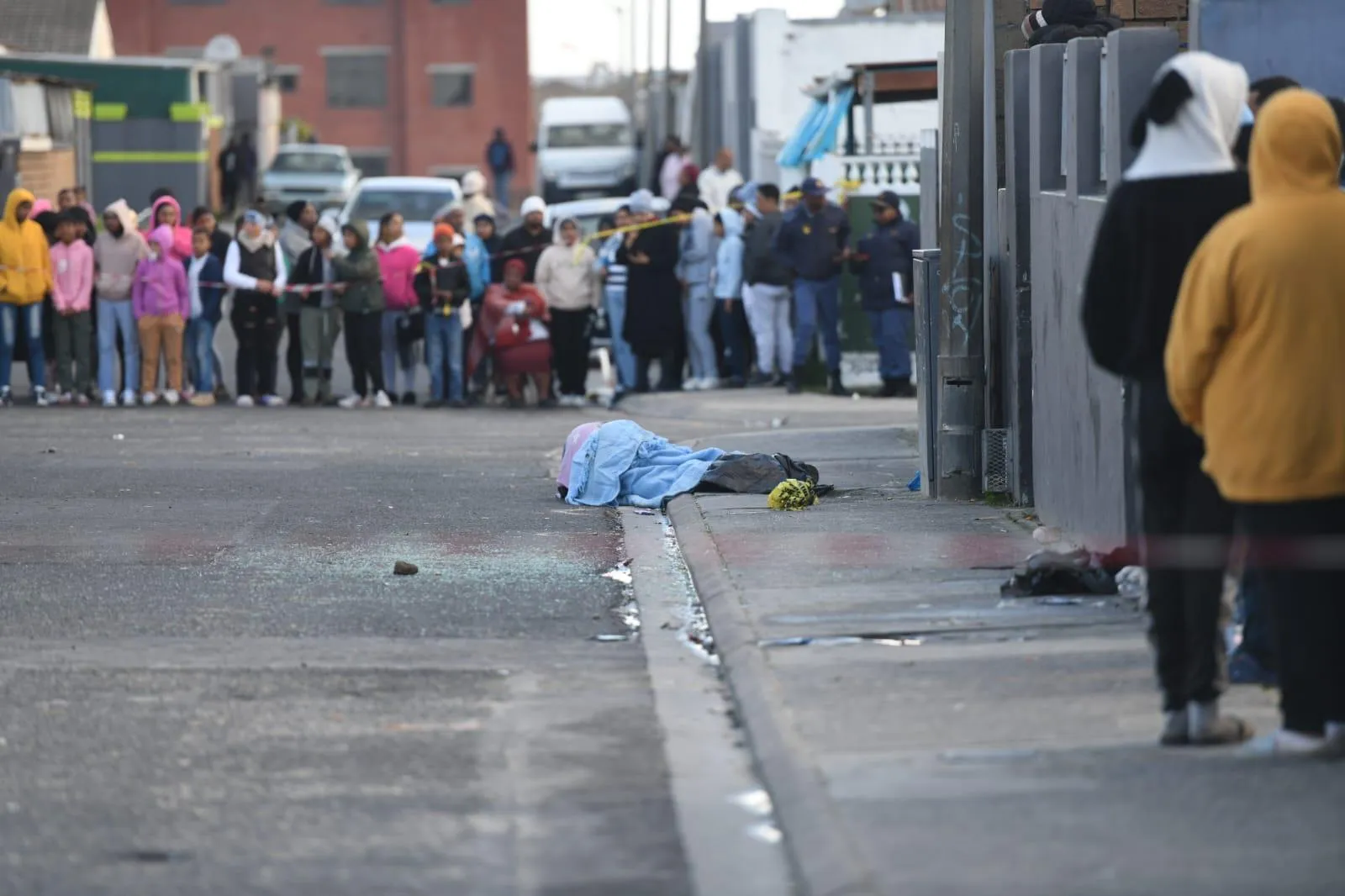
Cape Town – The streets of the Cape Flats have once again become a theatre of carnage, leaving a trail of grief that stretches from the informal dwellings of Philippi East to the morgues of Cape Town. In the wake of a weekend bloodbath that claimed at least 34 lives, President Cyril Ramaphosa has stepped forward with a familiar script of resolve, promising that the state will finally break the back of the gang violence and extortion rackets terrorising these communities. Yet, nearly a thousand kilometres away in the West Rand, a different kind of war is being waged—one where the state is not just losing, but has seemingly surrendered the field entirely.
In Randfontein, the Sporong informal settlement stands as a ghost town of abandoned shacks and shattered lives. Here, the enemy is not a traditional gang but the "Zama Zamas"—heavily armed illegal miners who have effectively annexed the territory, driving out more than 400 families. While the President speaks of "stronger law enforcement" in the Western Cape, the residents of Sporong are huddled in a cramped community hall, sharing two toilets amongst 600 people, wondering why the "decisive" action promised to the coast has not reached the mines of Gauteng.
The Cape Flats: A Vow Amidst the Bloodshed
The scale of the violence in the Western Cape over the past week has been staggering. Since last Friday, gun violence has claimed 34 lives across various neighbourhoods. The most horrific incident occurred in the early hours of Saturday, 17 January 2026, at a tavern in the Marikana informal settlement in Philippi East. At least three gunmen entered the shebeen and opened fire indiscriminately, killing eight people and wounding two others.
The massacre in Marikana was not an isolated event. By Monday night, the South African Police Service (SAPS) was investigating four more murders in two separate cases, alongside the killing of an off-duty police officer in Browns Farm. On Tuesday morning, the violence spread to Ndabeni, where three women and a man were shot dead, and to a nearby cemetery in Kensington, where two more men were killed.
President Ramaphosa, responding to the "weekend bloodbath," expressed that he was “saddened at the loss of life in violence on the Cape Flats at the weekend” and extended his “deepest sympathies to all families and communities concerned.” His solution, delivered through Presidency spokesperson Vincent Magwenya, is a surge in state presence.
“Communities could expect stronger law enforcement and increased police visibility to stabilise affected communities and reduce the potential for further violence,” the President stated.
However, the President’s message also carried a pointed demand for the residents themselves to step up. Magwenya noted that the President “calls on communities to strengthen their partnership with law-enforcement agencies in community policing forums.” More controversially, the President urged residents to provide information to the police, even when it involves those closest to them.
“The President also urges residents to provide information, even on neighbours and family members, to police on an ongoing basis so that communities will instead become unsafe for criminals,” Magwenya added.
Cape Flats Crime Incident Summary (January 2026)
| Incident Location | Date (Jan 2026) | Fatalities | Context |
|---|---|---|---|
| Marikana, Philippi East | 17th | 8 | Tavern mass shooting; linked to extortion |
| Browns Farm | 19th | 1 | Off-duty police officer killed |
| Ndabeni | 20th | 4 | Three women and one man shot dead |
| Kensington Cemetery | 20th | 2 | Two men killed |
| Total (Reported) | 16th – 20th | 34 | General gang and community violence |
The West Rand: A Community in Exile
While the President promises to make the Cape Flats "unsafe for criminals," the Zama Zamas have already succeeded in making Randfontein unsafe for everyone else. On 7 January 2026, the breaking point was reached for the people of Sporong. After weeks of being terrorised by illegal miners, more than 600 people—comprising over 400 families—abandoned their homes and belongings to seek refuge in the Randfontein CBD.
The stories emerging from the Randgate Hall, where the displaced families are now sheltered, paint a picture of a community under siege. The Zama Zamas, many of whom are believed to be foreign nationals from Lesotho, have moved beyond illegal mining into a campaign of systematic extortion and assault.
Esther Mhlongo, 40, recounted a terrifying night at the beginning of the year when a group of men stormed her home. While she and her children hid under the bed and her husband sought cover in another room, the intruders showed no mercy.
“They found me under the bed, dragged me out, hit me with a gun and demanded money,” she said. “It was hard to live there. If you don’t have money, they take your child and force you to find the money. If you don’t have cash, they demand you transfer it.”
When the men found her husband, the assault turned even more violent. “They hit him on the head and slit his arms with a knife. He was bleeding badly. We need help,” Mhlongo pleaded. Other residents reported even more gruesome injuries, including cases where Zama Zamas allegedly cut off victims' fingers during robberies.
Life in the Hall: From Terror to Squalor
The "safety" of the Randgate Hall is relative. While the residents are no longer dodging bullets, they are living in conditions that defy basic human dignity. More than 600 people are packed into the space, with only one toilet for men and one for women. There is no privacy; residents are forced to bathe in front of one another. Food is scarce, and the air is thick with the smell of unwashed bodies and desperation.
Johanna Bergman, who moved to the hall with her six children, including seven-week-old twins, described the harrowing choice she had to make. She had lived in Sporong since 2017, but the atmosphere changed last year when the illegal miners began their reign of terror.
“For me, being here with my children is not a good experience, but at least we are safe from the zama zamas,” Bergman said. “We can’t complain because we feel safer here. There are no zama zamas, no gunshots, no robberies or killings.”
The trauma of the gunfire remains fresh. Bergman described the helplessness of living in a shack while high-calibre weapons are discharged outside. “We are scared to go back. When they start shooting, we lie on the floor with our children. We don’t know when it will stop, and we are scared to even leave our shacks.”
The residents had initially sought help from their ward councillor, Alfred Thenjekwayo, who first took them to Finsbury Hall. However, they were chased away by the local residents there. “They even told us that we are going to bring them zama zamas,” one resident recalled. Eventually, they were moved to the current hall in Randgate.
The State’s Silence and the Army’s Absence
The most damning aspect of the Randfontein crisis is the apparent paralysis of the state. Despite President Ramaphosa’s previous authorisation of 3,300 South African National Defence Force (SANDF) personnel to combat illegal mining, the soldiers are nowhere to be seen in Sporong.
When questioned about the lack of military intervention, SANDF spokesperson Siphiwe Dlamini shifted the responsibility back to the police.
“We are not there until police request more assistance; we are not there [in the area],” Dlamini stated.
Meanwhile, the police themselves have been largely silent. Gauteng police spokesperson Lt-Col Mavela Masondo did not respond to enquiries regarding the situation in Sporong. This silence stands in stark contrast to the high-profile promises made by the Presidency regarding the Cape Flats.
Elsie Mokobane, 45, who has lived in Sporong for seven years, expressed the deep sense of betrayal felt by the community. She noted that the Zama Zamas have become increasingly brazen, targeting the most vulnerable members of society.
“They have been harassing us, killing people and sending others to hospital,” Mokobane said. “When they came back, they targeted tuckshops and small businesses. They shoot people in the streets and go into homes, especially targeting the elderly and stealing their social grants.”
Despite repeated pleas for help, the attacks continued until the community was forced to flee. Now, they are left waiting for the Department of Human Settlements to assess their situation, with no clear timeline for when they might be allocated permanent, safe housing.
A Tale of Two Crises
The contrast between the government's response to the Cape Flats and the West Rand exposes a troubling inconsistency in South Africa's security strategy. In the Western Cape, the President uses the language of "decisive" action and "partnerships," perhaps aware of the political stakes in a province governed by the opposition. In the West Rand, where the victims are the poorest of the poor in informal settlements, the response is a bureaucratic shrug.
The Zama Zama phenomenon is no longer just a matter of illegal mining; it has evolved into a form of domestic insurgency. These groups are well-armed, well-funded, and seemingly unafraid of the state. In Sporong, they have achieved what any invading force desires: the total displacement of the local population and the control of the territory.
As President Ramaphosa vows to "deal" with the crime on the Cape Flats, he must answer why the same resolve is missing in the face of the Zama Zama threat. For the families in Randgate Hall, the President's words ring hollow. They are not looking for sympathies or calls to inform on their neighbours; they are looking for a state that is capable of protecting its own borders and its own people.
Until the government can address the Zama Zama crisis with the same urgency it promises for gang violence, the "decisive" action the President speaks of will remain nothing more than a political slogan. For now, the families of Sporong remain in exile, their homes occupied by gunmen, and their future as uncertain as the next round of gunfire.