

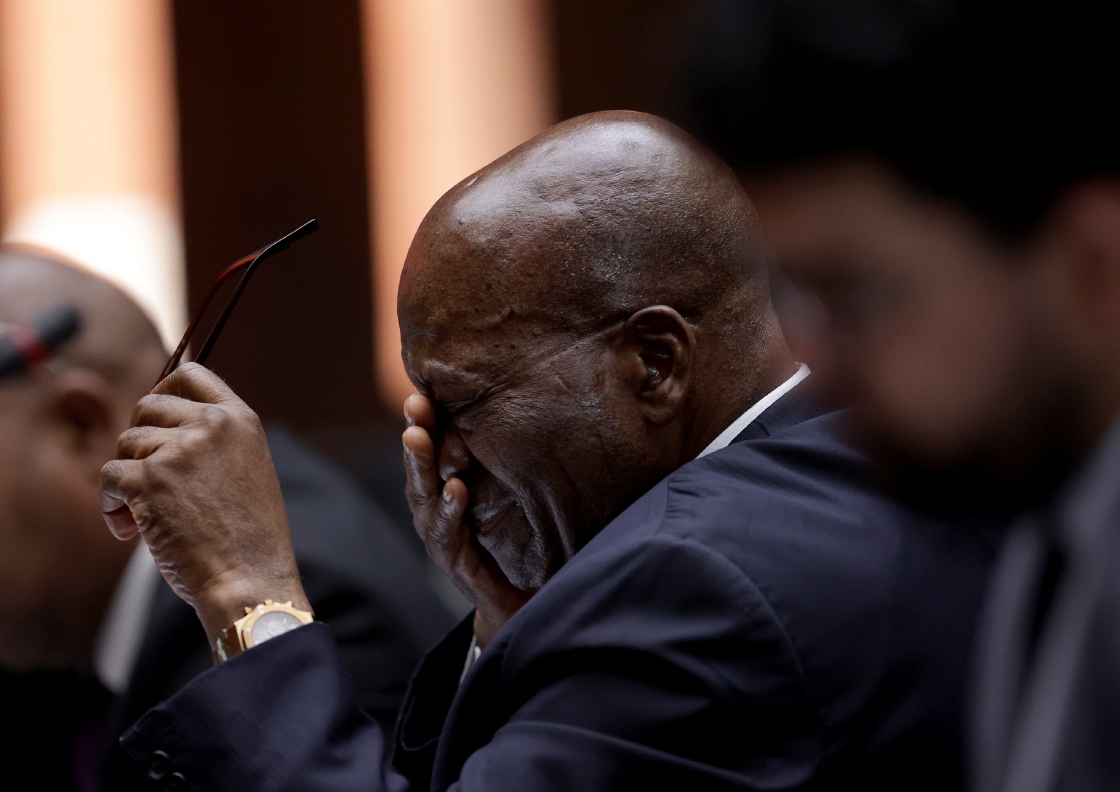
MK Party president Jacob Zuma missed his party’s Johannesburg state of the city address on Wednesday, with second deputy president Tony Yengeni attending in his place as conflicting reports about Zuma’s health circulated.
Yengeni told supporters that he had a message from Zuma: Johannesburg residents should vote for the party’s mayoral candidate, Bongani Baloyi.
Zuma’s absence was notable because he has closely overseen the MK Party’s mayoral candidate process and has been a prominent figure in the party’s election campaign.
The event was held in Orange Farm and was led by Baloyi, the party’s Johannesburg mayoral hopeful.
Instead of Zuma, Yengeni addressed the crowd and encouraged residents to support Baloyi in the local government election campaign.
The former president’s absence triggered speculation that he had fallen ill or was receiving medical treatment in KwaZulu-Natal.
A person described as a confidant of Zuma said the former president had “been sick these days”.
The confidant did not provide details about Zuma’s condition and said he had not yet visited him in hospital.
Reports also emerged that Zuma was at a private medical facility in Pietermaritzburg, where security was said to have been heightened.
Journalists reportedly gathered near the facility, while speculation circulated that Zuma could be transferred by air to 1 Military Hospital in Pretoria.
The MK Party denied that such a transfer was planned.
Party spokesperson Sifiso Mahlangu also rejected reports that Zuma’s health was in serious danger.
In a statement issued the evening before, Mahlangu said Zuma had attended a routine medical check-up on Tuesday, an examination he undergoes twice a year.
“We hereby confirm that he is healthy and in good spirits. His campaign programme will continue accordingly,” Mahlangu said.
The statement did not explain why Zuma had missed the Johannesburg event or whether he had remained at the medical facility after the check-up.
Mahlangu’s comments were intended to reassure party supporters, but the conflicting accounts have kept attention focused on Zuma’s health and his ability to continue campaigning.
When asked whether Zuma was still at Netcare St Anne’s Hospital, Mahlangu reportedly objected to further questions and threatened to end communication.
The party has not publicly released a medical report or provided details about any treatment Zuma may have received.
The situation has echoes of 2024, when Zuma also fell ill before the general elections and became less visible during parts of the campaign.
That history has added to the current speculation, although there is no confirmation that the present situation is connected to the earlier episode.
Zuma’s health has been a recurring subject of public discussion because of his age and his history of medical treatment.
He remains the central figure in the MK Party, and his public appearances often draw large crowds and generate significant political attention.
His absence from an event involving the party’s Johannesburg mayoral campaign therefore carried political significance, even though the party said his campaign programme would continue.
Yengeni’s decision to deliver a message from Zuma allowed the party to maintain the focus on Baloyi and the Johannesburg campaign.
The message was direct: voters in Johannesburg should support the MK Party candidate.
But Zuma’s absence meant that the event lacked the presence of the party’s most recognisable political figure.
Baloyi is seeking to present the MK Party as a force in Johannesburg’s local government contest, where issues such as service delivery, housing, transport, electricity, water and municipal accountability are expected to shape the campaign.
The party’s ability to mobilise support in Gauteng will be closely watched, particularly because Zuma’s influence remains one of its most important political assets.
The former president has been involved in selecting and promoting the party’s mayoral candidates, making his health and availability relevant to the party’s campaign plans.
Mahlangu said Zuma’s programme would continue, suggesting that the party expected him to resume political activities.
However, no detailed timetable for his return to public campaigning was provided in the statement.
The party’s communications have therefore attempted to strike two positions at once: reassuring supporters that Zuma is well while offering limited information about his whereabouts and absence.
That approach has contributed to the uncertainty surrounding the former president’s condition.
The reports of increased security around the Pietermaritzburg facility also drew attention, although heightened security around a former president does not by itself establish the severity of a medical condition.
The speculation about a possible transfer to Pretoria was also denied by the MK Party.
Until an official medical update is released, the public record consists of the party’s statement that Zuma attended a routine check-up and is healthy and in good spirits, alongside reports from sources that he has been unwell and remained at a medical facility.
Those accounts cannot be reconciled without further information from Zuma, his doctors or the party.
Zuma has not publicly addressed the reports.
His absence has also raised questions about whether he will attend upcoming campaign events and whether the MK Party will adjust its programme if he needs additional medical care.
For now, the party is continuing its campaign and using Yengeni and other senior officials to represent its leadership at public events.
The message delivered in Orange Farm was that Johannesburg residents should vote for Baloyi, but the attention surrounding the event remained focused on the missing party president.
The MK Party has previously relied heavily on Zuma’s personal popularity and political history to mobilise supporters.
His presence can energise rallies, while his absence can quickly produce speculation, particularly when there is no detailed explanation.
The party will therefore face pressure to provide consistent updates if Zuma remains away from public activities.
At the same time, his medical privacy remains a legitimate consideration, and unverified claims about his condition should not be treated as established fact.
What is confirmed is that Zuma did not attend the Johannesburg state of the city address, Yengeni represented him, and the party says he attended a routine medical check-up and is healthy and in good spirits.
The former president’s future campaign schedule will indicate whether he is able to return to public engagements as planned.
Until then, questions about his health and whereabouts are likely to continue overshadowing the MK Party’s campaign message in Johannesburg.