

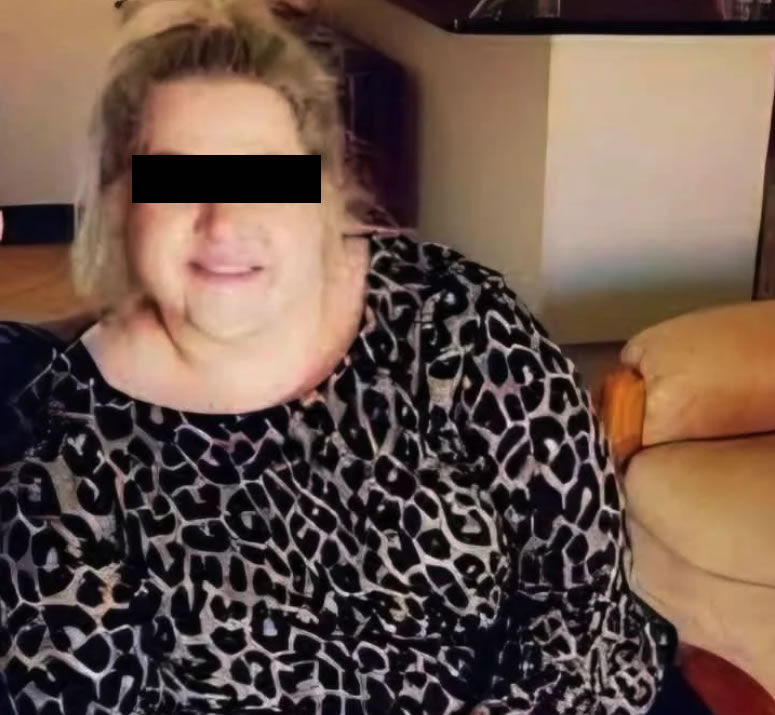
A Centurion woman who was left quadriplegic after being diagnosed with Guillain-Barré syndrome is claiming R35.4 million from the health minister and Aspen Pharmacare.
Amarisca Oguz alleges that her condition was caused by the Johnson & Johnson Covid-19 vaccine she received in August 2021. She says the minister and Aspen knew by July 2021 that Guillain-Barré syndrome had developed in some people who received the vaccine, but failed to warn the public.
The health minister and Aspen have formally objected to her civil claim. The objections are expected to be heard on 15 February next year.
Oguz was 29 when she became severely ill. She was eventually unable to walk, began using a wheelchair and had to learn how to use her arms and legs again. She still cannot work and lives with her parents.
“For me, this is about justice. About what was done to me and many other people,” she said.
“During the day, my mother, who has Parkinson’s, [and I] have to care for each other alone at home. And then I have to watch my father work incredibly hard during the day and then come home tired to help me. I feel so sorry for them.
“We can’t make ends meet as things are now. My future has been stolen from me. My humanity has been stolen from me, and my potential too.
“The onus is on the government of South Africa and Aspen Pharmacare. They think we are going to stay quiet about this. But my legal team and I are not going to give up.”
Oguz received her first Johnson & Johnson vaccine dose in August 2021. She alleges that she began experiencing side effects almost immediately, then grew steadily weaker over the following months.
By early January 2022, she was paralysed. She was admitted to Mamelodi Hospital, where she was diagnosed with Guillain-Barré syndrome, a rare condition in which the body’s immune system damages the nerves. The illness can cause muscle weakness and, in severe cases, paralysis.
Oguz spent eight months in hospital and at a rehabilitation centre as she worked to regain basic movement and independence.
“There I had to relearn how to lift my arms, use my fingers and hands, and eat.”
She continues to spend most of her time in a wheelchair because her legs remain extremely weak. Bathing and dressing have become difficult daily tasks.
“It takes me a very long time to get well because my myelin sheath (the covering around the nerves) is badly damaged. I can only walk short distances with my walking frame or crutches.”
She also suffers severe pain when she remains seated or lies in one position for too long.
“It then hurts so much that I feel like I want to die.”
One of the things she misses most is driving. She described it as her “freedom”.
Her mental health has also suffered, and she becomes ill easily because of what she describes as a weakened immune system.
“So I also can’t go where there are lots of people. I try to live life as much as I can, but it sometimes brings me down.”
Before she became ill, Oguz enjoyed walking and swimming. She also had a strong passion for cooking.
“I also have a great passion and love for cooking. But I no longer have the will to do it.”
She now spends much of her time reading and writing, colouring in or doing jigsaw puzzles with her mother.
What the court papers allege
According to the court papers, Oguz argues that the health minister and Aspen knew by July 2021 that Guillain-Barré syndrome had been reported in people who had received the Johnson & Johnson vaccine.
She is holding the minister and Aspen liable as the “manufacturers, suppliers and distributors” of the vaccine.
“The vaccine was unsafe, defective and dangerous, and no adequate instructions or warnings were given to consumers about the dangers the vaccine holds,” the court papers state.
The papers further say that the parties had a “legal responsibility to inform the general public of the side effects of the vaccine, so that the public could make an informed decision […] about its benefits and risks”.
The claim states that the defendants “failed in their duty to inform the public that Guillain-Barré syndrome is one of the side effects of the vaccine”.
“As a result of the parties’ unlawful and negligent failure to fulfil their legal duty, Oguz consented to the vaccine being administered, which she would not have done had she been properly informed about the vaccine’s side effects, and specifically Guillain-Barré syndrome.”
The papers argue that Oguz’s constitutional right to “dignity, life, bodily and psychological integrity, healthcare services and access to information” was violated.
An extensive medical report by neurosurgeon Dr Herman Edeling has been attached in support of her claim.
Oguz is seeking more than R4 million for past, present and future medical expenses. She is claiming a further R4 million for help with daily tasks, R25 million for lost earning capacity and R2.4 million in general damages.
Together, the claims amount to R35.4 million.

Regulatory warnings
The Johnson & Johnson vaccine, also known as the Janssen vaccine, was the subject of safety monitoring in several countries after reports of Guillain-Barré syndrome.
In July 2021, the United States Food and Drug Administration added information to the vaccine’s safety documents saying that reports suggested an increased risk of Guillain-Barré syndrome during the 42 days after vaccination. The information also said the chance of the condition occurring was very low.
South Africa’s medicines regulator later said Guillain-Barré syndrome was a very rare but potentially severe neurological side effect associated with various vaccines, medicines and some infections. It said the condition could cause weakness, pain, numbness and tingling, and could sometimes lead to serious or life-threatening problems.
The regulator also said the Janssen vaccine may increase the risk of Guillain-Barré syndrome and listed it as a rare adverse event in the vaccine’s professional information. In some South African cases, its expert committee classified reported incidents as vaccine product-related events after assessing the available evidence.
Oguz’s case will now turn on the evidence before court, including the medical report, the timing of her symptoms and the allegations about what the defendants knew and when they knew it.
Neither the health minister nor Aspen Pharmacare commented on the claim. Their formal objections will be heard on 15 February next year.