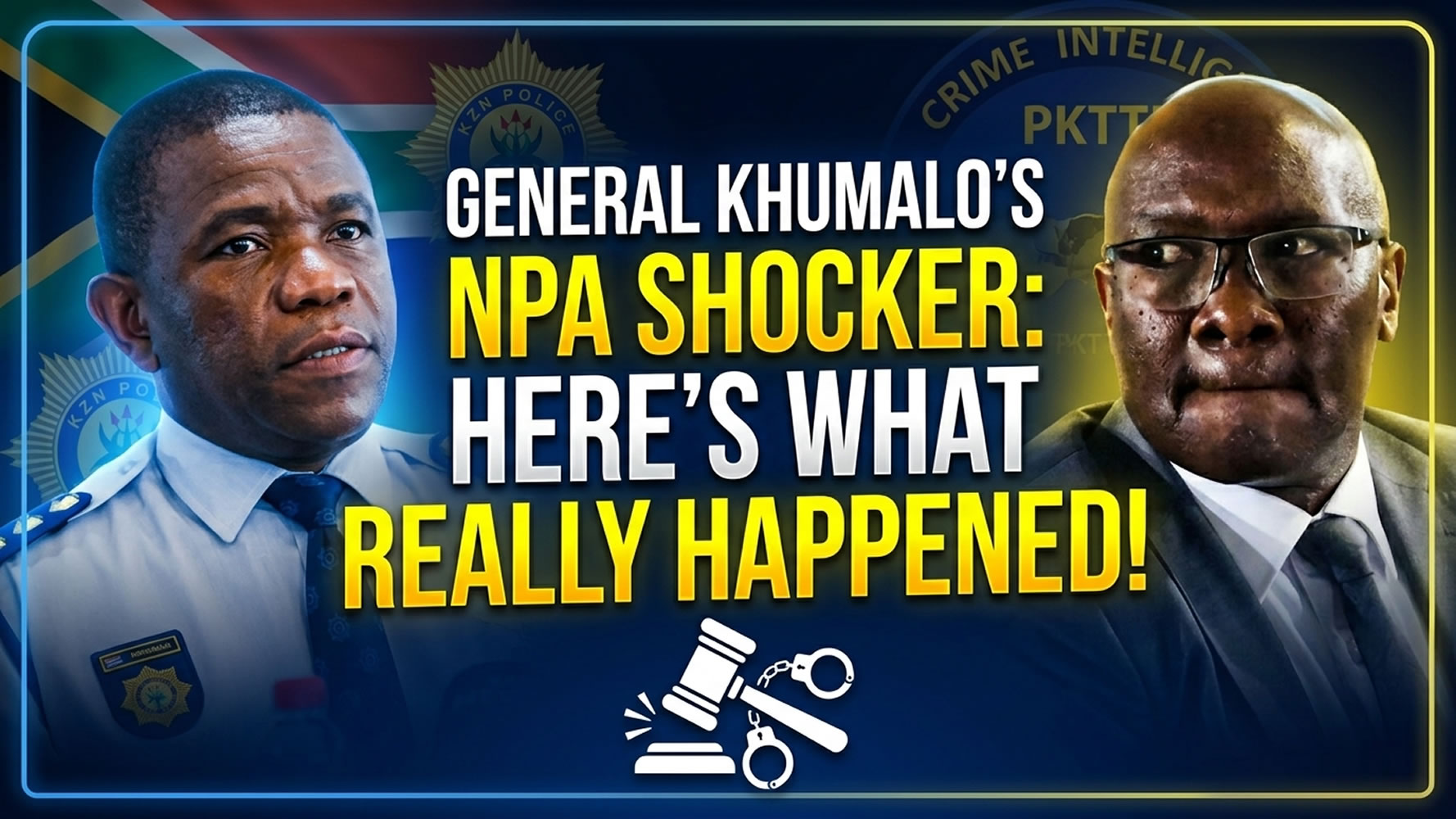
Good day, and welcome to Daily Strange Stories. My name is John Brown, and today we delve into a truly perplexing development that has gripped South Africa's criminal justice system. This is South Africa Latest News you won't want to miss. The National Prosecuting Authority (NPA) has sensationally withdrawn fraud and corruption charges against Crime Intelligence boss, Lieutenant General Dumisani Khumalo. This decision, coming after intense scrutiny, has left many questioning the integrity of our institutions and asking: What truly happened behind the scenes to lead to such a dramatic turn of events? This documentary explores the real reasons why NPA withdrew charges against General Khumalo.
For months, the saga surrounding Lieutenant General Khumalo and his co-accused has been a focal point of public discourse, casting a long shadow over the South African Police Service (SAPS). The charges, initially brought by the Investigating Directorate Against Corruption (Idac), centered on the alleged irregular appointment of Brigadier Dineo Mokwele. However, the foundation of these charges now appears to have crumbled under critical examination, particularly during the ongoing Madlanga Commission of Inquiry.
The withdrawal represents a significant victory for those who argued that Idac, under its former head Andrea Johnson, was being weaponised against certain individuals within the SAPS. This narrative gained traction following an explosive press conference on 6 July 2025 by KwaZulu-Natal police Commissioner Lieutenant-General Nhlanhla Mkhwanazi. General Mkhwanazi alleged that criminal cartels had deeply infiltrated law enforcement and the judiciary, positing that General Khumalo, who led the crucial Political Killings Task Team, was being deliberately targeted to shield corrupt elements from investigation. General Mkhwanazi WINS, as his assertions now resonate with shocking prescience.
The Madlanga Commission has become a crucible testing the credibility of powerful institutions. Andrea Johnson, the former head of Idac, faced grueling cross-examination, exposing what many call 'serious flaws' in the processes leading to the arrests of top Crime Intelligence officials. The timing of the charge withdrawal is poignant: just a day before the NPA's announcement, President Cyril Ramaphosa acceded to Ms Johnson's request to vacate her post with immediate effect. This swift departure, following her testimony, intensified speculation about internal pressures. Ms Johnson herself admitted to 'serious flaws' in the process of charging the Crime Intelligence leaders, bolstering arguments of those who felt unfairly targeted.
The core of the case against General Khumalo and his six colleagues revolved around Brigadier Dineo Mokwele's appointment. It was alleged she lacked qualifications and was part of a conspiracy to 'capture' the policing unit. However, testimony before the Madlanga Commission suggested Brigadier Mokwele was qualified, and the entire process against these senior intelligence officials was 'seriously flawed' from its inception.
NPA spokesperson Kaizer Kganyago confirmed the withdrawal, stating the decision followed a comprehensive review and consideration of representations from the officials' legal representatives. This review revealed significant weaknesses, concluding a successful conviction was unlikely. The implications suggest that individuals within Idac may have pursued cases with insufficient evidence or questionable motives.
The Madlanga Commission's proceedings have been instrumental. On Monday, 27 July, Ms Johnson faced questioning regarding a key Section 27 affidavit, supposedly the catalyst for the investigation, filed by National Coloured Congress leader and Member of Parliament Fadiel Adams. Commission leaders openly questioned its authenticity. Evidence leader Senior Counsel Advocate Mahlape Sello highlighted concerns about a potentially fraudulent document, involving Idac chief investigating officer Dylan Perumal and investigator Tyron Ramsamy. Ms Johnson conceded that if the affidavit was authentic, it would make 'little sense' for Mr Perumal to have taken a supplementary affidavit. Advocate Sello further highlighted 'irreconcilable contradictions' in investigators' evidence.
While the Madlanga Commission continues, Ms Johnson's admissions and the charge withdrawal represent a significant blow to Idac's credibility. It is an apparent vindication of General Mkhwanazi's July 2025 claims regarding the weaponisation of state institutions. The tables are turning: those controversially arrested are being freed, while others face scrutiny. General Feroz Khan and a dozen other SAPS bosses are facing arrest, alleged to have corruptly awarded Vusimusi 'Cat' Matlala, an underworld businessman, a 360-million Rand SAPS health tender. General Mkhwanazi also accused the NPA and judiciary of being 'captured by a drug cartel from Gauteng province,' citing controversial bail grants for Katiso Molefe, an alleged organised crime boss linked to the death of DJ Sumbody and the Armand Swart murder case.
The Madlanga Commission, by publicizing the 'rot that has been plaguing the criminal justice system,' appears to have created an environment where such alleged weaponisation of the NPA could no longer be sustained. The charges against General Khumalo were fundamentally flawed, based on an investigation compromised by irregularities and potentially fraudulent documentation. This is breaking news on a critical turning point for the nation.
What are your thoughts on this astonishing development? Do you believe justice has been served, or does this withdrawal signal deeper issues within our legal framework? Share your opinions below.
#SouthAfricaLatestNews, #BreakingNews, #GeneralMkhwanazi, #DumisaniKhumalo, #NPADecision, #MadlangaCommission, #AndreaJohnson, #CrimeIntelligence, #SAPSCorruption, #SouthAfricanJustice