Shooting Victim in Chatunga Mugabe Case Allegedly Paid to Stay Silent
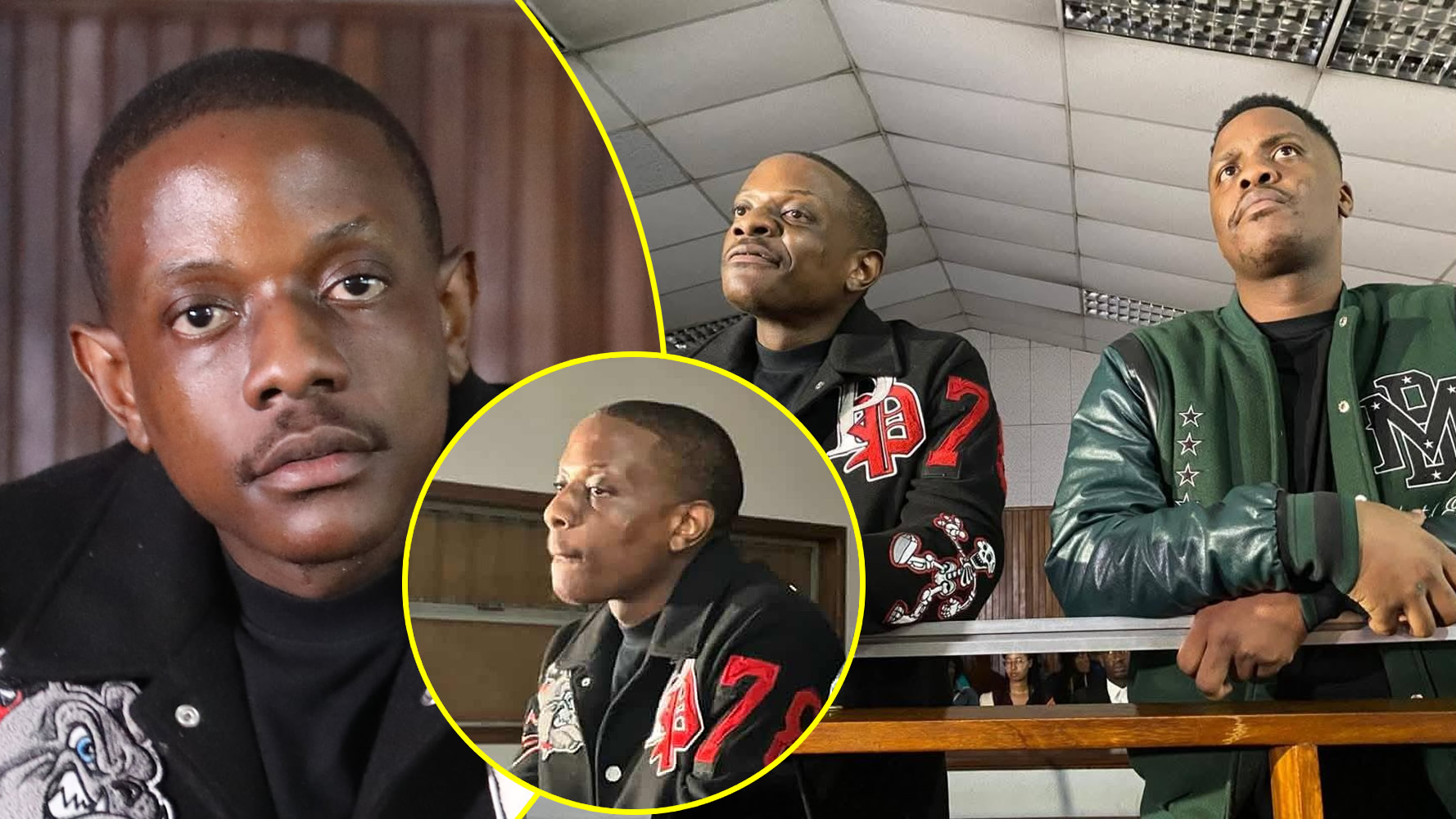
JOHANNESBURG — In a courtroom filled with the heavy scent of tension and the ghosts of a fallen political dynasty, the youngest son of the late Zimbabwean strongman Robert Mugabe stood in the dock this week, facing the grim reality of a South African prison cell. But it was not just the charges of illegal immigration or the pointing of a firearm that transfixed the Alexandra Magistrate's Court; it was the revelation of a cold, hard cash transaction designed to buy silence.
State prosecutors have launched a blistering demand for a "harsh prison sentence" after it emerged that a security guard, left bleeding after being shot twice in the back, was allegedly bribed with a staggering R250,000 to keep his mouth shut.
The victim, 23-year-old Sipho Mahlangu, was a man tasked with protecting the very walls that nearly became his tomb. In February, at the Mugabe family's opulent R43 million mansion in the leafy suburb of Hyde Park, a confrontation erupted that ended in gunfire. Mahlangu was shot twice in the back as he attempted to flee for his life. This week, the court heard the sordid details of what happened while he lay in a hospital bed: a total of R400,000 was allegedly offered to him to ensure his cooperation—or lack thereof—with the authorities.
Investigating officer Colonel Raj Ramchunder, a veteran who has seen the intersection of power and crime many times before, did not mince his words when he addressed the magistrate.
"He was paid R250,000, and on the same day, a promise that a further R150,000 would be paid to him in cash," Ramchunder testified, confirming that Mahlangu had acknowledged receipt of the initial payment just days ago.
The revelation sent a ripple through the gallery. In South Africa, where the Mugabe name once carried the weight of diplomatic immunity and untouchable status, the sight of Bellarmine Chatunga Mugabe, 28, and his cousin Tobias Mugabe Matonhodze, 33, awaiting their fate felt like the final chapter of a crumbling legacy.
The prosecution is now pushing for a combined two-year direct imprisonment for Chatunga and a staggering 30 years for Matonhodze. The disparity in the sought sentences lies in the pleas. Chatunga, through a calculated legal manoeuvre, pleaded guilty to the lesser charges of pointing a firearm and contravening immigration laws, effectively dodging the attempted murder charge. Matonhodze, however, took the heavier fall, admitting to attempted murder, possession of an unlawful firearm, and defeating the ends of justice.
But for Colonel Ramchunder and the State, the R250,000 payment was not an act of restitution; it was an act of corruption.
"The accused show no remorse in assisting the police in any way to point out where the firearm is. They know where the firearm is," Ramchunder told the court, his voice echoing the frustration of a police force that has yet to recover the weapon used in the Hyde Park shooting. "Both the accused were there when the firearm was fired and injured the victim."
The defence, led by the formidable Advocate Laurance Hodes, attempted to paint a different picture—one of accountability and reform. Hodes argued that the payments to Mahlangu were "reparations" rather than bribes, suggesting that his clients were simply trying to make amends for the trauma inflicted.
"Should this court order further reparations, both accused would be in a position to honour such an order," Hodes stated, his tone measured and professional. "Should this court be inclined to impose a fine, both accused are in a position to pay."
Hodes pushed for a non-custodial sentence, noting that the pair had already spent months behind bars and were willing to cover their own deportation costs back to Zimbabwe. He suggested a suspended sentence would serve as a sufficient "warning" to the young men.
Yet, the investigative trail behind Chatunga Mugabe suggests a pattern of behaviour that transcends a single night of violence in Hyde Park. This is a young man who has lived his life in the shadow of a father who ruled Zimbabwe with an iron fist for 37 years, and a mother, Grace Mugabe, whose own legal entanglements in South Africa remain a point of national contention.
In 2017, the world watched as Grace Mugabe was accused of assaulting a young model, Gabriella Engels, with an extension cord in a Sandton hotel. At the time, the South African government granted her diplomatic immunity, allowing her to flee across the border under the cover of darkness. That immunity is gone now. The Mugabe name no longer opens the doors of the Union Buildings; instead, it has led to the sterile, grey corridors of the Alexandra Magistrate's Court.
Chatunga's own rap sheet has grown increasingly colourful over the years. In 2024, he was arrested for allegedly assaulting a police officer in the Zimbabwean border town of Beitbridge after brandishing a knife during a routine stop. He was also previously accused of damaging property and spitting at a police officer in 2023—an incident that mirrored the perceived arrogance of a family that once felt it was above the law.
The Hyde Park shooting, however, is of a different magnitude. It involves a victim who was nearly killed on the grounds of a mansion that stands as a monument to the Mugabe family's wealth. Neighbors in the exclusive suburb, accustomed to the quiet hum of electric fences and private security patrols, have watched the proceedings with a mixture of fascination and fatigue.
The court heard that on the night of the shooting, a confrontation broke out between the residents and the security staff. Mahlangu, fearing for his life, turned to run. He didn't make it far before the bullets found him. While Chatunga has admitted to pointing a firearm, he maintains he was not the one who pulled the trigger on the weapon that nearly ended Mahlangu's life. That admission was left to Matonhodze.
The prosecution's demand for a 30-year sentence for Matonhodze reflects the severity of the charges: five years for attempted murder, 12 years for the unlawful firearm, and another 12 years for defeating the ends of justice by attempting to conceal evidence and refusing to disclose the weapon's location.
For Chatunga, the State is seeking 12 months for pointing the firearm and another 12 months for the immigration violations. The latter is a particularly sharp irony for a family that once championed African sovereignty; the son of Zimbabwe's founding father was living in South Africa as an illegal immigrant.
The case has also cast a spotlight on the broader issue of "blood money" settlements in high-profile criminal cases. Legal experts have noted that while South African law allows for restorative justice and compensation, such payments cannot be used to circumvent the criminal justice system or suppress evidence. The fact that the firearm remains missing, despite the R250,000 already changing hands, is a point the prosecution continues to hammer home.
As the court adjourned, with a final sentencing decision expected on April 29, the image of Chatunga Mugabe being led back to the holding cells was a stark contrast to the champagne-soaked lifestyle he often flaunted on social media. Gone were the designer clothes and the entourage of hangers-on; in their place was a man facing the very real possibility of a "harsh prison sentence."
The security guard, Sipho Mahlangu, continues his recovery, but the R250,000 in his pocket—and the R150,000 still promised—serves as a permanent reminder of a night when the Mugabe legacy collided with the South African justice system. Whether that money was a bribe or a "reparation" is a question for the magistrate to decide, but for the prosecution, the answer is clear: justice cannot be bought, even with the riches of a former president's son.
The world now waits to see if the court will heed the call for a sentence that reflects the gravity of the crime, or if the Mugabe name still holds enough residual power to secure a path back to Zimbabwe without the clang of a prison gate behind them.