

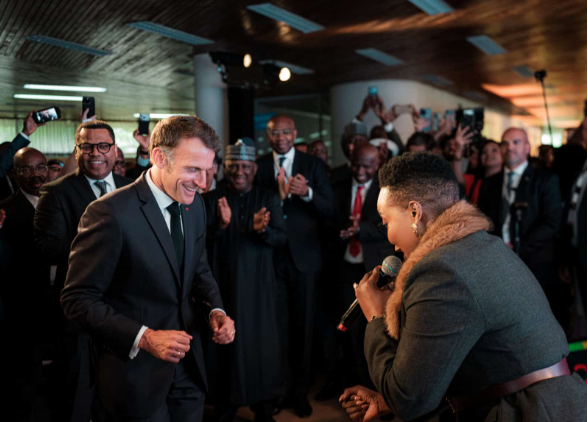
The global music sensation brought the house down at the Africa-France Summit, captivating world leaders and showcasing the unifying power of South African music on an international stage.
Nairobi, Kenya – The recent Africa-France Summit in Nairobi witnessed an unforgettable moment that transcended diplomacy and politics, as South African global music sensation Nomcebo Zikode took to the stage and, with her infectious energy, managed to get none other than French President Emmanuel Macron dancing. The electrifying performance, which also saw Kenyan President William Ruto join in, quickly went viral across social media platforms, captivating audiences worldwide and reaffirming the unifying power of music, particularly the global phenomenon that is "Jerusalema." This unexpected display of joy and cultural exchange has become a highlight of the summit, showcasing South African talent on an international stage.
Nomcebo Zikode, renowned for her powerful vocals and her role in the global hit "Jerusalema," was a featured performer at the high-profile summit. Her presence alone was a testament to the immense cultural impact of her music, which has broken language barriers and brought people together across continents. As she performed her beloved songs, the atmosphere in the room shifted from formal diplomatic discourse to one of celebration and shared humanity. Her ability to connect with such a diverse and influential audience underscores her status as a true global artist.
The most talked-about moment of the evening came when President Macron, known for his composed demeanor, shed his presidential formality and enthusiastically joined Nomcebo on the dance floor. Accompanied by President Ruto, the sight of the two world leaders attempting the now-iconic "Jerusalema" dance moves alongside Zikode was a spectacle that instantly captured hearts. The video footage of Macron’s "moves" quickly spread like wildfire, becoming a symbol of cross-cultural connection and the universal appeal of African rhythms.
Nomcebo herself shared several candid pictures and videos of the memorable encounter on her social media platforms, expressing her delight and honour at the opportunity. Her posts were met with an outpouring of pride and excitement from South Africans and fans globally, who celebrated the moment as a victory for African music and culture. The images and clips served as powerful reminders of how art can bridge divides and create moments of genuine connection, even in the most formal of settings.
The "Jerusalema" phenomenon, which swept the globe during the challenging times of the pandemic, became an anthem of hope and resilience. Its simple yet captivating dance challenge united millions, from healthcare workers to religious communities, in a collective expression of joy. Nomcebo Zikode’s performance at the Africa-France Summit, culminating in President Macron’s participation, served as a powerful continuation of this legacy, demonstrating that the song’s message of unity and celebration continues to resonate deeply.
Beyond the immediate spectacle, the incident carries significant symbolic weight. It highlights the growing influence of African culture on the global stage and the recognition of its artists as powerful cultural ambassadors. For South Africa, it was a moment of immense pride, seeing one of its own bring such joy and positive attention to the nation. The event also subtly underscored the importance of cultural diplomacy in fostering international relations, proving that sometimes, a shared dance floor can achieve what lengthy negotiations might not.
In conclusion, Nomcebo Zikode’s performance at the Africa-France Summit was more than just an entertainment segment; it was a cultural phenomenon. Her ability to inspire world leaders to dance to the rhythm of "Jerusalema" created a moment of pure, unadulterated joy that transcended political boundaries. It was a powerful testament to the universal language of music and the enduring spirit of South African artistry, leaving an indelible mark on the summit and in the hearts of those who witnessed it, both in person and online.