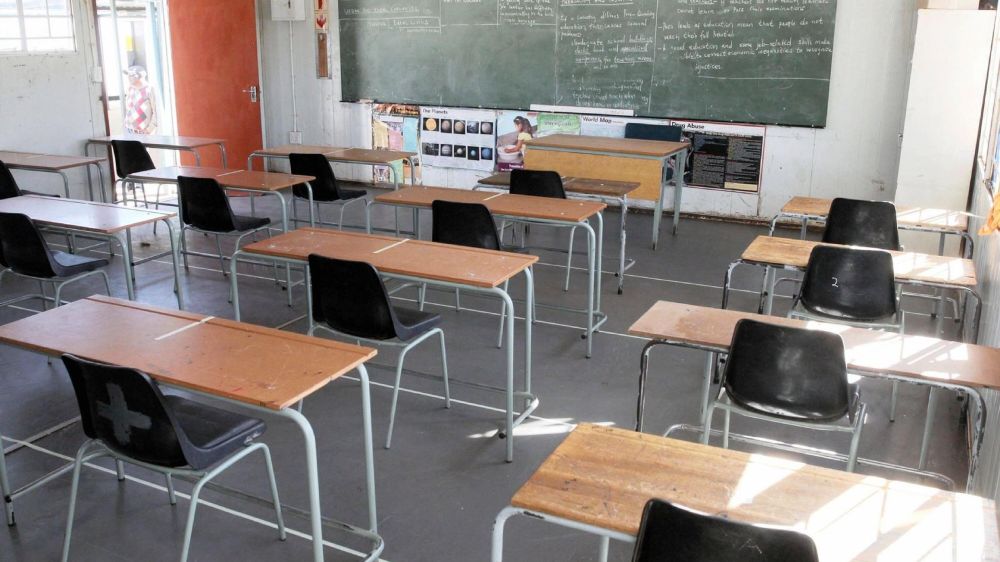
A new South African study has raised serious questions about the wisdom of sending children to grade 1 at the earliest possible age, finding that the youngest in each cohort are more likely to repeat and to perform worse academically than their older classmates – especially if they are boys or attend poorer schools.
Far from giving children a head start, starting formal schooling too early may be putting them on the back foot, says study author Bianca Böhmer, a researcher at Stellenbosch University’s Research on Socioeconomic Policy (ReSEP) unit.
“Rather than giving children a head start, sending kids to primary school too young may set them back,” she said. “There is a very clear finding that the younger you are relative to your peers, the worse you [perform].”
The research, based on education department data, tracked a cohort of more than 550,000 children who started grade 1 in 2018 and followed their progress to grade 4. It covers schools in Gauteng, Eastern Cape, KwaZulu-Natal, Limpopo, Mpumalanga and Northern Cape, and provides one of the clearest pictures yet of how age at school entry shapes early learning trajectories.
The findings present a conundrum for policymakers and parents alike. On paper, the law gives families flexibility; in practice, the youngest entrants seem to pay a price in the classroom – even as going to school early may bring other benefits such as meals and childcare.
Younger learners more than twice as likely to repeat
The South African Schools Act, which was in force during the study period, allows children to be enrolled in grade 1 any time from the year in which they turn six, and compels schools to admit them by the year they turn seven.
The South African Schools Act, which was in force during the study period, says children entering grade 1 may be enrolled as young as fiveand-a-half and must be enrolled no later than the year in which they turn seven, in effect providing an 18-month window in which to start school.
Within that 18‑month window, Böhmer’s research shows that a child’s relative age matters a great deal.
The younger learners were at school entry, the more likely they were to repeat the year, with the youngest learners more than twice as likely to repeat grade 1 than those who were a year older.
About 20% of the youngest learners who entered grade 1 aged five-and-a-half repeated the year, while those who were almost six-and-a-half at grade 1 repeated the year only about 8% of the time, said Böhmer.
The impact is not limited to repetition. Assessment data show that the youngest learners consistently scored the lowest in key subjects.
The youngest learners scored the lowest in school-based assessments for home language, maths and first additional language.
The negative effects were particularly pronounced for boys and for learners in lower‑income school communities, reinforcing existing inequalities.
Who starts when: rich vs poor schools
The study also reveals stark differences in how schools use the flexibility allowed by the law – differences that closely track socioeconomic lines.
Enrolment practices vary between and within provinces and are closely aligned with a school’s socioeconomic status, said Böhmer.
The department of basic education divides schools into quintiles, based on the socioeconomic status of the communities they serve, with quintile 1 being the poorest and quintile 5 the wealthiest.
In the six provinces that were studied, almost all quintile 1 to 3 schools – serving the poorest communities – enrolled children in grade 1 in the year they turned six.
In the six provinces that were studied, almost all quintile 1 to 3 schools enrolled learners in grade 1 in the year they turned six, while nearly 60% of quintile 4 and 5 schools and 35% of independent schools admitted children to grade 1 in the year they turned seven.
In other words, children at no-fee schools typically start formal schooling at the younger end of the permitted age band, while those at better‑resourced fee‑paying and independent schools are more likely to start later, closer to seven.
This pattern, Böhmer argues, compounds disadvantage.
These children from poorer households were at a double disadvantage, as they were likely to be less school-ready than learners going into grade 1 at better-off schools.
Children from low‑income households are more likely to have had limited access to high‑quality early childhood development (ECD) programmes, books and structured play before grade 1. Entering school earlier than their better‑off peers, and often into under‑resourced classrooms, can magnify the gap.
The study did not directly survey parents or teachers at poorer schools on why children are being enrolled sooner, but Böhmer suggests that non-academic factors are likely central.
The study did not ask parents or teachers at quintile 1-3 schools why children were starting school so young, but it is likely that the provision of free school meals and childcare were important considerations, said Böhmer.
For many families, especially in food‑insecure communities, the guarantee of a daily meal and safe supervision can weigh heavily in favour of earlier enrolment, even if the child is not fully developmentally ready for the demands of grade 1.
The case for stronger early childhood development
Education experts say the findings should sharpen the focus on ECD services for three‑ and four‑year‑olds, so that age of entry is guided more by developmental readiness than by household hardship.
Mary Metcalfe, professor of practice in the School of Public Management, Governance & Public Policy at the University of Johannesburg, said that in an ideal scenario, children would be enrolled at age three or four in early childhood development centres that could provide them with pre-literacy and pre-numeracy skills while staff at these institutions would gauge when they are ready to move on to formal schooling.
Such a system would allow trained practitioners to identify whether a child is ready to cope with the structure, cognitive load and social demands of grade 1, rather than leaving the decision to parents who may be under economic pressure or to schools balancing overcrowded classes.
At present, however, access to quality ECD in South Africa is highly unequal and often unaffordable, particularly in the same communities where children are being enrolled into grade 1 at the youngest permissible age. This creates a policy tension: delay entry to protect academic outcomes, or allow early entry to secure meals and care.
The study highlights a conundrum for policymakers: while younger entrants may not be developmentally ready for formal schooling, they may derive other benefits, such as free meals.
That trade‑off is not easy to resolve. Keeping a child at home or in informal care for an extra year may improve their school performance later on, but it may also mean a year without reliable nutrition and structured learning. Conversely, enrolling early may help the household cope in the short term while risking repeat years, poor marks and frustration for the child.
Böhmer’s work does not offer a simple fix, but it does provide an evidence base for rethinking how age‑of‑entry rules are applied, particularly in poorer schools, and for strengthening the ECD system so that starting school later does not come at the cost of children’s basic needs.
With more than half a million learners in the 2018 cohort alone and similar patterns likely in other intake years, the stakes are high. Every repetition carries not only emotional and financial costs for families and the state, but also increases the risk that children become disengaged and eventually drop out.
As the basic education sector debates reforms – from grade R expansion to possible adjustments in school entry policy – the message from the data is clear: relative age in the classroom matters, and starting “too early” can leave some of South Africa’s youngest learners struggling to keep up from day one.