

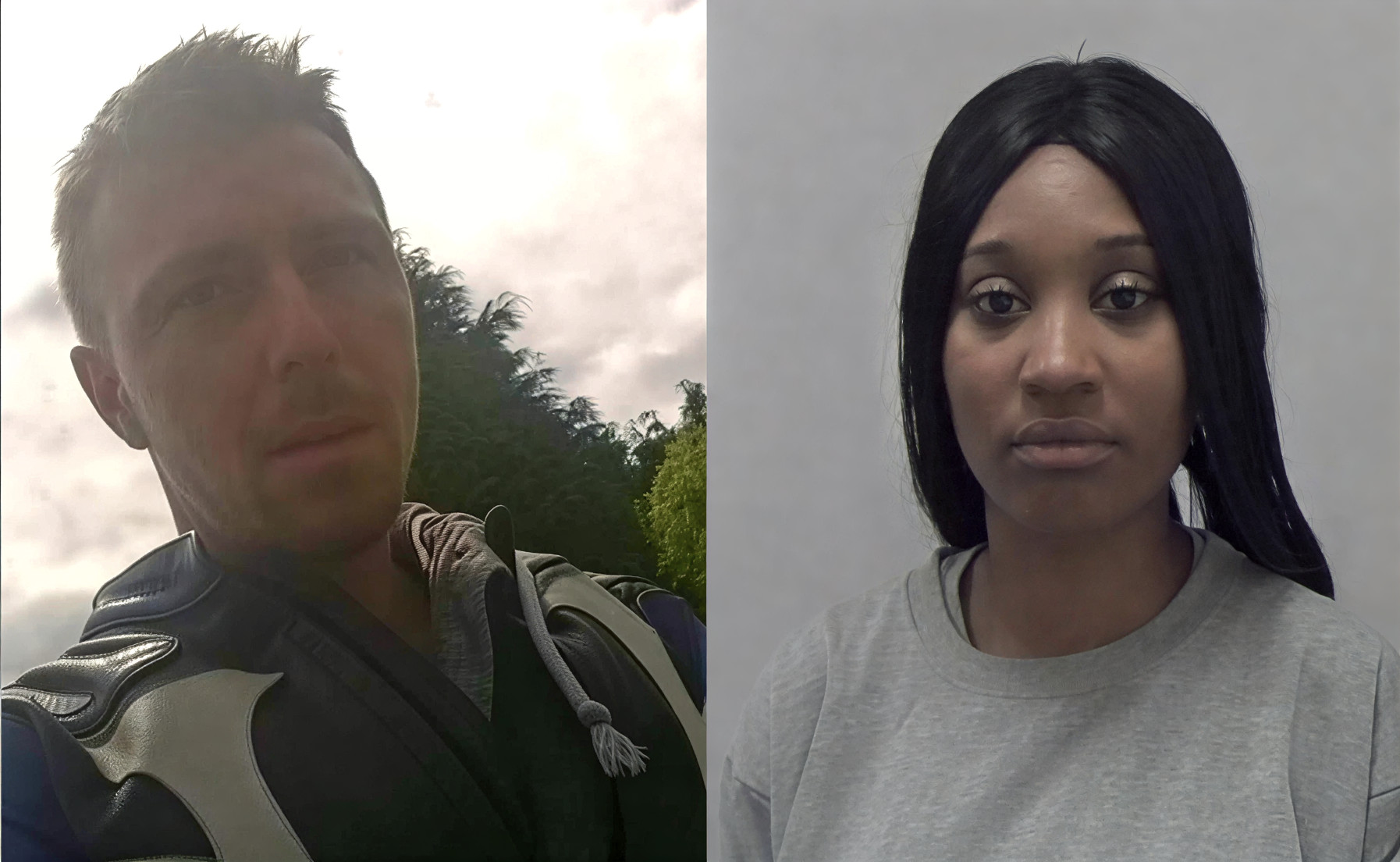
In the quiet suburbs of the West Midlands, the name Wayne Coventry is now synonymous with a tragedy that defies the common narrative of domestic abuse. A father of three, described by those who knew him as a man with a "Cheshire Cat" smile and a heart full of laughter, Wayne's life was extinguished in a flash of steel on a Monday night in October 2019. But the fatal blow was merely the final act in a long, harrowing saga of physical and psychological torment at the hands of a woman whose "evil streak" would eventually leave a family shattered and a community questioning the silent epidemic of male-directed domestic violence.
The perpetrator, Cordelia Farrell, 38, from Bartley Green, Birmingham, was not a stranger to the dark impulses of her own mind. Diagnosed with an underlying personality disorder described by experts as "emotionally unstable, volatile, and self-destructive," Farrell's relationship with Wayne was a toxic cocktail of control and extreme violence. While the world often focuses on the plight of female victims, Wayne's story serves as a stark, visceral reminder that the face of an abuser does not always match the stereotype.
A Love Turned Lethal
Wayne Coventry, 36 at the time of his death, was a man who doted on his children. Having spent 18 years with a childhood sweetheart, his life was built around the stability of family. When that relationship fizzled out, he eventually found himself in the orbit of Cordelia Farrell. It was a match that his family immediately viewed with trepidation. His father, Barry Coventry, recalled an "instant dislike" for her, a sentiment echoed by Wayne's older brother, Sean. "When they got on they did get on — but when they didn't it was bad," Sean noted, describing a dynamic that rapidly spiralled into a regime of terror.
The abuse was not merely physical; it was designed to break Wayne's spirit. According to family accounts, Farrell would isolate Wayne from his loved ones, preventing him from engaging in the hobbies he once enjoyed. In a particularly cruel display of psychological warfare, Sean revealed a detail that chilled the courtroom during Farrell's trial: "She used to phone him up while she was having sex with other men — just so he could hear it and it would get to him." This was not just a relationship; it was a slow-motion execution of a man's dignity. His father meanwhile said: "She used to threaten him a lot over the phone. I've even heard her turn around and threaten to kill him."
The Night of the 58 Bites
The violence reached a sickening crescendo weeks before the final tragedy. In a fit of rage that left even seasoned investigators reeling, Farrell attacked Wayne in his flat. The details, as recounted by Sean, are difficult to process. "She went round to his flat and they were having a bit of food and a bit of drink and then she sort of pretended that she wanted to have sex," Sean explained. "So she has put her hand down his pants, and the next thing you know she is grabbing on to his testicles and really badly pulling down on them."
One detective involved in the case described the scene as Wayne being "literally pulled around the room" by his genitals in a "vice-like grip." The agony was so intense that Wayne passed out. When he regained consciousness, he found Farrell "literally trying to bite it off." Medical examinations later confirmed the presence of 58 distinct sets of teeth marks on his genitals. As Wayne struggled to open the door for emergency services, Farrell plunged a broken plate into his back, adding a physical scar to the internal trauma he was already enduring.
Despite the sheer brutality of the assault, Wayne's love—or perhaps his entrapment—remained. He continued to see her, even after a non-molestation order was put in place. It is a phenomenon often seen in domestic abuse cases: the victim's inability to break the cycle, compounded in Wayne's case by a sense of embarrassment. Sean noted that his brother was "too embarrassed" to acknowledge he was being terrorised by a woman, a sentiment that highlights the societal barriers male victims face when seeking help.
The Final Confrontation
The end came on 14 October 2019, at Sean Coventry's home in Humphrey Avenue, Bromsgrove. A commotion broke out in the living room, and before anyone could intervene, the situation turned fatal. Sean witnessed the moment the life left his brother. "I shouted at Wayne," Sean recalled, but as Wayne turned around, Farrell "plunged the knife right in him." The kitchen knife found its mark in his chest, ending the life of the man who "made us laugh a lot."
Farrell fled the scene, remaining at large for five days before finally handing herself in. Her defence was as chilling as her crimes. She claimed she was acting in self-defence, alleging that Wayne had held a knife to her back—a claim the prosecution and witnesses vehemently denied. Even more disturbing was her demeanour during the legal proceedings. "When I was giving evidence on the stand and Cordelia was in the dock she was smiling at me as if it was something to laugh about," Sean told the court.
The Psychological Profile of an Abuser
The trial at Worcester Crown Court shed light on the complex psychological factors at play. Experts on the ITV documentary Murder on a Knife's Edge described Farrell as "emotionally unstable, volatile and self-destructive." This personality disorder meant that her emotions were often unregulated, leading to explosive outbursts of violence. However, for Wayne's family, this diagnosis did little to excuse the calculated nature of her control.
The court heard how Farrell's behaviour was marked by extreme jealousy and a need for total dominance. She didn't just want to be with Wayne; she wanted to own him. The psychological abuse—the phone calls during sex with other men, the threats to kill him, the isolation from his family—were all tools used to ensure Wayne felt he had nowhere else to go. "She has got an evil streak in her, definitely," his father Barry remarked, reflecting on the woman who had systematically dismantled his son's life.
Justice and the Silent Epidemic
In October 2020, the legal system delivered its verdict. To the family's profound disgust, Farrell was cleared of murder but found guilty of manslaughter. The jury accepted a plea of diminished responsibility due to her personality disorder. She was sentenced to 10 years in prison, with a requirement to serve at least seven and a half years. An additional 18-month sentence for the earlier genital assault was ordered to be served concurrently.
The case of Wayne Coventry is not an isolated incident, though its specifics are uniquely gruesome. Recent statistics from the Office for National Statistics (ONS) and the Crime Survey for England and Wales (CSEW) paint a sobering picture of domestic abuse in the United Kingdom. In the year ending March 2025, it was estimated that approximately 2 million men had experienced domestic abuse in their lifetimes. Furthermore, data from the Crown Prosecution Service (CPS) in December 2025 revealed that over 9,000 domestic abuse-flagged charges were recorded against male victims in a single year.
Organisations like the ManKind Initiative have long argued that male victims are often the "forgotten" casualties of domestic violence. The barriers to reporting—fear of not being believed, societal expectations of "masculinity," and a lack of dedicated male-only shelters—ensure that many men suffer in silence until it is too late. Wayne's story is a tragic example of what happens when these barriers are not dismantled.
A Legacy of Laughter and Loss
Today, the Coventry family is left with the memories of a man who loved his children and "always had a smile on his face." The ITV documentary True Crime Presents: Murder on a Knife's Edge recently brought the case back into the public eye, sparking a renewed conversation about the complexities of domestic abuse and the failure of the system to protect Wayne despite the clear warning signs.
The documentary highlighted the devastating impact on Wayne's three children, who now grow up without a father who "doted" on them. It also featured poignant interviews with Sean and Barry, who continue to advocate for better recognition of male victims. "He was someone who made us laugh a lot," Barry said, his voice heavy with the weight of a father's grief.
As we look at the 58 bite marks and the single, fatal knife wound, the lesson is clear. Domestic abuse knows no gender, and its precursors are often hidden behind closed doors and "Cheshire Cat" smiles. For Wayne Coventry, the "vice-like grip" of his abuser never truly let go until his final breath. His story remains a haunting testament to the need for a more inclusive, vigilant approach to domestic violence—one that hears the cries for help, regardless of who is making them.